By Hamza Faisal
XPeng has stopped talking about humanoid robots as a research project. At its AI Day 2026 event in Guangzhou on November 25, the Chinese electric carmaker unveiled the mass-production version of its IRON humanoid and put a date on it: hardware production begins in January 2027, on a dedicated automated line built to finish one robot every two and a half minutes at full capacity.
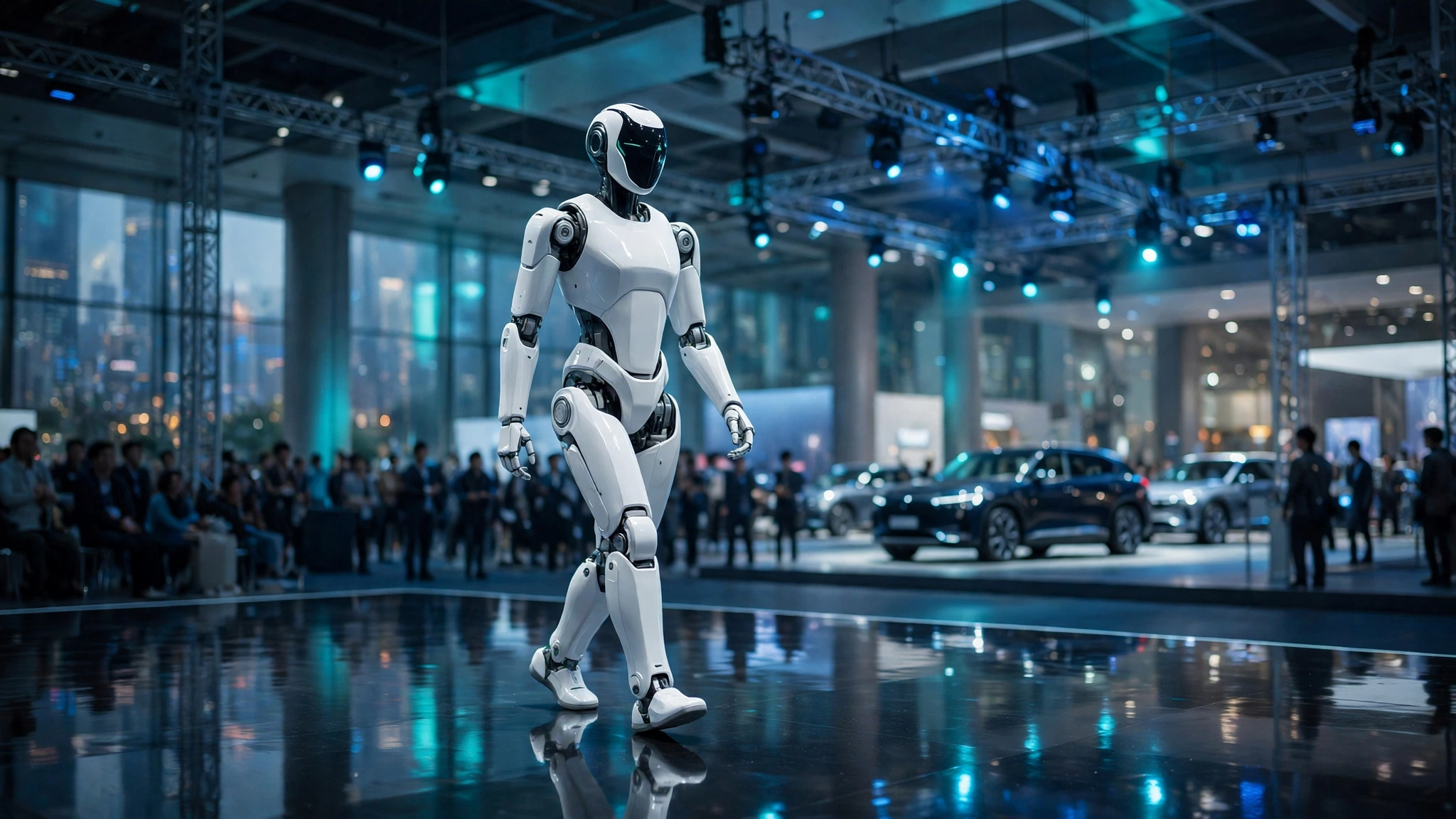
IRON is 170 centimetres tall, with 76 degrees of freedom, a 21-degree-of-freedom dexterous hand and more than 1,500 tactile sensing points across its body. It sees in 3D and perceives its surroundings in 360 degrees, and on stage in Guangzhou it walked out holding a microphone, introduced itself and answered unscripted questions from the audience in Chinese and English, with no human remote control.
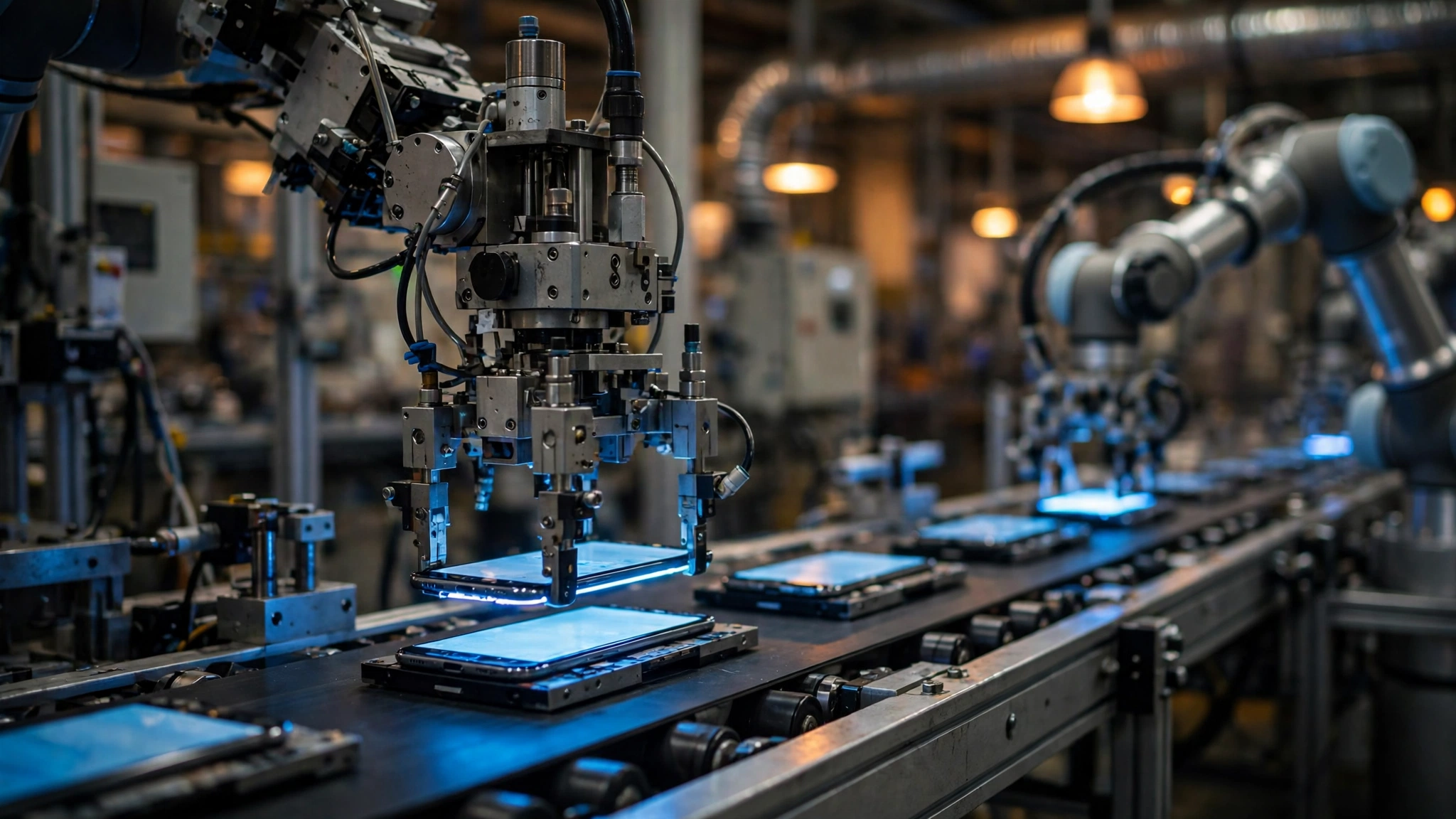
A car factory approach to building robots
XPeng's pitch is that it is not building a demo — it is building a product. The company has set up a dedicated automated production line for IRON, applying the same manufacturing discipline and quality control it uses for its cars. Its 50,000-square-metre Robot Data Factory trains the robot across more than 250 scenarios and 15 job categories, feeding the same software stack that runs XPeng's vehicles.
That stack is the new Turing Physical AI Architecture, also unveiled at the event, which ties together the robot's brain and body: three proprietary Turing AI chips delivering 2,250 TOPS of computing power, running IRON OS and the company's VLA 3.0 vision-language-action model. A solid-state battery rated above 300 watt-hours per kilogram powers the whole system.
First job: selling cars
IRON's first deployment will not be a factory floor or a warehouse. The first production units will train as sales assistants in XPeng's own retail stores in the first quarter of 2027, greeting customers and guiding them through the cars on display. Commercial sales to outside customers are planned for the second quarter, and the company says it has already secured its first purchase order, tied to the P7 at the Guangzhou Auto Show. Co-president Brian Gu told CNBC the robot is expected to be priced in the same range as one of XPeng's cars.
Safety was a major part of the presentation, since IRON is designed to work alongside shoppers. XPeng detailed a five-layer physical safety architecture with redundant dual-channel communications and an independent backup balance controller designed to keep the robot upright if its main computer fails.
The humanoid race gets a deadline
"Humanoid robotics is reaching the point where the industry must move beyond demonstrations and prove that robots can create value in the real world," chairman and CEO He Xiaopeng said at the event. "That requires more than capable hardware or intelligent models. It requires reliable products, high-quality data, scalable manufacturing and continuous learning through deployment."
XPeng is not alone in that bet — Tesla, Figure and Apptronik are all racing toward commercial humanoids — but few rivals have committed to a mass-production date this specific, or to putting the robots to work in their own stores first. A next-generation humanoid is already planned, with deliveries in the second half of 2027. The question now is not whether a carmaker can build a humanoid, but whether shoppers will take advice from one.