By Hamza Faisal
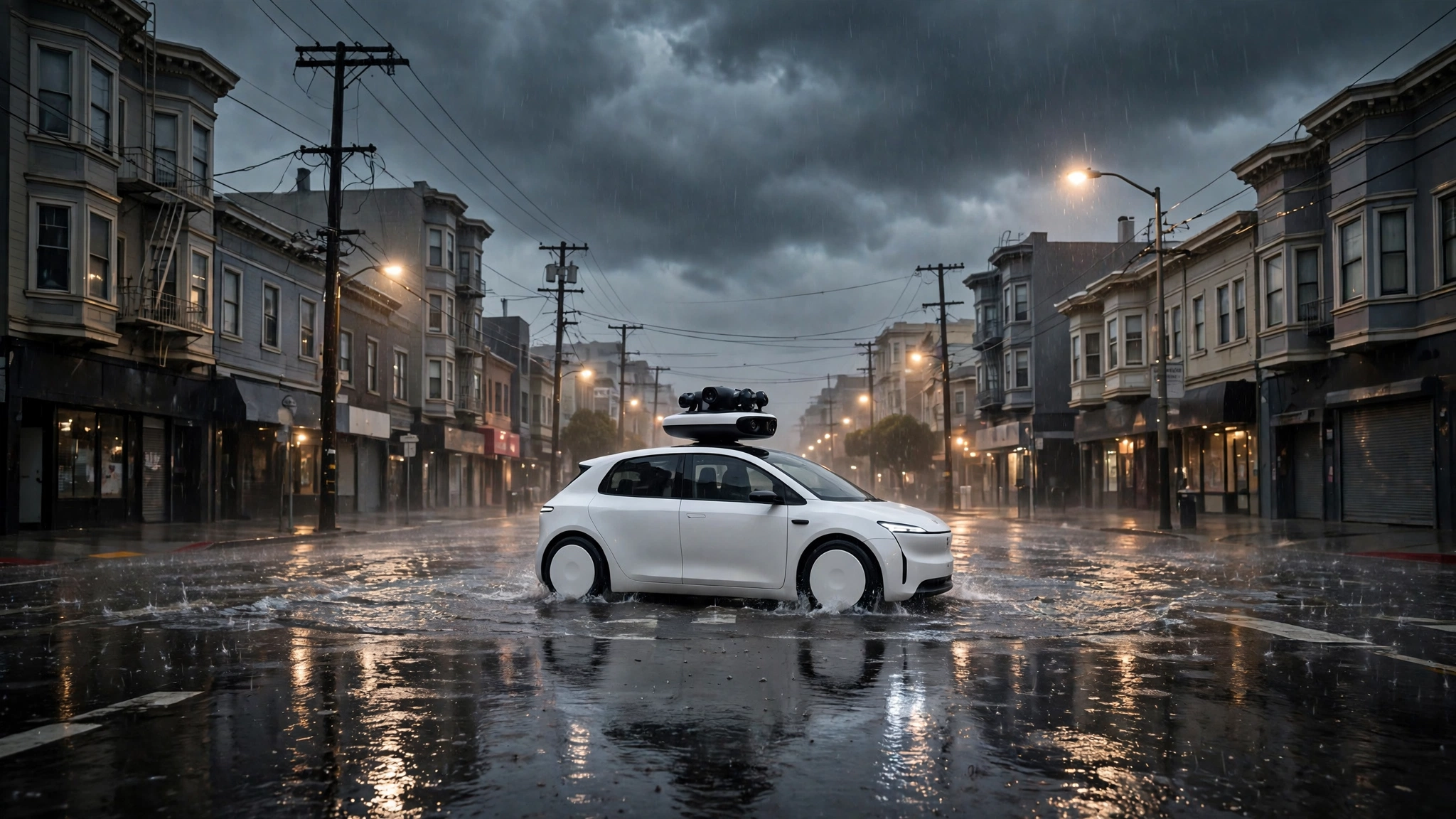
Waymo suspended its driverless robotaxi service across the San Francisco Bay Area on Wednesday after several of its cars stalled in flooded intersections during a record-breaking storm, grounding one of the world's most closely watched autonomous fleets on a day the weather simply outmatched the software.
The pause began at around 11 a.m. local time, with the Waymo app telling riders service was suspended because of the weather and would return when road conditions improved and the forecast cleared. The company said it had tracked the storm hours in advance and had already scaled back its fleet before pulling the rest of the cars off the road.
Stalled where the water was
Before the pause, several Waymo vehicles got stuck in flooded streets across the city. One blocked traffic at the intersection of Oak Street and Cole Street, next to the Panhandle, sitting in a flooded crosswalk while other cars drove around it. Another was disabled at Bayshore Boulevard and Industrial Street, east of Highway 101. A passenger in a third car said hers froze at Fell Street and Masonic Avenue as rain streamed past, and the car told her to stay inside.
No injuries involving Waymo vehicles were reported, and the company said the pause covered its entire regional footprint, from San Francisco down the Peninsula and into the South Bay. As of mid-afternoon on Wednesday, service was still suspended, with no timeline given for a restart.
A record storm — and a second bad day
The storm was an atmospheric river that dumped 2.28 inches of rain on downtown San Francisco by 3 p.m. on Wednesday, breaking the daily record of 2.24 inches set in 1918. Flooded freeways halted flights at San Francisco International Airport, cut power to thousands of homes, and even sent rain leaking through the ceiling of the Moscone Center, where Microsoft's Ignite conference was under way.
The timing could hardly have been worse for Waymo. A day earlier, California's Department of Motor Vehicles barred its robotaxis from the state's freeways after a string of incidents in construction zones, prompting the company to halt freeway rides nationwide. The flood pause was a separate decision — a weather call, not a regulatory one — but it landed on top of an already bruising week.
What the pause says about driverless limits
Waymo's decision was the conservative one, and it is hard to fault: when the road stops making sense to the software, stopping the fleet is the safe move. But it is also an admission about where the technology stands. Judging the depth of standing water, deciding whether to push through or reverse out, and reading a flooded intersection are things human drivers do without thinking. Waymo's cars, faced with the same judgment call, stopped where they were — and blocked the traffic behind them.
This is not the first time weather has beaten the fleet. Waymo paused service in San Francisco in December 2025, when a power outage left robotaxis stranded at dark intersections, and it halted rides in Atlanta, Austin, Dallas, Houston and San Antonio in May after its cars struggled with flooded streets there too.
For now, the Bay Area's robotaxis are parked until the roads dry out. The storm is heading south toward Los Angeles next — and Waymo's next test may be whether its cars can tell the difference between a puddle and a flood before they drive into it.


