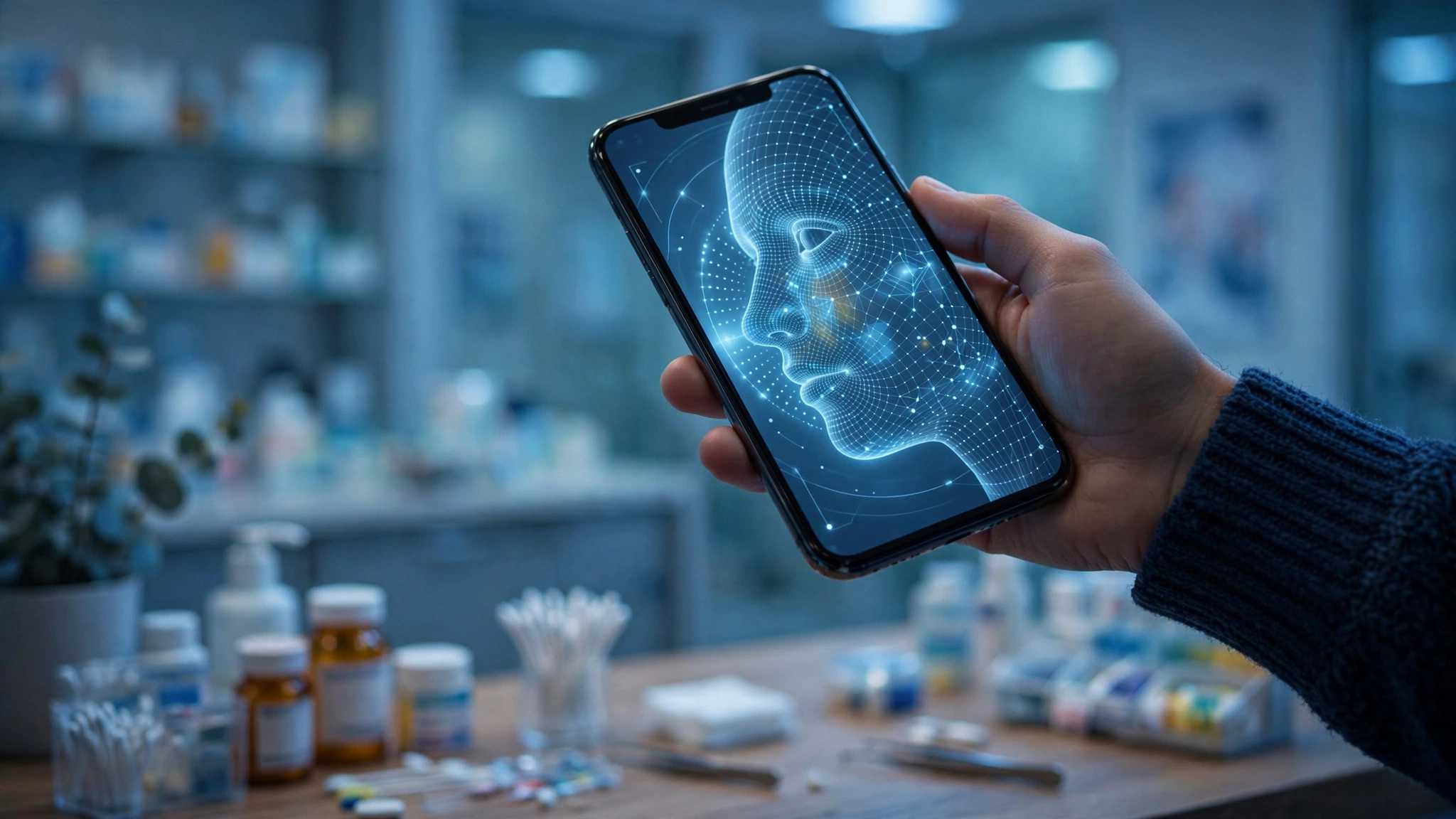
For the first time in the United States, an artificial intelligence system has been allowed to write original prescriptions without a doctor signing off first.
Utah's Office of Artificial Intelligence Policy, together with the state's Division of Professional Licensing, has signed an agreement permitting health startup Nolla Health's AI to diagnose mild-to-moderate acne and issue first-time prescriptions for topical treatments.
The pilot began on Monday and was first reported by Bloomberg. It marks a landmark moment for autonomous healthcare: while other systems have previously been cleared to renew existing prescriptions, Nolla says its approval is the first to cover initial prescriptions in the country.
A first for AI in U.S. healthcare
The authorization comes from Utah's Office of Artificial Intelligence Policy, a regulatory sandbox the state set up to let companies trial AI in regulated industries under supervision. Nolla Health's agreement permits the firm's AI to prescribe a limited set of eight topical acne medications.
There are clear guardrails. The AI cannot prescribe isotretinoin, commonly known as Accutane, or any oral medications — only skin-applied treatments considered lower-risk. Severe or complex cases are to be referred to human dermatologists, and the program covers only Utah residents aged 18 or older.
Utah has been moving toward this for some time. Earlier this year the state rolled out a separate pilot allowing AI to approve prescription refills, a step that drew criticism from physicians who questioned its safety. The new program goes further by covering brand-new diagnoses.
How Nolla Derm works
Through an app called Nolla Derm, patients verify their identity, complete a short health questionnaire, and take a five-angle facial scan.
The AI assesses acne severity, evaluates factors such as excess skin oil, and produces an acne severity score, then combines that analysis with the patient's medical history to recommend a treatment plan and prescribe from the eight approved topical medications.
"Until now, a licensed clinician signed every single prescription before it went out," founder Luis Wenus said in a video posted on X on Monday. "Our AI can now make that prescribing decision itself."
Wenus, who previously worked at Worldcoin, the eye-scanning identity project co-founded by OpenAI chief Sam Altman, called Nolla "the first ever end-to-end AI doctor."
The service is priced at $4.99 per month. Nolla says the AI will direct users to a physician if it cannot confidently select a treatment.
A cautious, staged rollout
Physician oversight is being phased out gradually rather than removed overnight. During the first stage, covering the first 100 patients, two physicians must approve every AI-generated prescription before it reaches a pharmacy.
In the next stage, covering up to 500 patients, doctors will review the prescriptions retroactively after the AI has sent them. After that, oversight shifts to monthly audits of at least 10 percent of prescriptions, plus every case involving an escalation or side effect.
Nolla says the pilot is designed to complement rather than replace physicians, arguing that by handling routine, low-acuity cases, the system frees dermatologists to focus on complex, high-risk patients.
Medical groups, including the Utah Medical Association and the American Academy of Dermatology, have not yet commented publicly on the new agreement.
Whether other states follow Utah's lead — and whether regulators elsewhere accept AI-written prescriptions — will likely depend on how this one-year pilot performs.
By Hamza Faisal