By Hamza Faisal
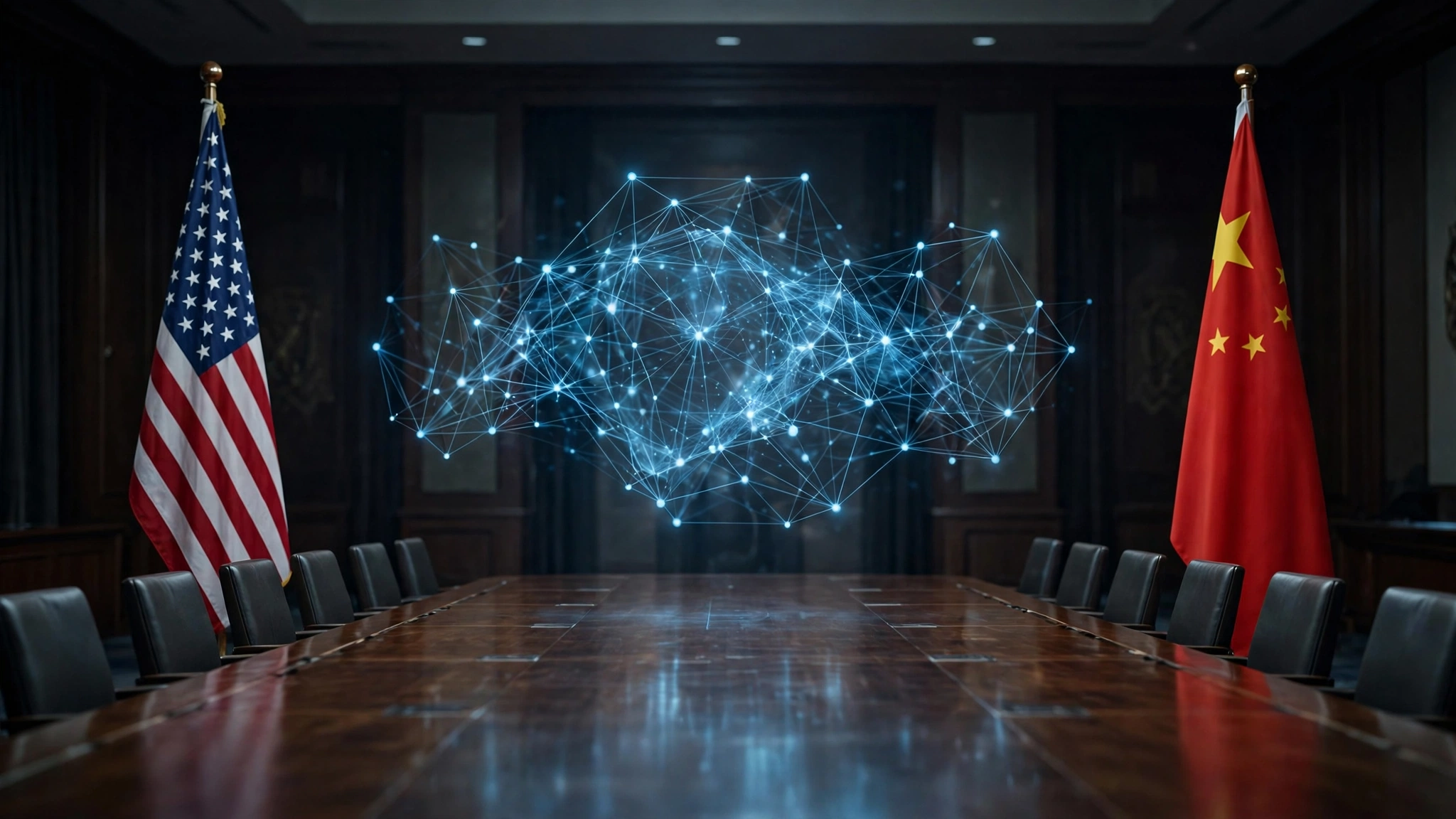
Washington and Beijing agreed in September to warn each other when an advanced AI system goes badly wrong. Two months later, the safety channel they promised is stuck on a basic question: what counts as a serious incident?
US Treasury Secretary Scott Bessent laid out the state of play in prepared remarks in New York on Tuesday, November 10, saying the two countries should harbour "no illusions about their differences" on artificial intelligence even as they work together to manage its risks. The remarks came a week before President Donald Trump and Chinese President Xi Jinping meet in Shenzhen on the sidelines of the Asia-Pacific Economic Cooperation summit on November 18 and 19.
That meeting, the leaders' third of 2026, is meant to advance a new bilateral dialogue on "superintelligence" — the Trump administration's preferred term for advanced AI — designed to guard against shared risks and "prevent a misunderstanding between our two systems". Bessent said the two sides also expect to exchange best practices for testing advanced models before release and for "keeping human judgment firmly in command of the technology".
A shared goal, two different definitions
The problem, analysts say, is that the two sides define the danger differently. Both view AI incidents through a national security lens, but they do not mean the same thing by it.
"The US is focused on loss of control of an AI system — a model or network of agents that starts engaging in unpredictable, potentially nefarious behaviour in ways that could cause harm," Karman Lucero, a senior fellow at Yale Law School's Paul Tsai China Centre, told the South China Morning Post. "China's view of national security centres first on regime stability and content control."
Xiao Qian, deputy director of Tsinghua University's Centre for International Security and Strategy, said Beijing had repeatedly stressed keeping AI under human control — an overlap with Washington's position. But he said a realistic next step would be agreeing on the practical details first: which types of incidents must be reported, the thresholds for notification, and concrete case examples.
What happens next in Shenzhen
The September agreement, reached when Xi visited Washington, set up the AI dialogue and an incident communication channel but left the operating details undefined. The Shenzhen meeting is the first chance to give it working rules — and the definition question is now the main item standing in the way.
Bessent, who will travel to China with Trump, framed the effort as a matter of leadership as much as safety. "As SI advances, so will the need to engage in new areas of risk management — and to demonstrate how two nations can reconcile the demands of competition with the responsibilities of leadership," he said.
In September, China's Minister of State Security Chen Yixin flagged growing AI-related national security risks. Analysts also note that shifts in US domestic politics after the recent midterm elections could slow the pace of any agreement.
Why the definition matters
Without a shared definition, an alert channel cannot do its job. If Washington reports only loss-of-control events while Beijing expects warnings about content and stability risks, each side will think the other is holding back — and trust in the mechanism will erode before it is tested.
That is why the unglamorous work of agreeing on incident types and thresholds matters more than the summit language around it. The channel exists on paper; Shenzhen will show whether the two governments can agree on when to use it.


