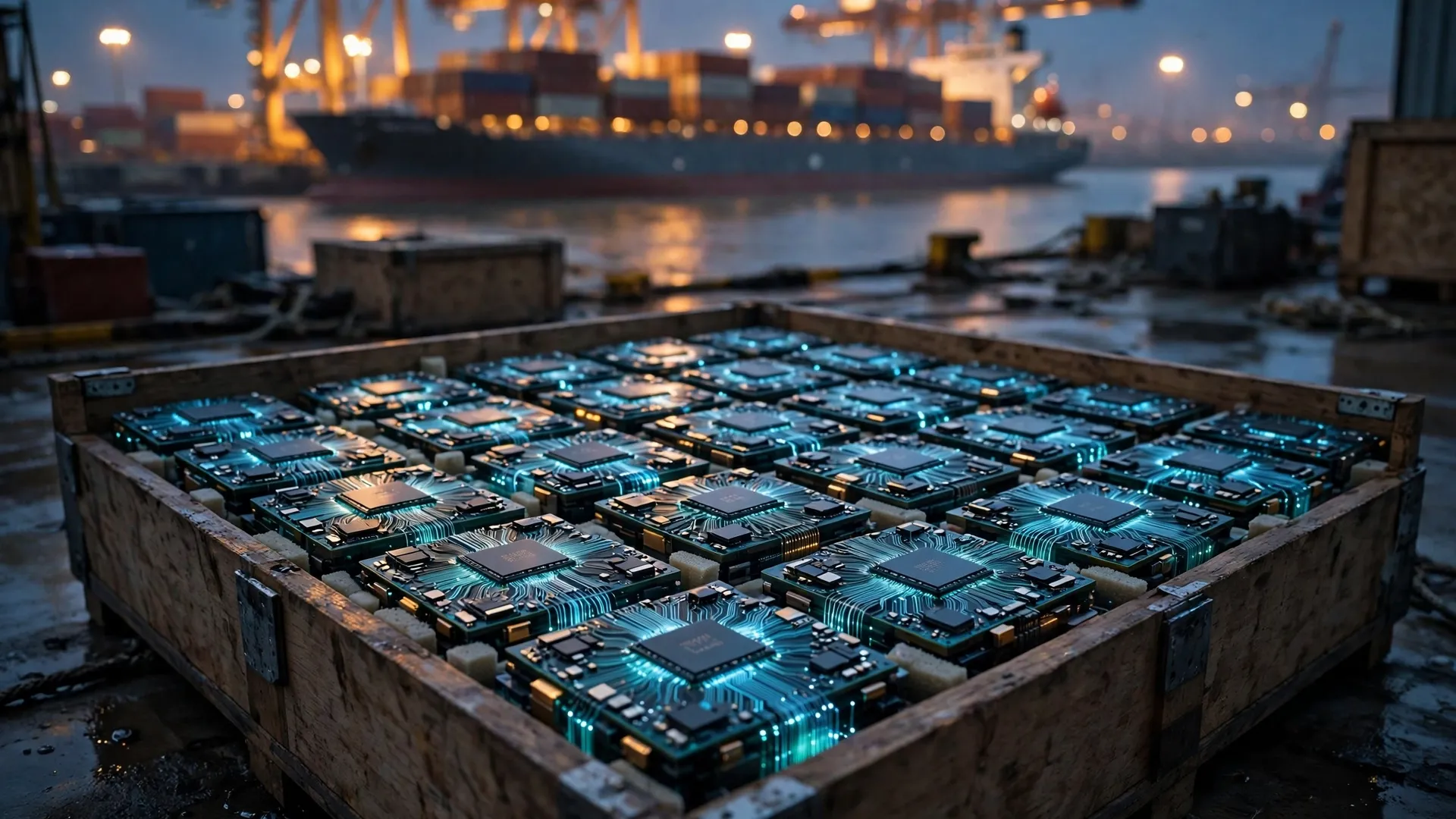
The Trump administration approved exports of nearly 900,000 advanced artificial intelligence chips to Chinese companies over a six-month period, the US House Foreign Affairs Committee disclosed on Thursday, in the most detailed public release of American chip-export licensing data ever made.
The approvals covered 879,000 chips made by Nvidia and AMD, shipped — or cleared to ship — to Chinese firms between December 2025 and May 2026, according to the committee. The companies had sought permission to send 3.4 million chips to China during the same period, meaning roughly one in four requested chips was approved.
The disclosure puts hard numbers behind a debate that has run for years in Washington: how much of America's most advanced AI hardware should be allowed to reach China, and who gets to decide.
The biggest recipients are on the Pentagon's list
The committee's breakdown shows the largest approvals went to some of China's best-known technology companies. Tencent was cleared to receive 150,000 chips, Alibaba 75,000, Baidu 43,000 and the electric vehicle maker BYD 4,000.
All four companies sit on the Pentagon's list of firms alleged to back China's military, the committee noted — a detail that is likely to sharpen criticism of the approvals. The committee said its findings included approvals for chip exports to "Department of War-designated Chinese Military Companies like Alibaba and Tencent."
The chips at the centre of the disclosure are Nvidia's H200 and AMD's equivalent MI325X, two of the most powerful AI accelerators available. It was not immediately clear how many of the approved licences actually resulted in chips being shipped to China, as opposed to simply being cleared for export.
How the licences were granted
The committee's chairman, Brian Mast, used powers under the Export Control Reform Act to make the licensing information public. The committee described the release as "the most detailed public disclosure in the history of the Export Control Reform Act."
The Commerce Department defended its approach, saying it rests on a rule published in the Federal Register in January 2026 that imposes significant additional national security requirements on applicants, allowing licences to be considered case by case rather than being denied by default.
The approvals followed President Donald Trump's decision in December to give Nvidia the green light to ship its H200 chip to China, rolling back restrictions put in place under the previous administration. That decision drew fierce criticism from China hawks across the US political spectrum, who argue that advanced AI chips can end up supporting Beijing's military and surveillance programmes.
The chipmakers respond
Nvidia said the approvals were "subject to strict conditions and limited volumes," and added that "despite receiving some licenses, we have since stopped shipping H200s to China." AMD said it "complies with applicable US export control laws and regulations and maintains rigorous processes to ensure compliance across our global operations."
The disclosure landed in the same week that scrutiny of Nvidia's China ties intensified, with California's attorney general subpoenaing the company over its chief executive's reported relationship with a suspected Chinese spy. The committee's release is likely to fuel fresh questions in Congress about whether the current export-control system is keeping America's most powerful AI hardware out of the wrong hands — or quietly letting it through.


