By Hamza Faisal
Unequal access to artificial intelligence risks deepening global inequality, a senior United Nations official warned on Sunday, arguing that the AI revolution could turn today's digital divide into a lasting opportunity divide between rich and poor nations.
Tomas Lamanauskas, deputy secretary-general of the International Telecommunication Union (ITU), the UN agency for information and communication technologies, made the warning in an interview with Al Jazeera on the sidelines of the UN Conference on Trade and Development (UNCTAD) World Investment Forum in Doha, Qatar.
"There is a risk ... I think the AI divide is really the big concern because it's really not just about the digital divide," Lamanauskas said. "AI has the huge potential of powering health, education, public services, industries, agriculture, trade. So a great divide could really mean an opportunity divide, and really could deepen the socioeconomic divide."
The infrastructure gap in numbers
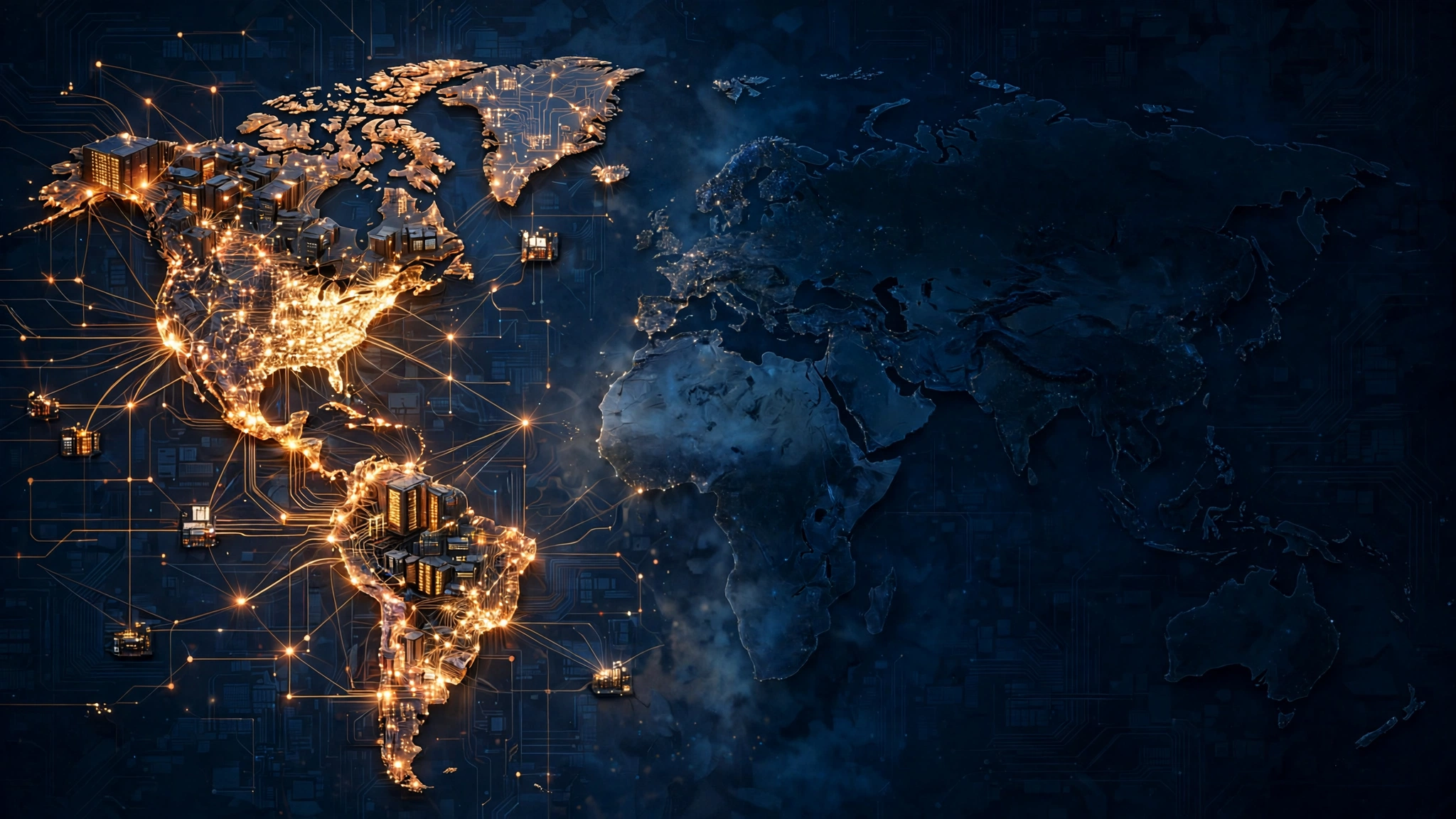
The disparities are already visible in the physical backbone of the AI era. Africa and Latin America together account for just 3.3 percent of global data centre capacity, Lamanauskas said, while roughly 2.2 billion people worldwide remain without internet access at all.
Closing that infrastructure gap would require an estimated $2.8 trillion in investment by 2030, he said — a figure that underlines how far the world's poorest regions are from the data centres, power grids and fibre networks that AI depends on.
The gap shows up in usage as well. Around 29 percent of working-age people in developed countries use generative AI, Lamanauskas said, compared with just 16 percent in developing nations. "This actually affects your ability to be productive and to be part of job-market opportunities," he said.
A warning echoed across the UN system
Lamanauskas is not the only UN voice raising the alarm. A December 2025 report by the UN Development Programme cautioned that AI could trigger a new era of inequality between nations, reversing decades of progress in narrowing economic disparities. Countries with unreliable power, limited connectivity and shortages of technological skills risk missing out on AI's economic gains entirely, the programme warned.
The stakes go beyond individual opportunity. Lamanauskas warned that AI-driven automation threatens to erode government tax bases, lower living standards and disempower citizens in countries that cannot keep pace — a combination that could strain public services exactly when they are most needed.
No stopping AI — so the answer is investment
Despite the warning, Lamanauskas said he did not believe there was any possibility of simply stopping AI or halting its rapid advance. "AI is here to stay, and AI is here to transform our lives," he said, noting that 104 countries now have AI strategies, compared with just four a decade ago.
The way forward, he argued, is investment: in digital infrastructure, in education and in regulation, so that developing countries can participate in shaping the technology rather than merely receiving it. "The way forward is really to invest to make sure that the AI benefits everyone, to recognise and acknowledge the fears and anxieties that people feel," he said.
For the billions still offline, that investment is the difference between AI as a shared leap forward and AI as a new line drawn between those inside the revolution and those left outside it.
By Hamza Faisal