By Hamza Faisal
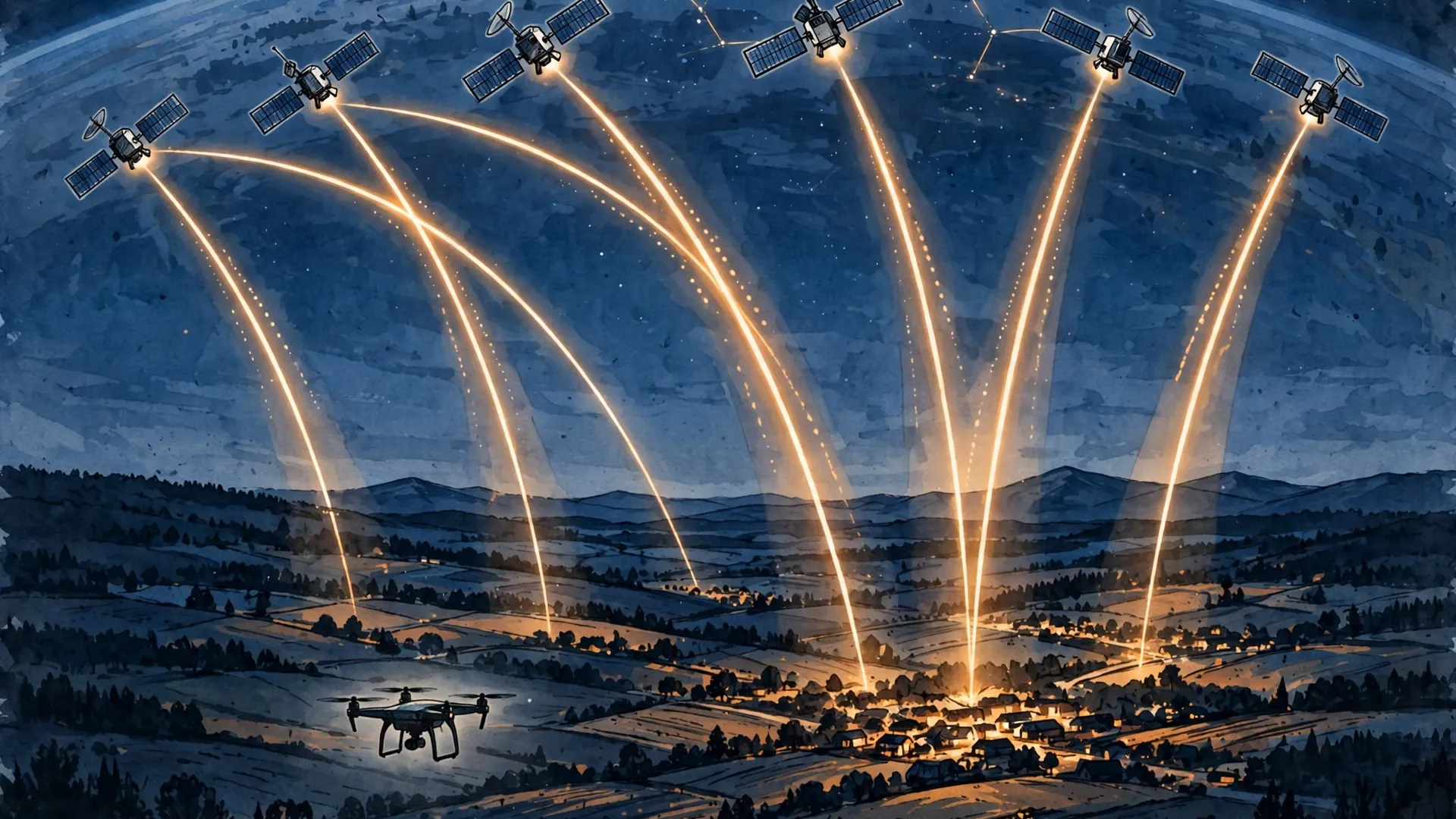
Ukraine's military has regained full use of SpaceX's Starlink and Starshield satellite links for its fast-moving equipment, Defence Minister Yevhenii Khmara said on Saturday, ending speed restrictions that Ukrainian officials said disrupted front-line operations for more than a week.
Khmara told reporters that the Defence Ministry's monitoring systems showed stable connections on objects travelling faster than 400 kilometres per hour (250 miles per hour) — the threshold that matters for the drones and fast-moving vehicles at the centre of Ukraine's war effort. The ministry said it would keep monitoring the systems, but the headline message was unambiguous: the limits are gone.
A week of lost drones and disrupted missions
The restrictions applied to Starshield, SpaceX's military-grade version of Starlink and the backbone of Ukraine's drone operations and battlefield communications. Commanders reported lost drones and disrupted missions during the slowdown, which stretched for more than a week before Saturday's announcement.
Starlink has been a critical communications network for Ukraine since Russia's full-scale invasion damaged much of the country's infrastructure in 2022. It is particularly vital for operating medium-range drones and for intercepting Russia's high-speed drones — roles where a connection that drops at speed is not a minor inconvenience but a mission failure.
Starshield extends Starlink's technology to government and security uses, with stronger encryption for agencies handling sensitive information, alongside Earth observation and special payload integration. The 400 kph figure announced on Saturday refers to the terminal's movement speed at which a connection can be maintained, not to internet throughput.
Who ordered the limits remains unclear
Questions have persisted since last week about who ordered the interruptions to the satellite system Ukraine has relied on for years. United States President Donald Trump denied responsibility while defending SpaceX chief executive Elon Musk, and said the service was restored after he asked Musk to lift the restriction — though Ukrainian officials indicated the limits continued until the day before Saturday's announcement.
President Volodymyr Zelenskyy said as recently as Friday that Ukraine was still experiencing Starlink and Starshield speed limits. Khmara on Saturday credited direct dialogue and Zelenskyy's diplomacy with Washington for the restoration, saying the outcome mattered most for the front, for the military, and for the work of drones, logistics and communications.
The episode added to tensions between Kyiv and Washington, a relationship already strained by Trump's agreement to temporarily lift sanctions on Russian diesel imports, which Ukraine viewed as a betrayal. Ukrainian officials have also suspected the restriction was linked to a clash over an energy truce, after Ukrainian strikes on Russian refining facilities continued despite Trump's announcement of a pause.
What the restoration means for the front line
The restoration comes as US envoys launched a new push to end the war. Russia agreed on Wednesday to resume three-way negotiations with Washington and Kyiv next month, with negotiators expected to meet in Abu Dhabi in the first half of November.
On Friday, Kyiv and Moscow also agreed to a localised ceasefire brokered by first lady Melania Trump around Oleshky, a war-ravaged town in Ukraine's southern Kherson region that Russian forces have occupied since 2022. The ceasefire is due to start on October 27, with a humanitarian operation planned for October 29.
For Ukraine's forces, the immediate effect is simpler and more concrete: the satellite links their drones depend on are working at full speed again. After a week in which the country's most important communications backbone faltered, that restoration is itself the news — and a reminder of how much of modern warfare now runs through infrastructure controlled by a single private company.