By Hamza Faisal
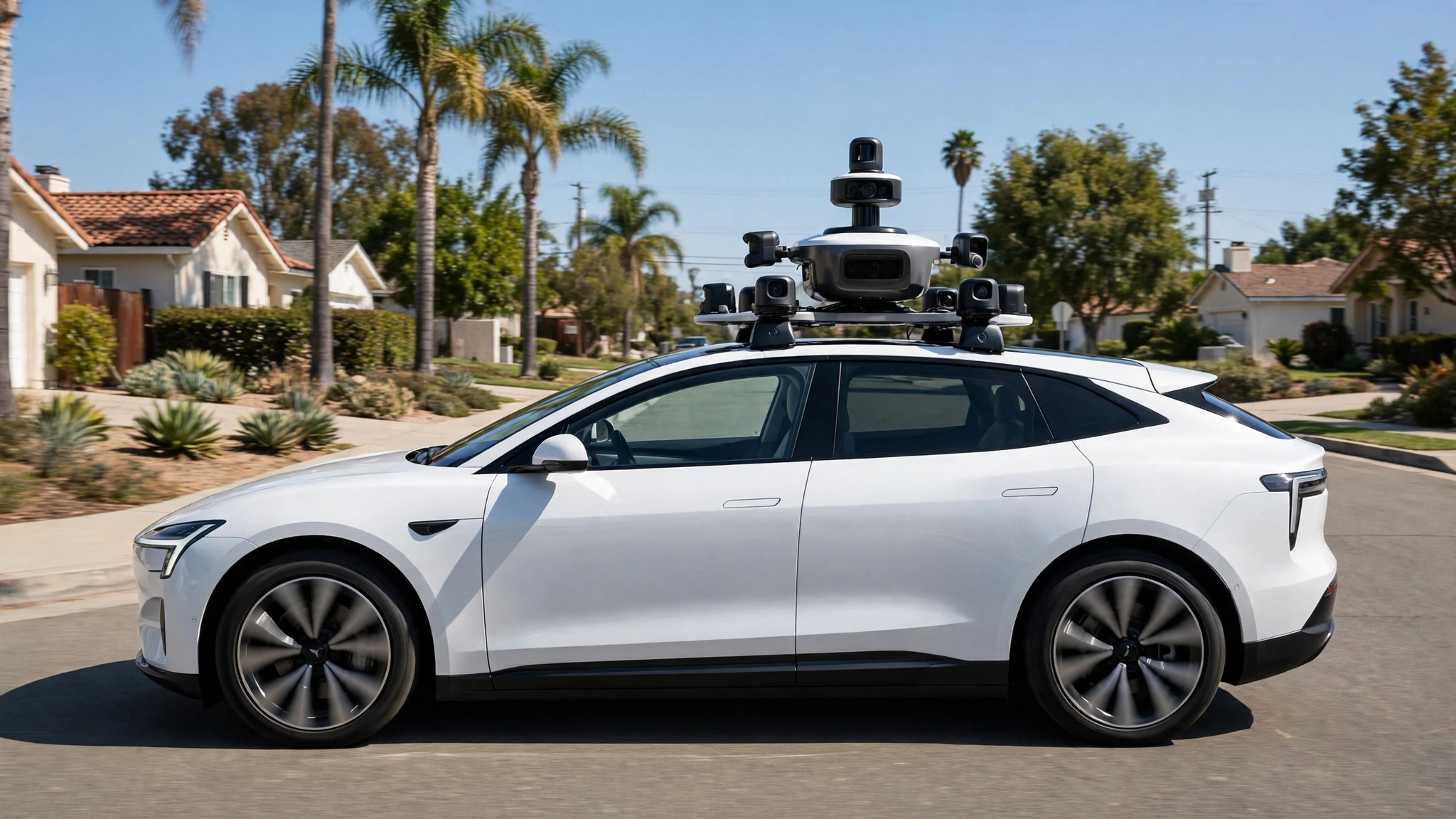
Uber's robotaxis are about to lose their chaperone. Uber, autonomous driving startup Nuro and luxury EV maker Lucid announced on Tuesday that they have begun testing their Lucid Gravity robotaxis on public roads in the San Francisco Bay Area with no safety driver behind the wheel — the last major milestone before the service opens to paying riders.
The driverless testing covers Palo Alto, Mountain View, Los Altos and Sunnyvale, with more Bay Area cities to follow next year. Uber employees will soon be able to take fully driverless rides, and the companies say a commercial launch is planned for the first quarter of 2027.
A year of supervised miles first
Nuro has been testing the Gravity robotaxis around the clock in the Bay Area and Houston since December 2025, always with a human safety operator in the driver's seat. Before pulling the driver, the company ran driverless testing at its closed course in Las Vegas, covering pedestrian encounters and right-of-way violations, alongside large-scale simulation.
The California Department of Motor Vehicles granted Nuro a driverless testing permit for the Lucid Gravity in May 2026, making it one of only six companies allowed to test without a driver on the state's roads, alongside Waymo, Zoox, WeRide, Tensor and AutoMo.
The cars run Nuro's Level 4 Nuro Driver system, using high-resolution cameras, solid-state lidar and radar to perceive the road. Lucid has delivered more than 100 Gravity SUVs for the programme, and Uber — which will own and operate the fleet — has raised its purchase commitment from 20,000 vehicles to at least 35,000 over six years.
The launch has slipped a quarter
The milestone comes with a quieter update: the public launch, originally promised for 2026, is now expected in the first quarter of 2027. When the three companies announced the partnership in July 2025, the plan was to launch in a major US city later the following year, and as recently as June the Bay Area debut was still slated for this year.
Uber has invested heavily in the programme — $500 million in Lucid, up from an initial $300 million, and nearly $500 million in Nuro — and the service will be bookable only through the Uber app. Houston is set to follow the Bay Area as the second market later in 2027.
Waymo is the benchmark to beat
The trio is entering a market where Waymo already runs a paid, fully driverless service across much of the Bay Area, including the Peninsula and South Bay where Nuro is only now pulling its safety drivers. Zoox, meanwhile, has its own driverless vehicles on the Uber app in Las Vegas.
"Removing the safety operator from behind the wheel is an important milestone in our partnership with Nuro and Lucid," said Samarth Kejriwal, Uber's global head of autonomous mobility. "As we prepare for our first driverless passenger rides in the coming months, we'll be working closely together to refine our operations, infrastructure, and the in-cabin experience to ensure a safer, more comfortable ride."
By Hamza Faisal