By Hamza Faisal
The first commercial satellite built entirely in the United Arab Emirates lifted off on Friday aboard a SpaceX rideshare mission, marking a major milestone in the Gulf nation's push to become one of the world's ten leading space economies by 2031.
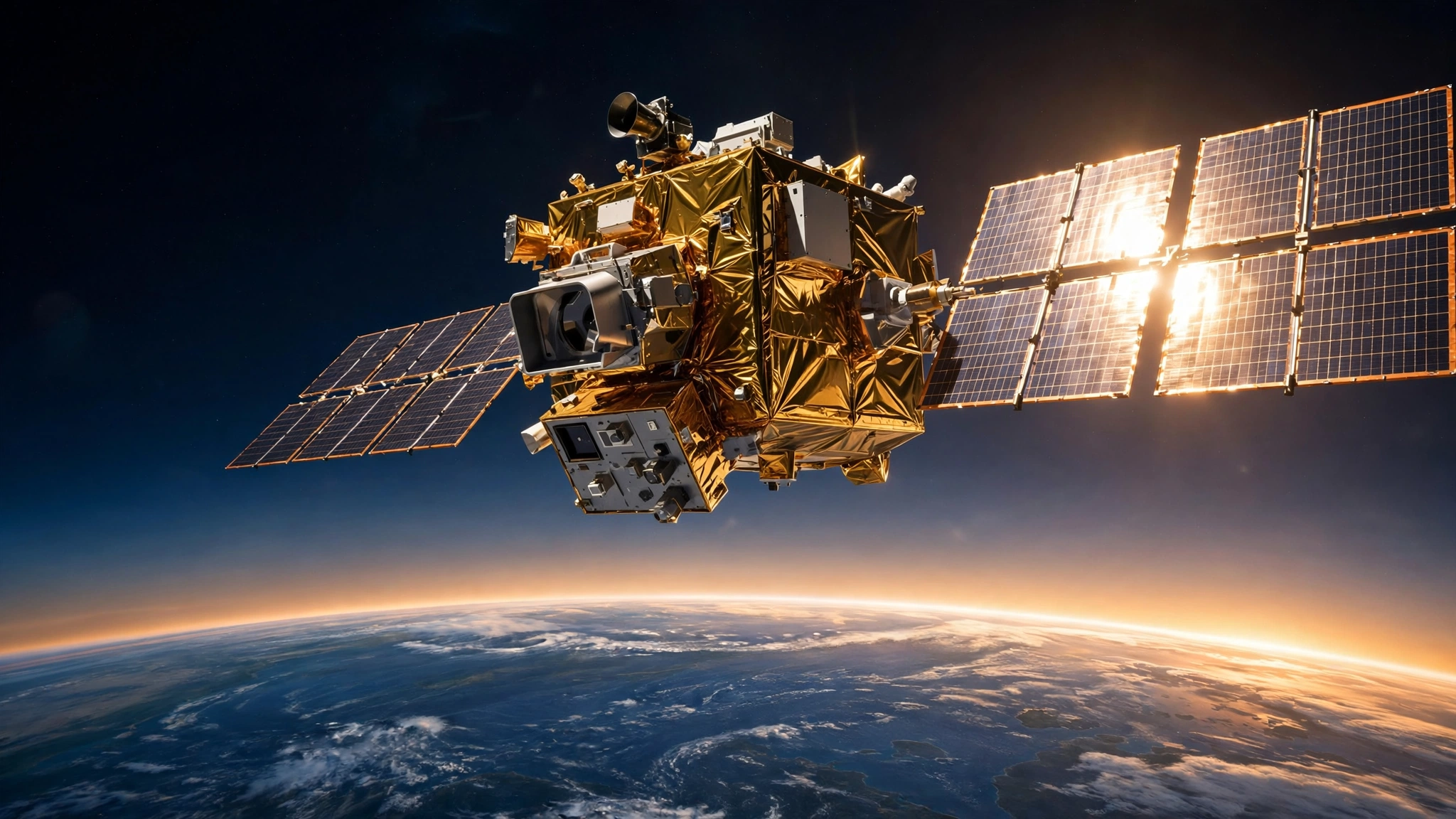
Altair-1, designed, assembled, integrated and tested by Abu Dhabi-based Orbitworks, launched from Vandenberg Space Force Base in California as part of SpaceX's Transporter-18 rideshare mission. After deployment, the satellite successfully acquired a signal and is now in its commissioning phase, according to multiple reports.
The spacecraft was shipped from Dubai World Central to Los Angeles aboard an Emirates SkyCargo Boeing 777 freighter in August, completing the transition from manufacturing in Abu Dhabi to final launch preparations in the United States.
AI processing at the edge of space
What sets the Altair constellation apart is how much thinking the satellites do on their own. Each spacecraft carries five integrated sensors covering optical, shortwave infrared, thermal, hyperspectral and radio-frequency data.
NVIDIA GPUs onboard each satellite process that data in orbit, producing analysis-ready information within minutes and sharply reducing the need for initial ground-based processing. Once the full ten-satellite constellation is deployed in 2027, it is designed to revisit any point on Earth roughly every four hours.
What the constellation will watch
Orbitworks says the AI-enabled Earth observation network will support a broad range of applications: disaster response, maritime awareness, environmental monitoring, food security, infrastructure surveillance and national security.
The nine remaining Altair satellites are scheduled to follow through 2027, building out the UAE's first commercial, AI-enabled Earth observation network from a single proof-of-flight into a global data service.
A private-sector milestone
Orbitworks was formed as a partnership between Abu Dhabi's Marlan Space and San Francisco's Loft Orbital, and opened a satellite assembly, integration and testing centre in Abu Dhabi's Kezad industrial zone.
"The launch of Altair-1 reflects the strength of the UAE's national space ecosystem and its growing capacity to develop and manufacture advanced space technologies," said Dr. Ahmad Belhoul Al Falasi, Minister of Sports and chairman of the UAE Space Agency, congratulating the Orbitworks team.
"Guided by the National Space Strategy 2031, we are bringing together research, industry and investment to enable national companies to innovate, grow and contribute to economic diversification."
Al Falasi added that the satellite demonstrates how capabilities developed in the UAE can deliver solutions with commercial value beyond its borders, opening new markets and international partnerships for Emirati companies.