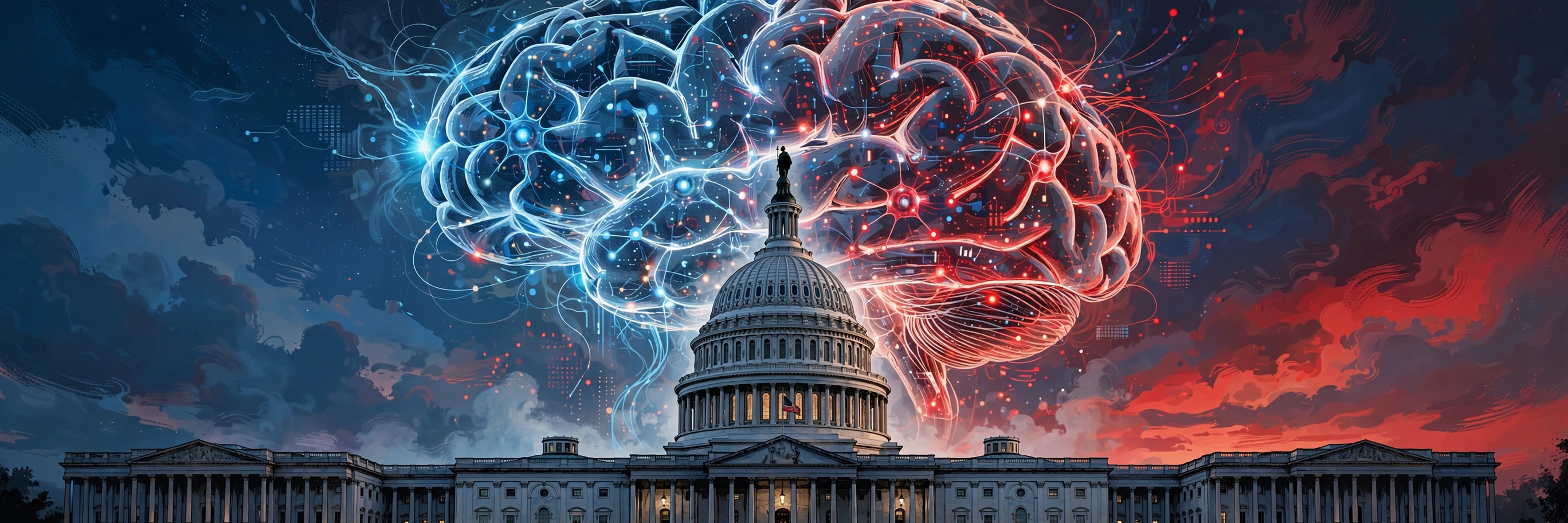
US President Donald Trump has announced plans to create an "AI Force" and appoint a new artificial intelligence czar, pushing back hard against growing calls from technology leaders to slow the development of increasingly powerful AI systems.
Trump revealed the plans in a Truth Social post on Saturday, September 19, comparing the proposed AI Force to the Space Force he established during his first term. He did not provide details about the group's structure, responsibilities, or when it would begin operating, nor did he name a candidate for the AI czar role.
It would be his second appointment to the post: venture capitalist David Sacks served as White House AI czar earlier this year before stepping down into an external advisory position.
"Will not hinder or stifle" the industry
In his post, Trump said the United States should not "hinder or stifle" the growth of the AI industry, arguing that existing criminal and civil justice systems are sufficient to deal with wrongdoing involving the technology.
He dismissed fears that advanced AI could pose an existential threat to humanity as a "HOAX," described AI as the next Industrial Revolution or the internet, and claimed it could eventually account for as much as 25 percent of the US economy. He also stressed competition with China, saying the US is currently leading in AI and that he intends to keep it that way.
Safety debate intensifies
The announcement lands in the middle of a heated debate about the pace of AI development. Anthropic CEO Dario Amodei has called on the industry to slow the development of frontier AI models, a call that OpenAI CEO Sam Altman and Elon Musk have publicly supported.
Meanwhile, New York officials including Governor Kathy Hochul on Monday unveiled the state's new Responsible AI Safety and Education (RAISE) Act, which takes effect in January, with Hochul saying the state would explore additional safeguards — including possible AI "kill switches."
Internationally, a coalition of 20 nations led by Norway and Finland this week called for "control of frontier AI models" and urged the United Nations to explore creating an international institution able to set AI standards and verify compliance, as the UN General Assembly opened in New York. The United States, China, the United Kingdom, France, and Japan are among the major players that have not signed the declaration.
Separately, the US and China agreed to set up a formal "AI dialogue" — a working-level channel for discussing shared AI-safety risks — ahead of a planned Trump-Xi summit in Washington, following talks between US Treasury Secretary Scott Bessent and Chinese Vice Premier He Lifeng in New York.