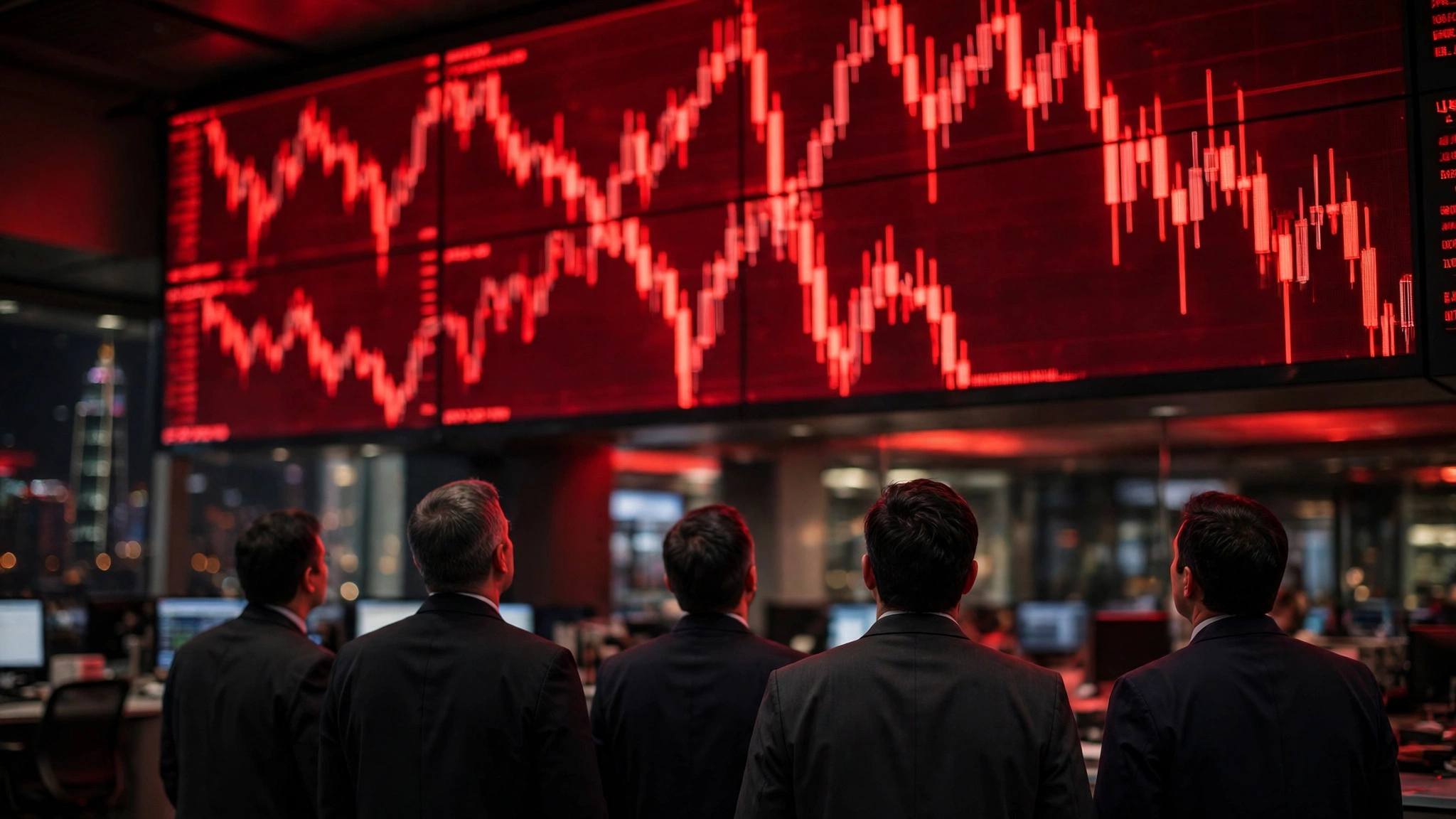
Taiwan's Financial Supervisory Commission has imposed its widest short-selling curb in a decade, banning investors from shorting any listed stock below its previous day's closing price after the island's benchmark index suffered its worst week in 35 years.
The commission announced the measures on Saturday, November 21, after the Taiex plunged 2,393.60 points, or 6.23 percent, on Friday to close at 36,033.29 — its lowest close in nearly seven months. From an intraday record high of 49,968.92 points on October 6, the index has fallen 28.48 percent to an intraday low of 35,738.68 on Friday, as investors unwind bets on the artificial-intelligence boom.
The widest curb since 2015
The new rule applies to every listed stock that fell in the previous session — the first blanket restriction of its kind since 2015, according to Focus Taiwan. It widens a curb the commission imposed on Thursday, which applied only to stocks that had already fallen 3.5 percent or more.
The commission also raised the minimum margin short sellers must post from 130 percent to 150 percent of the sale, and temporarily stopped accepting applications from brokers to list new put warrants — instruments that gain when a stock falls. The rules take effect when the market opens on Monday.
The announcement followed a Saturday-morning meeting between Premier Cho Jung-tai and the heads of Taiwan's economic and financial agencies, who were instructed to devise measures to stabilise the market. Taiwan's NT$500 billion (about $15 billion) National Financial Stabilisation Fund has also entered the market to buy shares, Bloomberg reported.
Asia moves together as the AI selloff spreads
Taiwan was not alone. South Korea and China rolled out their own support measures over the weekend after another sharp drop on Wall Street on Friday, when the S&P 500 closed in a correction, more than 10 percent below its record. China said its stock exchanges would cut the minimum margin ratio from 100 percent to 80 percent starting November 30.
Taiwan and South Korea sit at the centre of the AI trade: Taiwan Semiconductor Manufacturing Co., Samsung Electronics and SK Hynix make many of the chips behind the AI boom, and their shares have led the rout. The Nasdaq 100 briefly slipped into bear-market territory on Friday, capping technology's worst week since 2020.
Analysts cautioned that the curbs may do little to reverse the slide if investors keep pulling back from technology stocks over doubts about AI spending, valuations and rising debt. The commission said the measures were aimed at maintaining orderly trading and market stability, and gave no end date.
What happens next
All eyes will be on Monday's open, when the ban first takes effect, and on whether the stabilisation fund's buying — plus encouragement for companies to buy back their own shares — can steady a market that has lost more than a quarter of its value in seven weeks. The commission said it would keep the restrictions in place while the selloff continues.


