Shanghai Sudo Technology Co., Ltd., better known as Sudo AI, has raised more than RMB 1 billion — roughly $149 million — in a new financing round, according to a September 30 report by Sina/Lieyunwang, as China's race to put intelligent robots onto factory floors intensifies.
The round was jointly led by Futeng Capital, the Shanghai Guotou Pioneer Fund, and Guotai Haitong, with Daohe Long-term, Dongfeng Asset, China Development Bank Financial, Langma Peak, and Liangtu Zhice joining as new backers.
Xiaomi and other existing shareholders followed on, according to the report, which describes the financing as aimed at full-stack technology development and industrial validation.
Teaching robots in virtual worlds
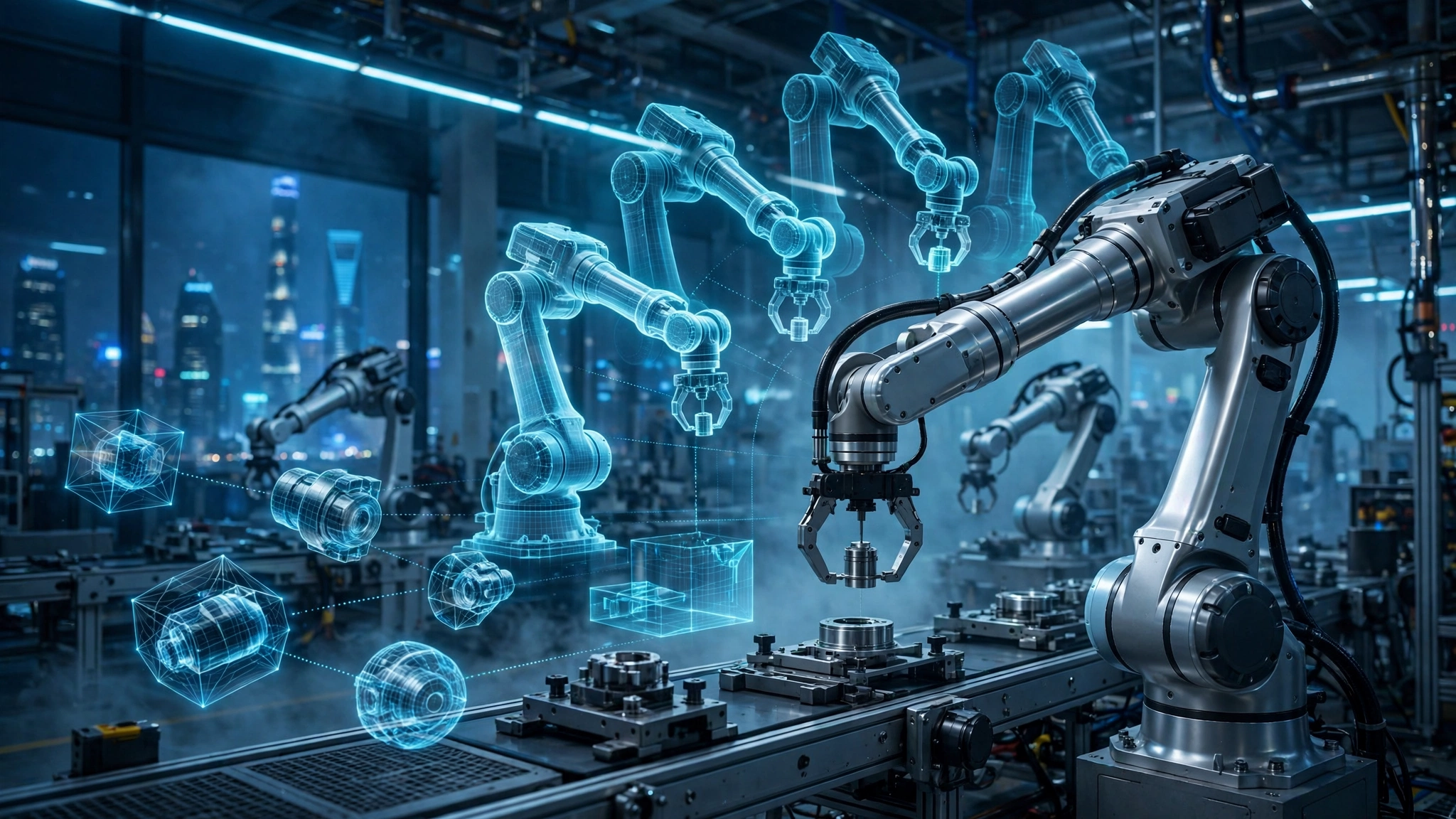
Sudo AI builds foundation models for robot manipulation, training them in vast simulated environments where machines learn across millions of scenarios before ever entering a factory, warehouse, or home.
Its sudo R1 robotic system is designed to reliably handle objects it has never encountered before, without depending on real-world manipulation data — tackling the data bottleneck that has long held back deployable robots.
Industry watchers note that proving robots can work reliably alongside existing production lines is the sector's biggest commercial hurdle, and Sudo AI is pitching its simulation-first approach as the answer.
The new capital is earmarked for full-stack technology development and validation across industries, customers, production lines, and workstations.
A pedigree in 3D vision and embodied AI
Sudo AI was co-founded by embodied AI and 3D vision researcher Hao Su, a co-author of the influential PointNet research who now serves as the inaugural dean of Fudan University's Institute of General Physical Intelligence, alongside serial entrepreneur Robin Han.
Cherubic Ventures was the company's earliest institutional investor.
China's robot-funding frenzy continues
The round is the latest sign of the capital pouring into Chinese embodied AI.
Xiaomi — itself a Sudo AI shareholder — recently unveiled U0, a 38-billion-parameter world model for robot data synthesis that reportedly lifted a manipulation policy's real-world success rate from 36.9% to 63.2%, while DeepSeek took a $20.8 million stake in humanoid maker Unitree.
The funding also reflects a broader policy tailwind: Beijing has named humanoid and embodied robotics a strategic priority, and local governments across China are racing to build robot training centers and manufacturing hubs to anchor the industry.
With this raise, Sudo AI joins a growing cohort of Shanghai robotics startups backed by a mix of state capital, industrial giants, and deep-tech investors betting that the next leap in AI happens not on screens, but on factory floors.
By Hamza Faisal