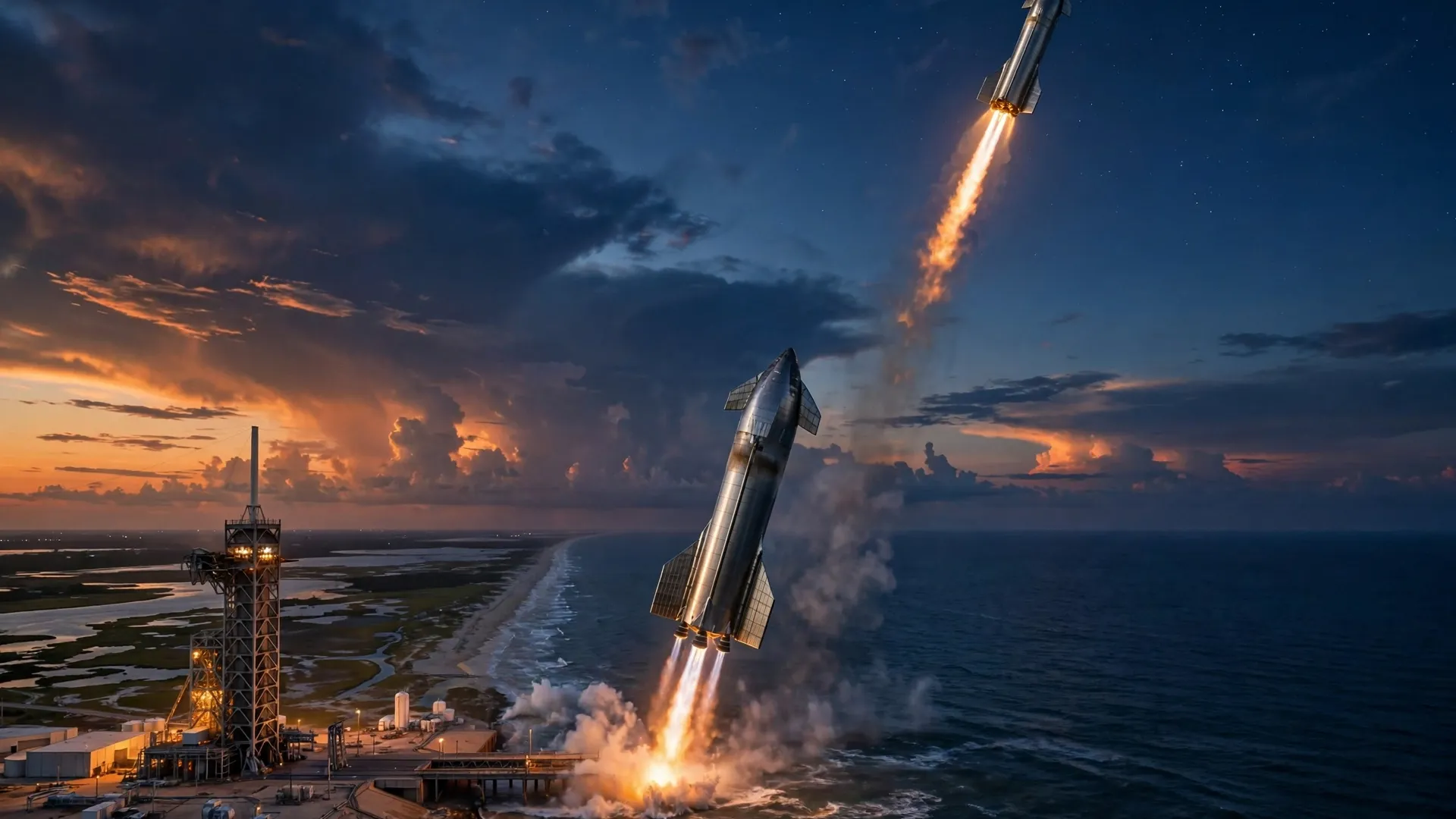
SpaceX launched Starship on its 15th test flight from Starbase, Texas, on Friday evening, sending the largest rocket ever flown toward orbit on a mission designed to end with both stages back at the launch tower. The first half of that plan did not work out: minutes after liftoff, SpaceX called off the planned catch of the Super Heavy booster, and the 71-metre booster splashed down in the Gulf of Mexico instead.
The upper stage, Ship 42, kept flying. It reached orbit and began deploying 26 next-generation Starlink V3 satellites, and it is now coasting through space on a roughly 22-hour loop around Earth. If all goes to plan, it will attempt the first-ever catch of a Starship spacecraft at the launch tower on Saturday afternoon, US time, in the early hours of Sunday in Pakistan.
Booster catch called off minutes after liftoff
Liftoff came at 5:47 p.m. ET from Orbital Launch Pad 2 at Starbase, with the Super Heavy booster's 33 Raptor engines pushing the 124-metre stack off the pad. The booster separated, fired its boostback burn and headed back toward the launch site, where the tower's giant mechanical arms were waiting.
About six and a half minutes after launch, SpaceX waved off the catch. Florida Today's live coverage reported that an unknown issue caused the abort, while Tesla Oracle's live updates said the catch was aborted for safety reasons at the launch pad. The booster descended instead to a designated splashdown area in the Gulf off the Starbase coast.
SpaceX had said before the flight that it would only attempt to catch either stage if it was safe to do so, with a splashdown as the fallback. The company has previously caught the Super Heavy booster three times with the tower arms, most recently on Flight 8.
Ship 42's long day in orbit
Ship 42, nicknamed "Don't Panic", continued into low Earth orbit after separation and deployed its payload of 26 Starlink V3 satellites. It is only the second operational Starship mission to carry Starlink satellites to orbit, after Flight 14 in September.
The ship will now circle Earth about 14 times over roughly 22 hours. Flight controllers have checkpoints along the way: if anything looks wrong, they can bring it down early into pre-cleared ocean zones near Hawaii or off the coast of Chile. If the ship passes its health checks, it will re-enter over the Indian Ocean and fly back to Starbase, where the tower arms will try to catch it, something never attempted before.
Success would make Flight 15 the first complete round trip of an orbital launch system: launch, orbit, and both stages home to the same pad they left from.
Why the double catch matters
The US Federal Aviation Administration issued the launch licence on Friday, including permission for both stages to return to Starbase. The ship's return path flies over populated areas.
Flight 14 in September reached orbit and deployed its Starlink satellites, but ended early after a Raptor engine issue, with the ship splashing down in the Pacific and the booster in the Gulf. Full and rapid reuse is central to SpaceX's plans for Starship, which is designed to fly again quickly after each mission rather than being discarded.
A caught Ship 42 would be a major step toward that goal, and toward the fully reusable orbital rocket SpaceX has been working toward since the programme began. But with one stage already in the Gulf, the second half of the mission is still a day away.