South Korea's education minister has resigned after the country's biggest exam descended into chaos over AI-assisted cheating.
Choi Kyo-jin stepped down on Sunday, taking responsibility for a string of last-minute rule changes meant to stop candidates using artificial intelligence to cheat in the College Scholastic Ability Test, known as the Suneung. President Lee Jae Myung accepted the resignation within an hour and ordered a comprehensive review of how national exams are run.
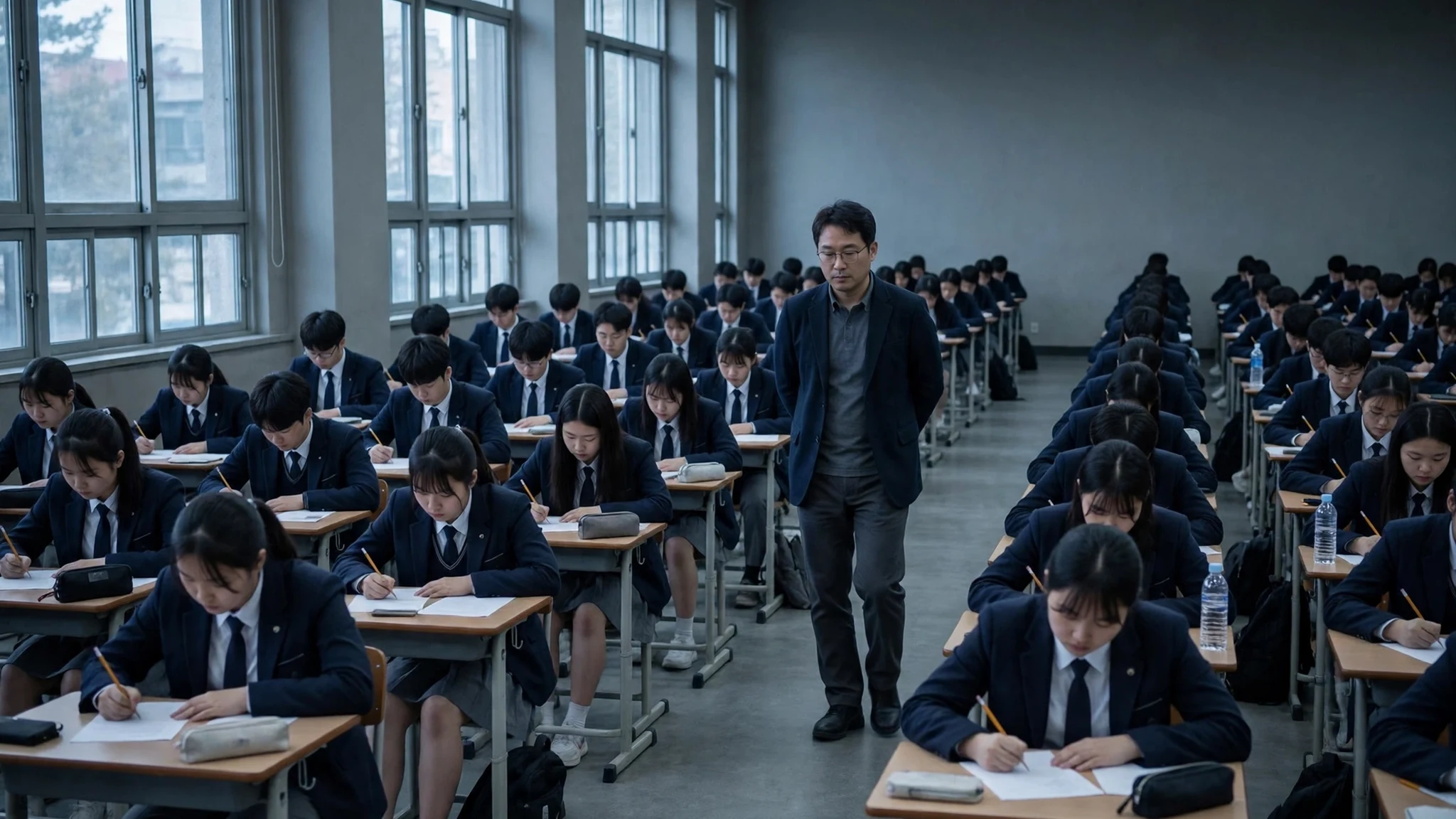
The Suneung is no ordinary test. The eight-hour exam, taken last Thursday by more than 550,000 candidates at 1,312 centres across the country, decides which university a student can attend — and in South Korea, that result can shape a whole career. When its integrity came into doubt, the fallout reached the cabinet.
A confession four days before the exam
The crisis began on November 15, when Han Won-seok, the top scorer in this year's certified tax accountant exam, admitted he had cheated using a miniature camera, a smartphone and generative AI. He answered 159 of the exam's 160 questions correctly.
Han confessed in a video posted on his lawyer's YouTube channel, saying he had photographed questions with the tiny camera and sent the images to an AI system for answers. The admission landed four days before the Suneung, and it set off alarm bells across the education ministry: if the technique worked in one national exam, candidates might try it in the biggest one of all.
The ministry had initially focused its anti-cheating measures on smart glasses. Overnight, the threat had widened to any device small enough to hide.
Rules that changed up to the night before
What followed was a week of rapidly shifting rules. The ministry banned mechanical pencils, correction tape and erasers, and told candidates they could bring only black pencils into the exam hall. Buttons on clothing were covered with stickers to block miniature cameras. Extra staff were drafted in — 8,400 in total, including 1,800 assigned to police smart devices and 6,600 corridor supervisors — and officials even considered radio-frequency detection equipment.
The changes kept coming until the eve of the exam, and they confused the very people they were meant to protect. At a parliamentary hearing on November 16, Choi admitted he was not confident the measures would work, a remark that drew heavy criticism and fuelled calls for him to go.
During the exam itself, the ministry said 111 suspected cheating cases involving electronic devices were detected.
What happens next
With the exam over, Choi said in a statement that he felt responsible for the confusion and was stepping down. Lee's decision to accept the resignation within an hour was widely read in Seoul as an effective dismissal, and the president told the prime minister to lead a full post-mortem of the exam's handling.
A successor will be named through established procedures, the presidential office said, while the review will cover exam management and the laws around it.
The episode has become a case study in how quickly artificial intelligence is outrunning exam security — and how a panicked scramble to catch up can do as much damage as the cheating itself. For South Korea, where the Suneung is treated as a national event, the lesson is now a political one: the next exam needs rules that are settled long before the candidates sit down.


