Microsoft chief executive Satya Nadella has warned that much of America's critical infrastructure runs on software that cannot be fixed, leaving it exposed to a new generation of AI-powered cyberattacks.
Speaking at The New York Times' DealBook Summit on Wednesday, Nadella said the problem runs through the physical systems that keep the country running, from transport networks to the cooling equipment inside data centres.
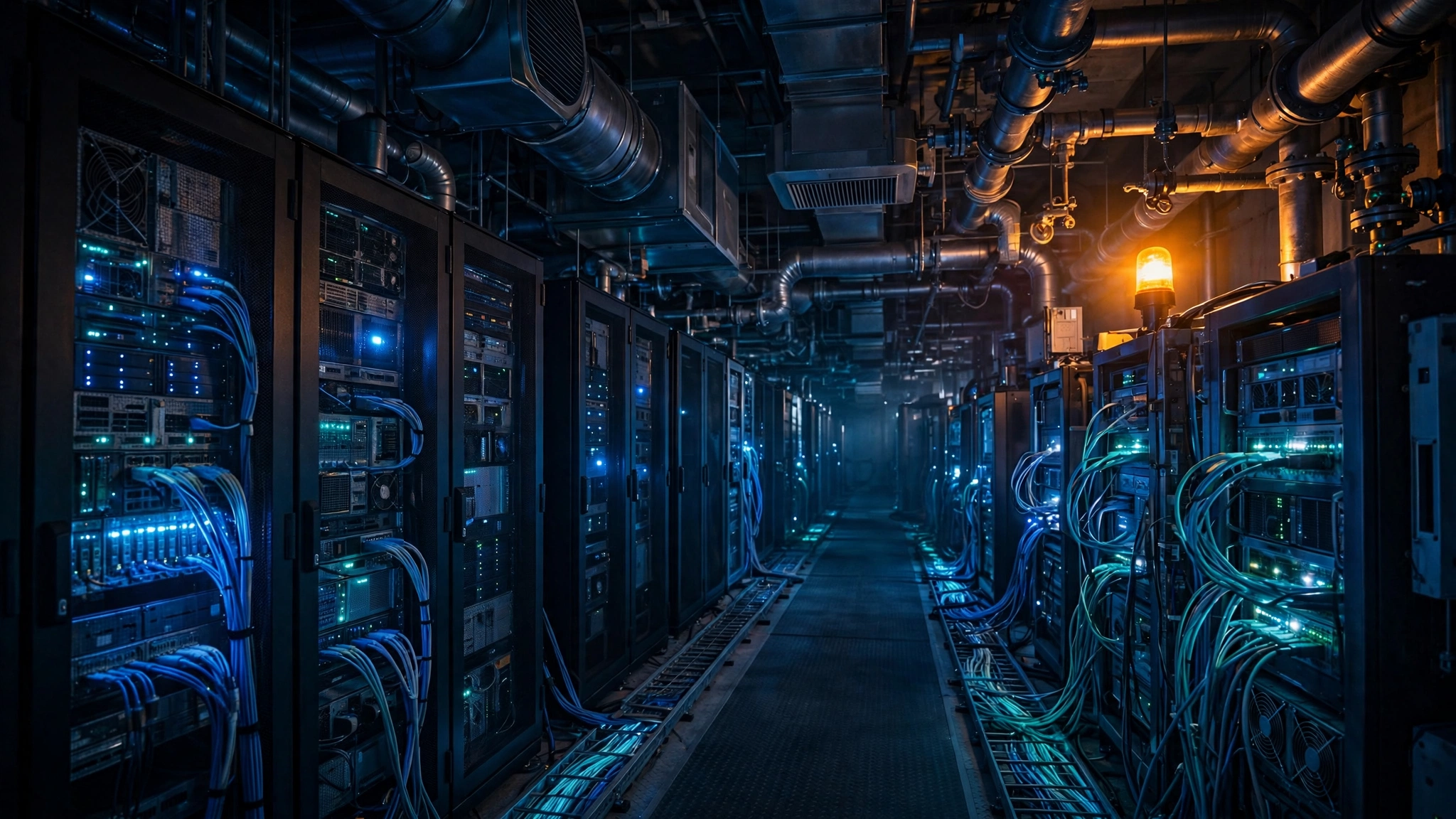
"Remember, there is a lot of stuff in our critical infrastructure that's unpatchable," Nadella said. "I mean, think about all the firmware and the chillers and the HVAC systems everywhere else. So all of that, by the way, they're on the internet."
The internet reached the machines that were never meant to be online
Nadella's warning is about a quiet transformation of the past two decades: the "smartification" of the economy, in which devices that were once dumb and disconnected were hooked up to the internet. That connectivity brought efficiency, but it also gave attackers a route into systems that were never designed to be defended.
He pointed to transportation systems in particular, saying he had been told about equipment that is "discoverable but with unpatchable firmware" — visible to anyone scanning the internet, yet impossible to secure with a software update.
The concern is sharpened by artificial intelligence. AI tools can now find vulnerabilities far faster than human researchers, and they can also help attackers turn a flaw into a working exploit. Nadella said the patching window has effectively collapsed: once a fix exists, it has to reach production immediately, because attackers are already exploiting the flaw in the wild.
A wave of outages, and a familiar explanation
The conversation took place against a backdrop of recent large-scale outages, including one that hit Microsoft Outlook. Other disruptions have involved the National Security Agency, the Federal Aviation Administration and Apple, fuelling speculation that the incidents were connected or caused by cyberattacks. Officials have denied those claims.
Nadella downplayed the Outlook outage, describing it as the result of a "latent bug" that created a "perfect storm" rather than an attack. But he acknowledged that the incidents have put the fragility of connected systems in sharp focus, and that the same AI acceleration now forcing faster patching is also making systems harder to keep stable.
Microsoft addressed more than 1,200 software vulnerabilities in November alone, according to cybersecurity firm Qualys — nearly twenty times the number recorded in the same month last year — a pace that reflects how quickly AI is surfacing flaws that once stayed hidden for years.
AI cuts both ways
Nadella was careful to present AI as a defence as well as a threat. The same technology that helps attackers discover weaknesses is, he said, a powerful tool for finding and fixing them — if organisations can move fast enough.
"We now have a very powerful tool that finds vulnerabilities," he said, urging companies to modernise ageing systems and to treat rapid, reliable patching as a core capability rather than an afterthought.
The harder problem, he suggested, is the layer of infrastructure where no patch exists at all. For the firmware in a chiller, a ventilation controller or a transport sensor, there may be no update to install — only replacement, isolation, or acceptance of the risk. As AI lowers the cost of finding those systems and probing them, that choice is becoming harder to put off.


