By Hamza Faisal
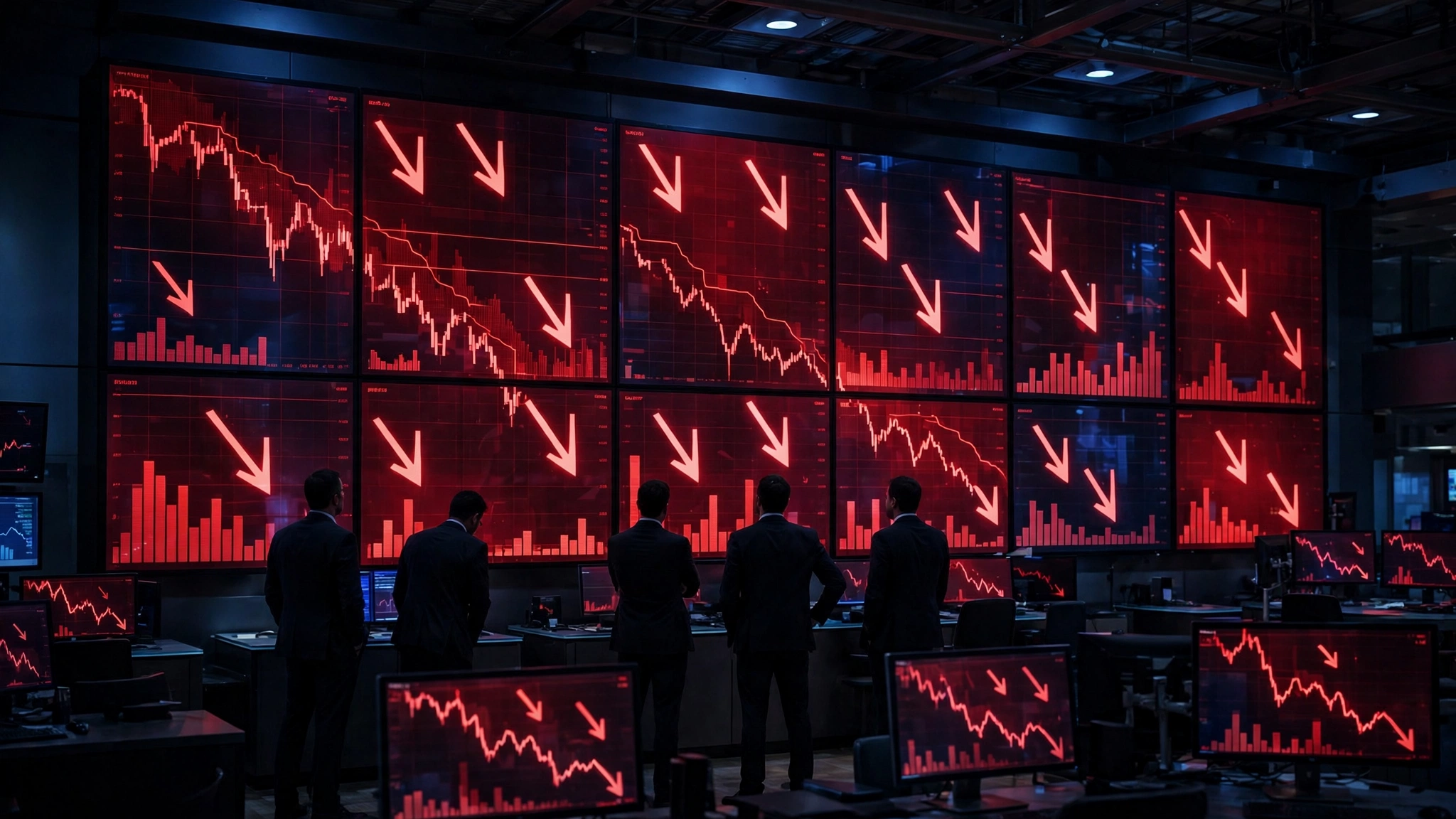
Wall Street's artificial intelligence rout turned into a full-blown market correction on Friday, as the S&P 500 slid more than 10 percent below its record high and the Nasdaq wiped out every gain it had made this year.
The S&P 500 fell 3.7 percent on Friday, its seventh consecutive daily loss — the longest losing streak since February 2020, when markets first braced for the Covid pandemic. The benchmark is now in what investors call a correction, having fallen more than 10 percent from its all-time high on October 6. It is the index's first correction since March 2025.
The Nasdaq Composite dropped 5.28 percent on Friday and is now down more than 2 percent for the year. Just six weeks ago it sat at a record high, up as much as 18.7 percent on the year. It has since fallen 18 percent from that peak. Both the S&P 500 and the Nasdaq are on course for their worst week since early April 2025, when tariff announcements rocked global markets. The Dow Jones Industrial Average fell 950 points, or 1.93 percent, on Friday and lost 8 percent for the week — its worst week since March 2020.
Nvidia posts its worst week since 2008
Nvidia, the chipmaker at the centre of the AI trade, tumbled 22.7 percent over the week, its worst weekly performance since October 2008. The company has plunged 47 percent since its October 6 peak, shedding about $2.7 trillion in market value. Other chip stocks followed: AMD fell around 11 percent on Friday, Micron dropped more than 12 percent, and Broadcom declined 9.2 percent, while the Philadelphia Semiconductor Index fell 7 percent.
Even Anthropic, whose record stock market debut was supposed to steady nerves, fell again on Friday, closing at $88.30 — barely above its $83 IPO price. CoreWeave, the cloud provider backed by Nvidia, slumped 12 percent on Friday to $39.46, wiping out all gains since its March 2025 debut at $40 a share.
What is driving the selloff
Investors have been pulling money out of the AI trade for weeks, questioning whether the sector's heavy spending and lofty valuations are justified. The selloff gathered pace as traders also weighed the prospect of higher interest rates and restrictions on data-centre expansion. The CBOE Volatility Index, Wall Street's fear gauge, jumped to 38.50 this week — its highest level in 19 months, up from 19.3 a week earlier.
Technology stocks were among the worst performers on Friday, with the sector falling more than 5 percent in a single session. Defensive corners of the market held up better: consumer staples gained, and health care shares also attracted buyers as investors looked for shelter.
Is the bottom near?
The scale of the decline has some investors wondering whether technology stocks are starting to look cheap. But with the S&P 500 and the Nasdaq both in correction and the Nasdaq down for the year, the mood on trading floors remains cautious. As one strategist put it, there is a real exodus out of tech stocks — and for now, buyers are in no hurry to step back in.
Hamza Faisal covers technology and markets for Paktechstan.


