By Hamza Faisal
The United States is not under a coordinated cyberattack, Secretary of State Marco Rubio said on Wednesday, telling reporters in Manila that a week of failures across aviation, banking and technology had no connection to one another — and no link to hackers or foreign governments. "We have zero evidence whatsoever," Rubio said, adding that investigators found nothing pointing to cyber hackers, criminals or another nation state.
The statement, delivered during an Asian tour alongside President Donald Trump, was the government's most senior answer yet to a run of outages that disrupted email, grounded flights, interrupted banking and even hit the National Security Agency's internal network in the space of five days. Director of National Intelligence Jay Clayton gave the same assessment to the House Homeland Security Committee, and Homeland Security Secretary Markwayne Mullin told CNBC he could say "with complete certainty" that the country was not under attack.
Six failures in six days
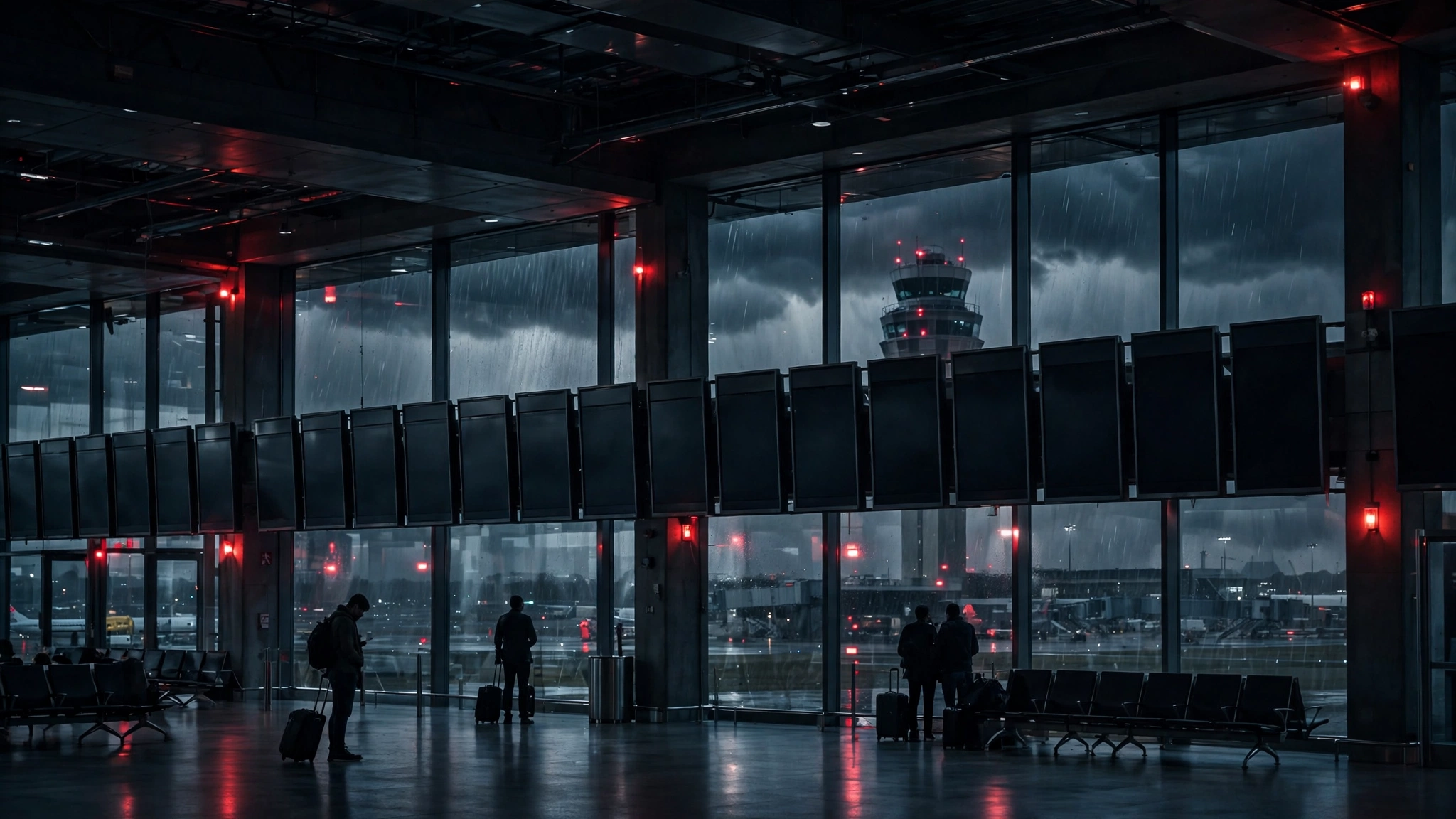
The sequence began on Thursday, November 12, when a worldwide Microsoft outage took Outlook, Teams and Copilot offline for about 36 hours across 70 countries. The next day, the Federal Aviation Administration imposed a nationwide ground stop on departing flights that lasted more than four hours, with more than 2,000 flights cancelled.
On Monday, a technical fault at United Airlines delayed about 150 flights, while a software failure at JPMorgan Chase disrupted account access and transactions — including money sent through Zelle. On Tuesday, Apple users hit problems with iCloud and Apple Pay, and the NSA's classified internal network went down for a time. The list has since grown, with Wells Fargo, Bank of America, US Bank, Marriott and the National Weather Service also reporting problems.
A different cause every time
Each organisation blamed something different. Microsoft traced its outage to a latent software defect from a network upgrade in July that had gone undetected. The FAA linked its failure to outdated equipment overwhelmed by a flood of data — its telecoms network was hit with about 1,000 connection attempts every four to five seconds, destabilising 17 of its 22 en route air traffic control centres. JPMorgan cited a temporary software bug in on-premises hardware; Apple blamed an internal update; the NSA described a temporary degradation during scheduled maintenance, later linked to patches for a software vulnerability.
Clayton told lawmakers the pattern had a simpler explanation: many institutions are taking systems offline to patch and upgrade them, and some are not coming back as expected. Cybersecurity specialists saw no evidence of a connection either, and every affected company or agency said there had been no cyber incident.
The questions that remain
Democrats, who won the November midterm elections, are demanding more. Their leader in Congress, Hakeem Jeffries, listed the Microsoft incident, the ground stop and the NSA's servers, and demanded the administration explain itself to Congress.
Rubio closed with a warning: as technology becomes more embedded in daily life, the vulnerabilities it carries become more real. The administration, he said, is still investigating and remains on the lookout for any potential attacks — even as every sign so far points to a week of separate accidents, not an assault.


