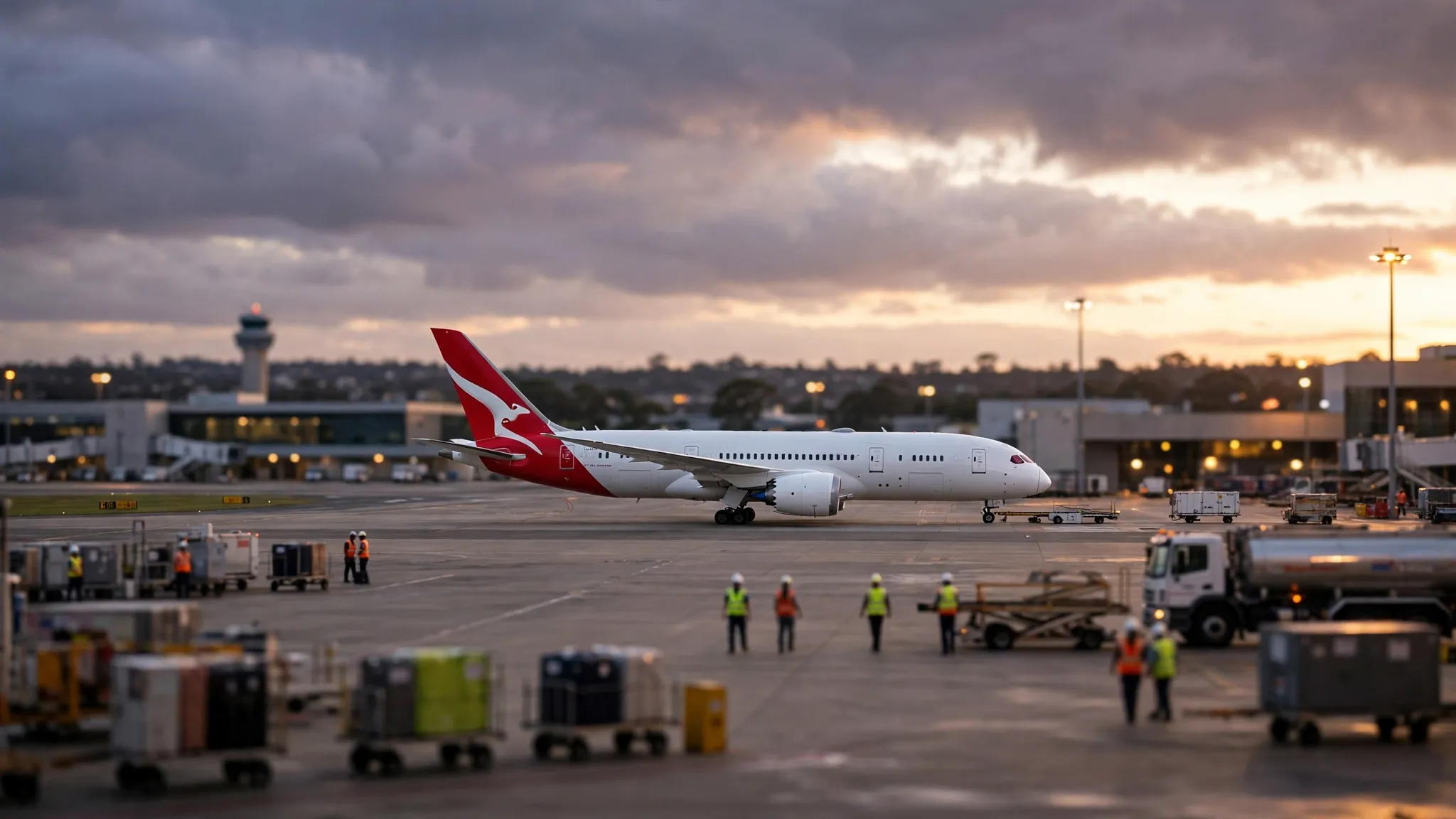
Qantas will cut about 850 corporate jobs in Australia and move most of the work to India under a multi-year deal with consulting firm Accenture, the airline told staff on Tuesday, framing the restructure as part of a push to modernise its technology and accelerate its use of artificial intelligence.
Chief executive Vanessa Hudson told staff in an email that the roles would go "over the coming years", with the first changes due by mid-2027. The cuts affect roughly 3 per cent of Qantas's 28,000-strong Australian workforce, and the first phase will hit staff in finance, procurement, human resources and marketing.
Under the deal, some corporate functions will move to Accenture, with most of the work delivered by its teams in India and some remaining in Australia. Qantas and Accenture will together redesign and simplify parts of how the airline's back office works, cutting duplication across systems that have grown up separately over decades.
An airline running on 1,000 ageing systems
Hudson pointed to the scale of the technology problem behind the decision. Qantas runs more than 1,000 back-office software applications that were never designed to work together, and spends more than AU$1 billion a year on technology. The Accenture partnership is meant to overhaul that legacy estate, and the airline said the work Accenture takes over would later be further automated with AI.
"Standing still is not an option," Hudson told staff, according to reports of the email, describing the changes as necessary to build a more modern and competitive organisation. The airline said it would consult affected employees and their union over the coming months.
Unions push back on broken assurances
The Australian Services Union, which represents Qantas staff, said the airline had previously assured it there was no plan to send jobs offshore under the Accenture deal. The union said it was meeting affected members on the day the cuts were announced, and the industrial fallout is only beginning.
The offshoring plan, known internally as Project iQ, was first reported in August. Qantas has been here before: the airline previously lost a High Court case over its outsourcing of ground-handling work, so the new move is likely to face close scrutiny from unions and regulators alike.
AI is reshaping the back office
Qantas has not said how many of the 850 roles will disappear to automation versus simply relocating overseas, nor has it put a figure on the savings the deal is expected to generate. What is clear is the direction of travel: routine corporate work is being consolidated, handed to a global services firm, and queued up for further automation.
The announcement lands as the airline reports strong financial results — Qantas announced a net profit of $1.3 billion — a contrast unions are unlikely to let pass. For staff in the affected teams, the message is that the airline's AI-driven overhaul is no longer a strategy document. It is a redundancy notice.