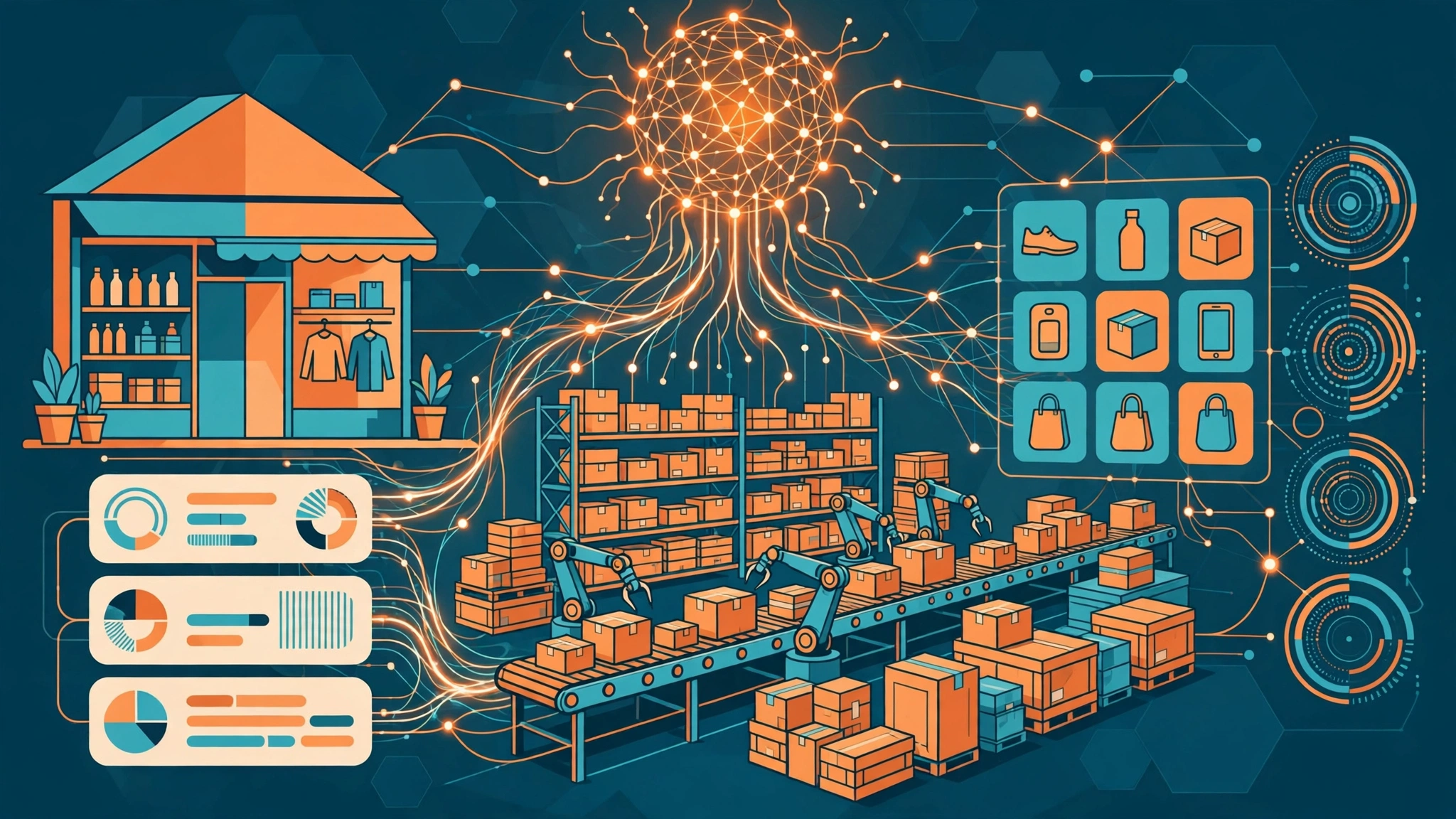
Pine AI has introduced Pine Computer, a cloud computer designed around AI models, and opened it to developers in a private beta. The San Francisco company says any developer product can spin up a Pine Computer on demand, hand it a job, and get back finished work — files, records, and answers.
Today's AI agents, Pine AI argues, work through computers built for humans: a screen to look at, a mouse to point with. At each step they look at a picture of the screen, work out what is on it, act, and look again — spending much of their growing capability working around a machine built for someone else.
Pine Computer starts from the model instead. It reads a web page as structure — what is on it, what can be done with it, what just changed — rather than reconstructing it from a picture each time. Pictures stay for people: a live screen can sit inside the developer's product so users can watch the work, take the controls, and hand them back.
A computer designed around the model, not the mouse
For developers, the entry point is an SDK: a product hands Pine Computer a task, follows its progress, and receives the result. Pine runs the computer, the intelligence in it, the browser, and the isolation; the developer builds the experience around it. Each instance runs sealed in its own sandbox with the developer's API keys kept in their own hands. Developers can also bring their own model, though that path works from screenshots for now.
Benchmarks and real-world use
Pine AI claims, based on its own preliminary tests, that Pine Computer is 2 to 5 times faster than AI running on conventional computers. On SaaS-Bench v1.1, a public benchmark of 106 business workflows across 23 applications from UniPat AI, it posted the highest checkpoint score in the publisher's table: 78.3 percent, against 74.3 percent for Opus 5 with Claude Code and 71.1 percent for GPT-5.6 Sol with Codex.
The fine print matters: a checkpoint score is the share of a task's checkpoints passed, not tasks finished — and Pine Computer completed fewer whole tasks than those systems (27.4 percent versus 31.1 and 29.2 percent). On cost, Pine says GPT-5.6 Luna, a lower-cost model, came to about $1.02 per task in model cost, against $26.50 and $20.50 for the rival systems.
Pine AI says it already uses Pine Computer in its own assistant and in enterprise deployments. In one deployment automating audits, the customer's team now takes on 50 percent more work with the same people, the company says. Andrew Mackenzie, co-founder of Subliminal, which evaluated Pine Computer for its product, said the company had "thought about all of this and built it all in."
An open bet on the AI computer
"We spent years making the model smarter. Now, we're making the computer worthy of the model," said Dylan Wang, Pine AI's co-founder and chief architect. Wang said Pine plans to open its designs, implementations, and specifications and work with others on what a computer built for AI should be: "We don't believe the future of computing for AI should belong to one company."
The launch expands Pine beyond its roots as the Palo Alto startup that raised a $25 million Series A last December for a consumer AI agent handling digital chores. Pine AI says its systems have handled millions of real-world tasks, and earlier this year its Pine Voice system topped the tau-three-Voice benchmark from Sierra and Princeton researchers, ahead of xAI, OpenAI, and Google. Pine Computer is in private beta; developers can join the waitlist at pinecomputer.io.