By Hamza Faisal
The Pentagon is weighing a loan of $15 billion to Hadrian Automation, a California startup that builds robot-run factories for military parts — a deal that would dwarf every federal loan the department has made in recent memory and has already drawn scrutiny over the company's ties to Donald Trump Jr.'s venture firm.
ProPublica reported on November 24 that the Pentagon's Office of Strategic Capital is in preliminary talks on the loan, citing interviews and internal Pentagon records. The money would fund a dozen new automated factories producing munitions, submarine components, drones and other equipment, in partnership with other defense and commercial manufacturers.
A Pentagon spokesperson described the discussions as being in their "early stages" and disputed the $15 billion figure. Hadrian said the report mischaracterized the talks, arguing the proposed loan contemplated a consortium of manufacturers across the American industrial base rather than a single company. An administration official separately called the proposal "extremely early stage."
A loan ten times anything before it
The scale is what makes the proposal stand out. At $15 billion, the loan would be ten times larger than the biggest conditional loan the Office of Strategic Capital has agreed in its recent lending spree — a $1.5 billion deal for semiconductor component maker Wolfspeed.
It would also be worth nearly twice Hadrian itself. The startup was valued at about $8 billion after a $1.37 billion Series D round in August, and the federal government is effectively its only major customer. Hadrian won a $900 million manufacturing contract from the US Navy in March 2026.
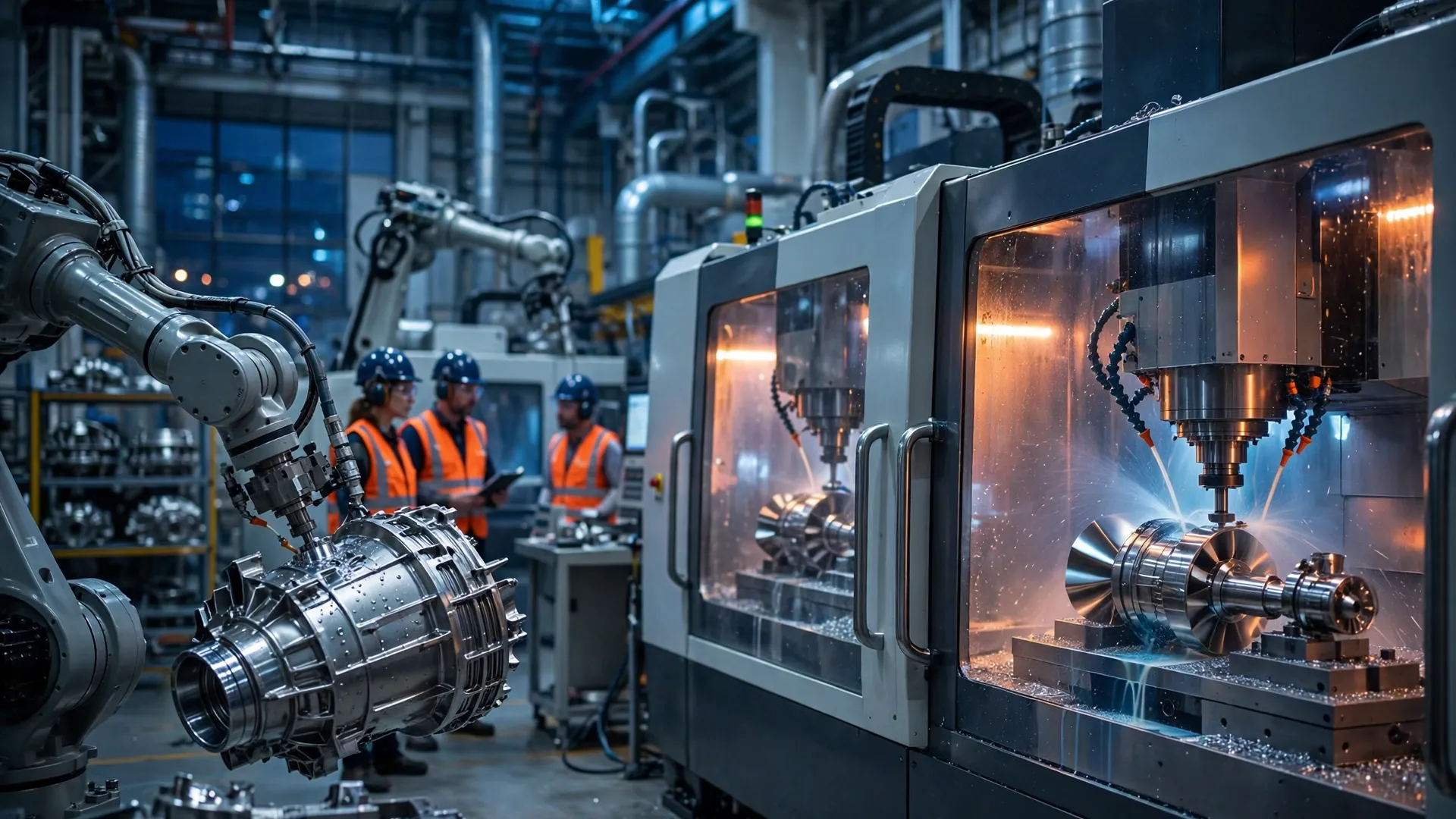
Founded in 2020 by Chris Power, Hadrian runs factories where software and robotics make precision components for defense and aerospace. Its pitch is that the Navy cannot hire skilled machinists fast enough, so production has to be automated. The company operates four manufacturing sites totalling about three million square feet and plans another one-million-square-foot research plant in the Bay Area.
The Trump Jr. connection
Much of the attention has focused on who backs Hadrian. Its investors include 1789 Capital, the venture firm where Donald Trump Jr. became a partner after his father's 2024 election victory. The firm first invested in Hadrian in July 2025 and took what the company called "major participation" in the August round.
The Pentagon said no company receives preferential treatment and that "outside affiliations, investors, or political connections play absolutely no role" in funding decisions. But the timing has invited scrutiny: the loan is under consideration weeks before Democrats take control of both chambers of Congress, and Rep. Jamie Raskin has opened a probe into companies tied to 1789 Capital.
The Defense Department's inspector general has also launched an audit into how the department issues awards, examining controls meant to prevent improper influence and protect nonpublic information.
What happens next
No approval has been announced, and the Office of Strategic Capital's decision is the next milestone. The office was created by Congress under the Biden administration to mobilize private capital for technologies critical to national security and reduce dependence on adversarial supply chains.
Whether the Hadrian loan survives that process — and the political scrutiny around it — will be a test of how far the Pentagon is willing to go in betting public money on automated defense manufacturing.


