The Pentagon is asking three of the most polarizing figures in American technology and politics to tell it what warfare looks like in the decades ahead.
US Defense Secretary Pete Hegseth announced this week that the Defense Department has launched “Project Meridian,” a new initiative to study the battlefields of the future — and that it will be co-led by xAI chief Elon Musk, Anduril co-founder Palmer Luckey, and former House speaker Newt Gingrich.
Hegseth unveiled the project on September 30 during his “State of the Force” address at Marine Corps Base Quantico in Virginia, describing it as “an effort led by America’s best minds to study the future of warfare.”
The group will be supported by technologists, innovators, business leaders, policymakers, and national security experts, and will operate under Under Secretary of Defense for Research and Engineering Emil Michael.
What Project Meridian is supposed to do
The project is deliberately “futuristic on purpose,” according to Hegseth, meaning it is meant to look decades ahead and identify potential solutions for future conflicts rather than draft immediate military strategies or policy documents.
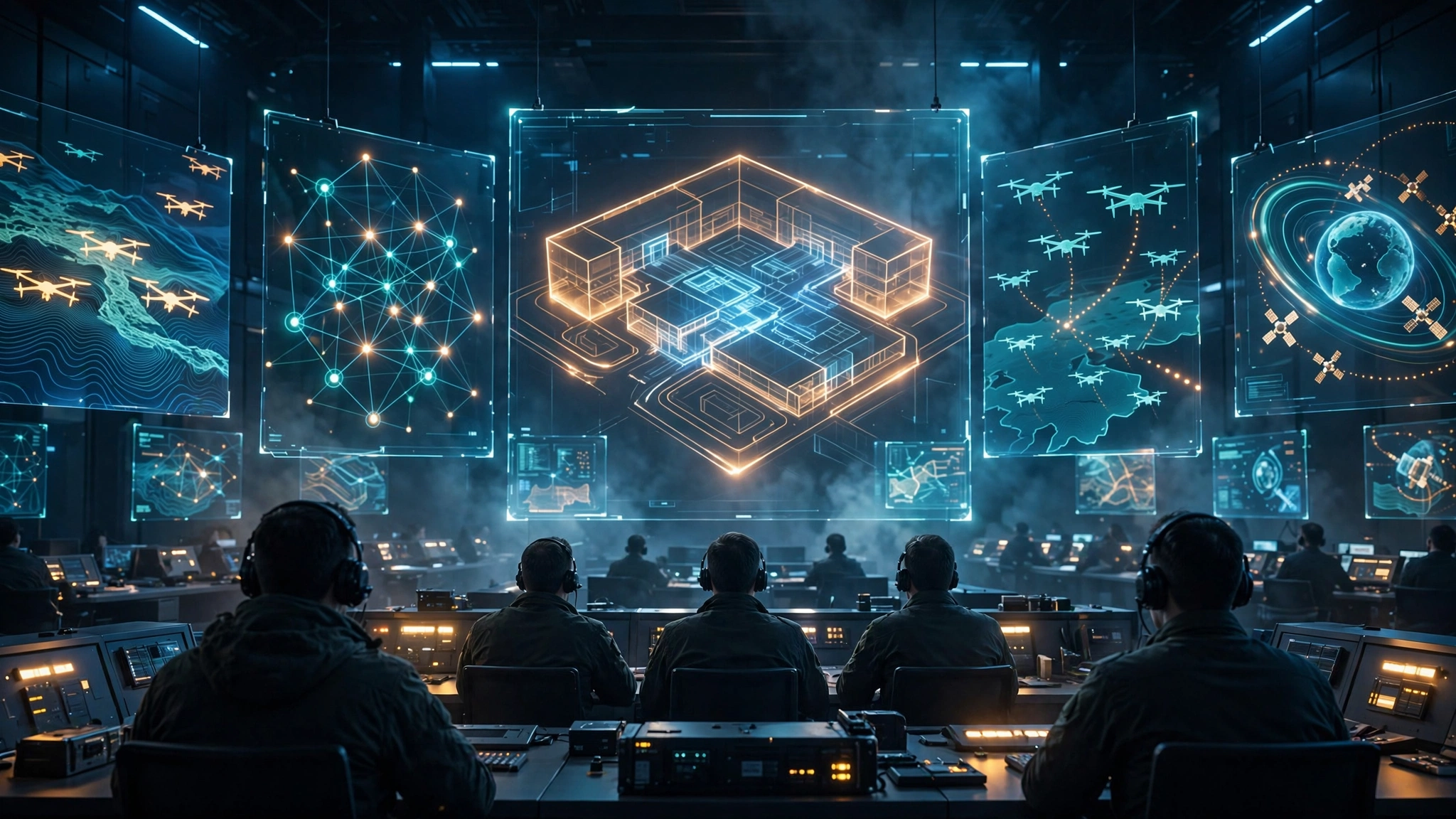
Its commissioning documents point to artificial intelligence, autonomous systems, robotics, directed-energy technology, and biotechnology as the fields expected to transform future conflict — and to battlefields stretching from subterranean warfare to the cislunar frontier between Earth and the Moon.
A Pentagon memo released alongside the announcement warned that the rapid development of these technologies could significantly change the nature of warfare, and that the US military “must not take our current advantages for granted.”
The group must recommend how promising capabilities can be developed, tested, and fielded — reportedly on a roughly four-month sprint, aimed at actionable answers rather than more strategy papers.
An unusual trio of co-leads
None of the three co-leads has served in the US military. Musk, who runs xAI, SpaceX, and Tesla, is the Pentagon’s most consequential contractor among them: his companies already build satellite networks for the military, and xAI signed a deal this year allowing the armed forces to run its Grok chatbot on classified systems.
Musk previously headed the Department of Government Efficiency before leaving in May 2025, and has since returned to Trump’s orbit — he sat beside the president at a lunch with AI executives who signed a voluntary AI safety accord Trump called “morally binding.”
Luckey, 34, founded defense-technology company Anduril Industries in 2017 after selling his virtual-reality startup Oculus to Facebook; Anduril is now one of the Pentagon’s favored suppliers of autonomous systems, drones, and surveillance technology.
Gingrich, 83, the former Republican House speaker, is the political veteran of the trio. Musk’s firms and Anduril already hold Pentagon business totaling as much as $4.16 billion, according to Korean press estimates.
Why the timing matters
The launch lands as the Pentagon pushes hard to become what it calls an “AI-first fighting force.”
The department recently struck agreements with eight major technology firms — including OpenAI, Google, Nvidia, SpaceX, Microsoft, Oracle, and Amazon Web Services — to deploy AI models on classified military networks.
Its annual budget request exceeds $960 billion, with more than $33 billion earmarked for science and technology.
Hegseth’s argument for the outside-led model is that “the best forecasters of future conflict do not solely reside inside the Pentagon,” and that the military bureaucracy risks both asking and answering its own questions.
The arrangement will also draw scrutiny: two of the three co-leads run companies that sell directly to the Defense Department, and any recommendations the group produces could steer billions in future procurement toward exactly the kinds of systems they build.