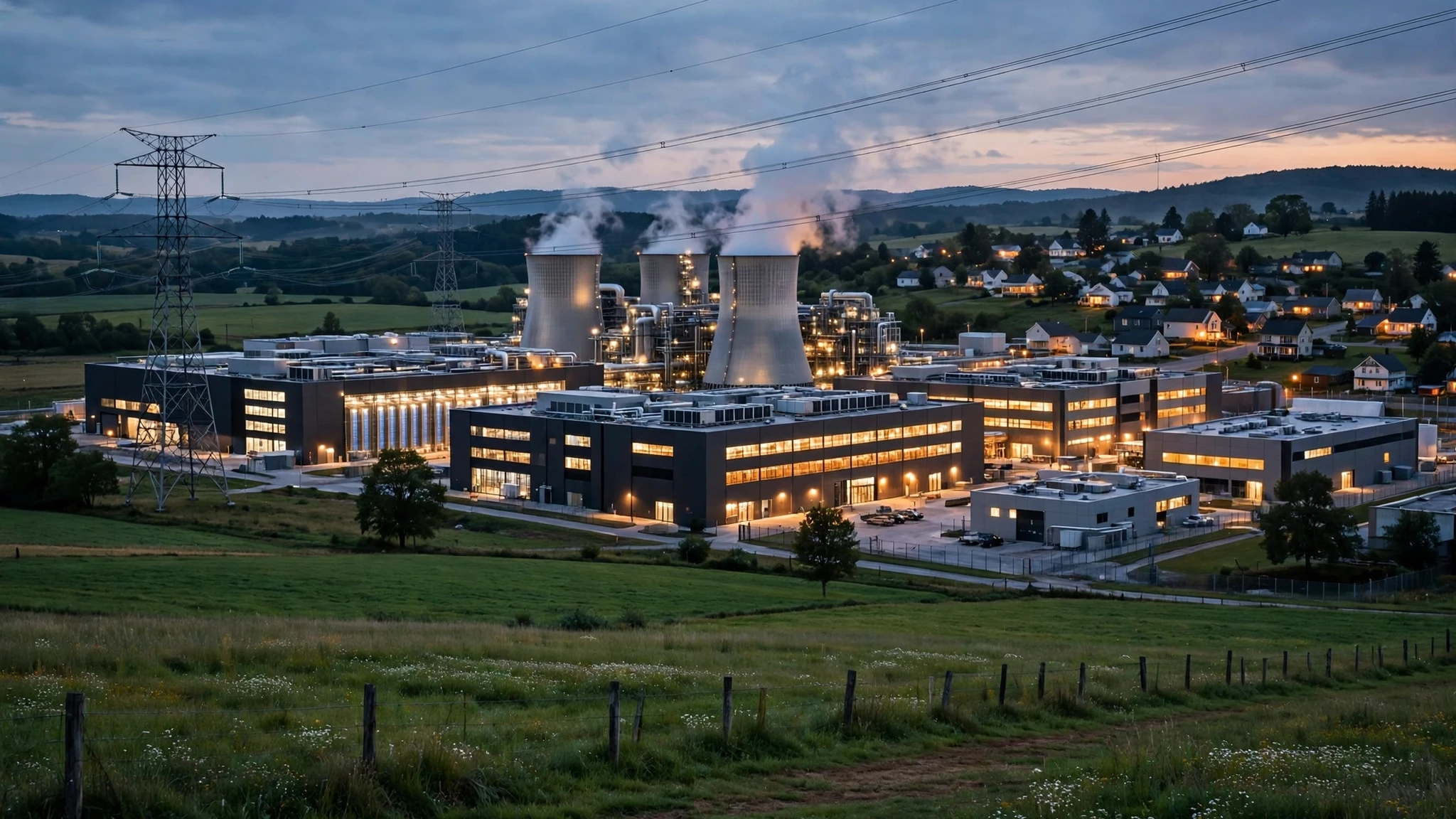
OpenAI published a National Community Compact and a Compute Campus Policy Blueprint on Thursday, promising that the AI campuses it owns and operates will pay the full cost of their electricity, publish how much water and power they use, and stop asking public officials to sign nondisclosure agreements.
The documents land two days after American voters backed limits on data centres in 40 of 41 local ballot measures across 10 states in the midterm elections — the clearest sign yet that the AI building boom has become a neighbourhood issue, not just a technology one.
What OpenAI is promising its neighbours
Under the compact, every future campus OpenAI owns and operates will get its own local agreement, shaped by residents' input, with a named local point of contact and a public report on progress each year.
On power, the company says it will pay the full cost of the electricity it uses, plus the grid infrastructure needed to serve its sites, and post financial assurances before major spending so other ratepayers are protected if a project slips or is cancelled.
Each campus will also get a water plan that prioritises closed-loop or low-water cooling, and OpenAI will publish site-level water and electricity use, construction plans covering traffic, noise and lighting, and independent noise studies before a site opens and every year after. Each site also gets a published workforce plan and local hiring targets.
Perhaps the most striking commitment is on secrecy: OpenAI says it will no longer require public officials to sign NDAs, apart from narrow carve-outs for security details, trade secrets and competitively sensitive information. The blueprint says the company already voided the agreements it had in Effingham County, Georgia, in July.
Georgia and Ohio put numbers on the promises
The compact points to two communities where the pledges are already taking shape. In Effingham County, Georgia, home of Project Camellia, OpenAI has committed $80 million to community priorities, including free school meals for all 14,000 county students and a $2 million park. Its Georgia Power deal lets the utility cut deliveries by up to 1,000 megawatts at peak demand, and the company is contracting for 3.2 gigawatts of power between 2028 and 2032 — expected to save customers about $950 million a year by 2029, roughly $15 a month per household.
In Pike County, Ohio, OpenAI lists a $40 million commitment, including a $6 million joint pledge with SB Energy for childcare, after families there identified it as a priority.
A blueprint that asks lawmakers to make it law
The second document, the Compute Campus Policy Blueprint, goes further than OpenAI's own sites. It asks policymakers to turn similar rules into statute for the whole industry: utility commissions should set rates that make large electricity users pay the extra grid costs they create, public reporting of water, noise and energy use should be compulsory, and developers should be barred from requiring officials to sign NDAs.
The blueprint concedes that voluntary measures alone do not meet the scale of this moment — an acknowledgement that pledges from one company, however detailed, do not bind its rivals.
The documents build on OpenAI's January Stargate commitments and follow the November 2 launch of Grid Protectors. Chief Global Affairs Officer Chris Lehane told reporters the blueprint has been in the works since August.
There are limits. The compact covers only campuses OpenAI owns and operates, and neither document lists which existing sites count. Until lawmakers act, the rules bind OpenAI alone — and the test will be whether the next community that hosts one of its campuses sees the promises kept.


