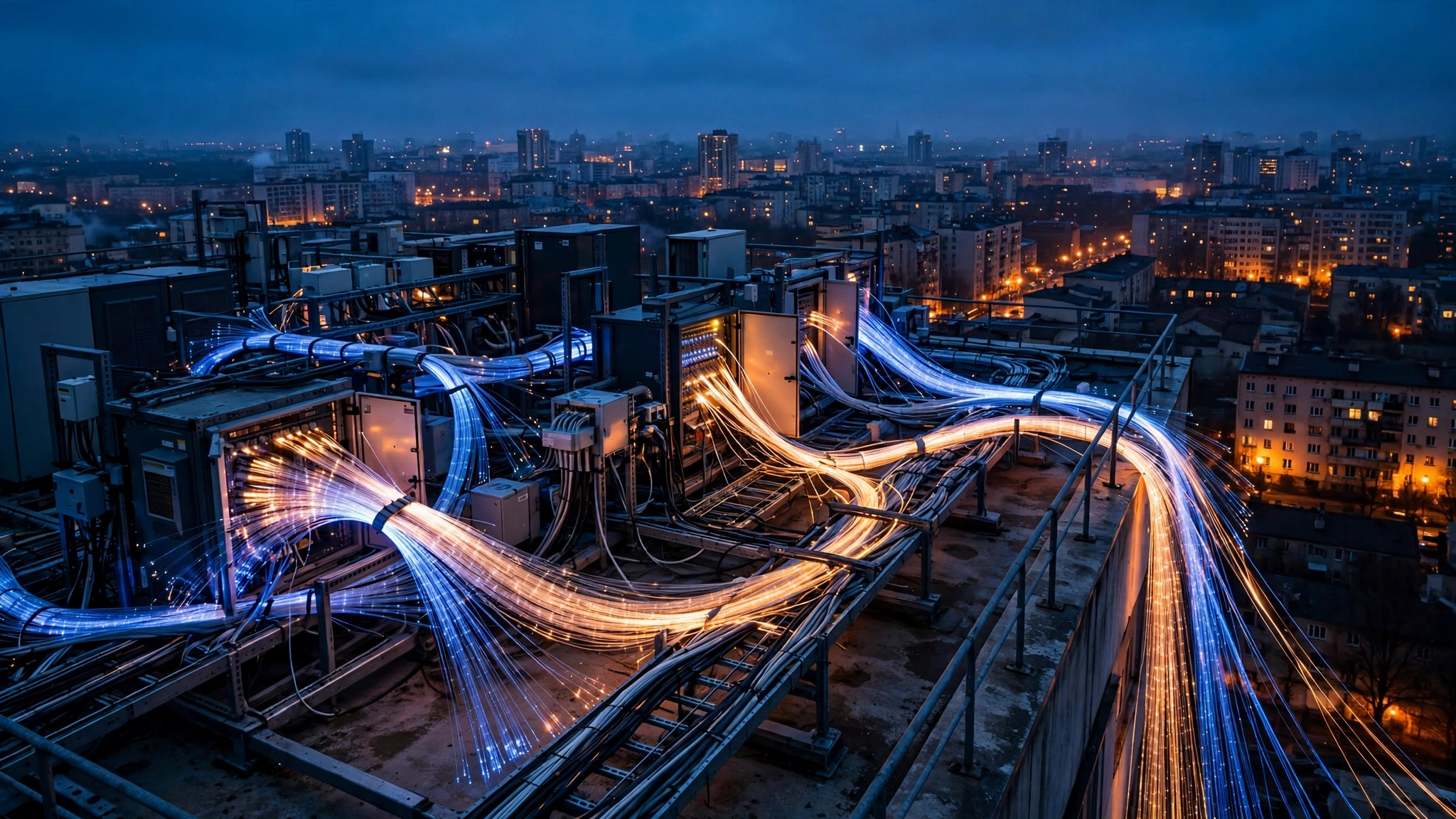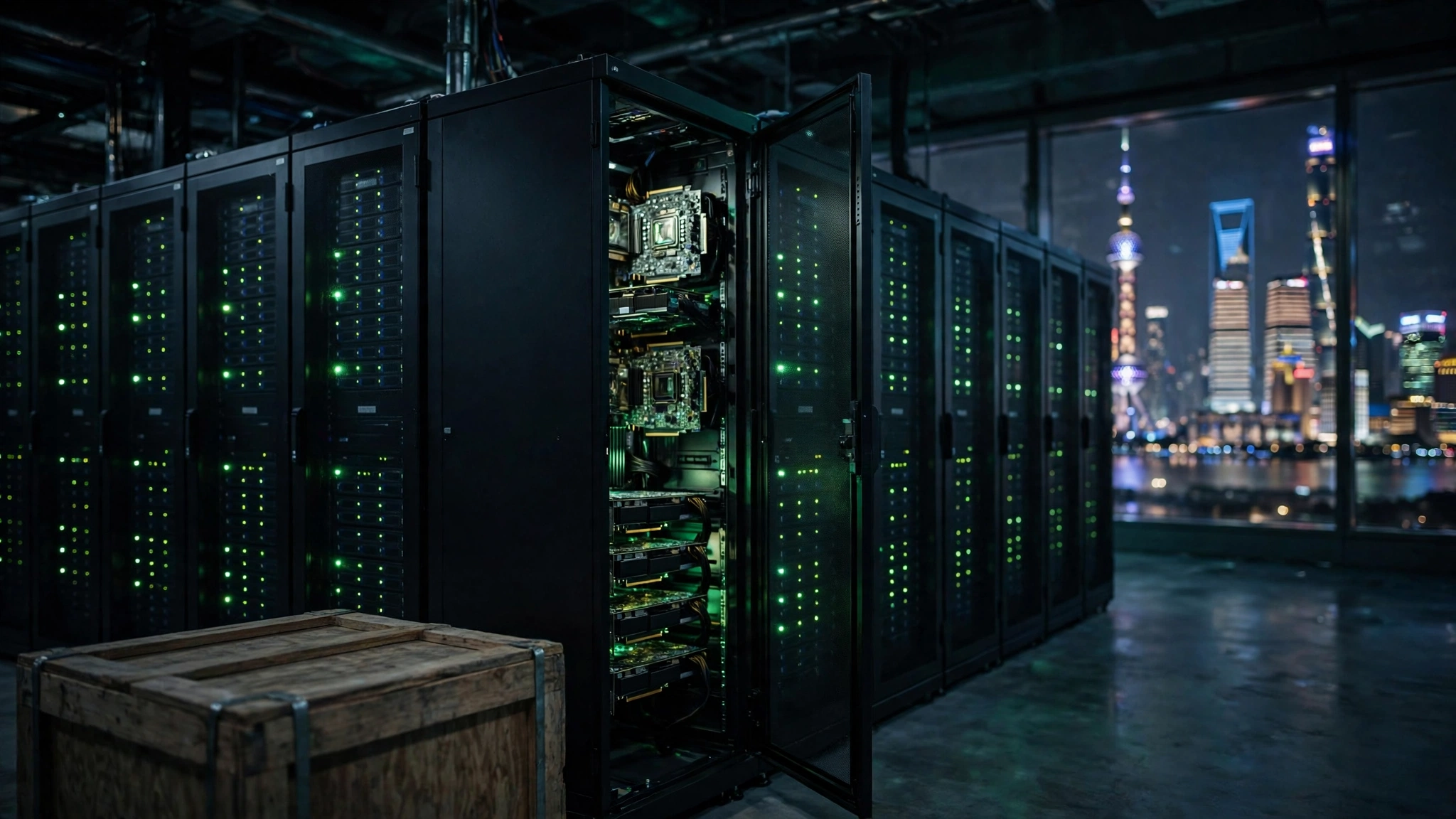
Bloomberg has found the first hard evidence that Nvidia's most powerful AI chips reached China despite US export controls: Blackwell hardware installed at a Shanghai data center linked to Alice Huang, the businesswoman at the center of the chip-smuggling scandal that briefly cost Nvidia chief executive Jensen Huang his job.
Documents submitted to Chinese regulators in November show two firms installed the restricted hardware at the Yangtze River Delta Project, a Shanghai facility tied to Huang and to Singapore-based cloud firm Megaspeed. The filings were reviewed by Bloomberg, which traced one rack's serial number through a public warranty database to its manufacturer.
A $14 million loan, secured by a banned rack
The clearest evidence comes from Shanghai Shuoyao, a company active at the data center. It listed an Nvidia GB300 NVL72 rack — one of the company's most powerful products — as collateral to secure a 96 million yuan loan, about $14 million, from Shanghai Innovation Bank. The filing included the rack's serial number, which Bloomberg checked against a public warranty database and matched to a GB300 NVL72 unit built by Taiwan's Gigabyte Technology, which assembles Nvidia chips into server racks.
A second firm, Shanghai Kezhan, controlled by a Tokyo-based parent, described a GB200 server at the same facility in paperwork for a 90 million yuan loan from a finance-leasing firm in late 2025. A third company, Shanghai Longjie, which shares a parent with Shuoyao, reported servers carrying Nvidia's earlier Hopper-generation chips from Super Micro and Dell, using them to secure a 200 million yuan loan from the same bank.
A single GB300 NVL72 rack holds 72 Blackwell Ultra GPUs and 36 Grace processors and weighs about 3,300 pounds. Shipping Blackwell systems to China without a US licence is illegal, and President Donald Trump has said he does not currently want to allow exports of the chips to China. Jensen Huang once argued that racks of that size were too big to smuggle.
The Megaspeed connection
Shanghai Shuoyao has significant overlap with Megaspeed, the Singapore cloud firm Alice Huang founded in 2023. Megaspeed became Nvidia's largest Southeast Asian customer within months of its creation, and the United States added it to its trade blacklist on November 24. The Justice Department is investigating whether the company broke US export rules. Megaspeed denies any wrongdoing, and Bloomberg said it found no evidence that Megaspeed directly diverted chips to the Shanghai site.
The filings also show that Chinese financial institutions with government ties were willing to lend against the restricted hardware. The documents cover only equipment pledged as collateral for loans, so they show a small part of what a site of that size would need — local media have described the Yangtze River Delta Project as a facility meant to house as many as 800,000 servers.
Bloomberg also found that Kang Wei, listed as the president of the facility, is the man The New York Times has reported was often introduced as Huang's husband and had ties to China's Ministry of State Security.
What happens next
The disclosure lands days after Nvidia reinstated Jensen Huang as chief executive on November 23, following an 11-day absence, and a day after the company told manufacturing partners to halt AI server shipments to four Southeast Asian countries while it assesses new US export-licence rules. Huang is set to testify publicly before Congress on December 3, where lawmakers are expected to press him on how the company's most advanced hardware ended up in China — and what Nvidia knew about the customers buying it.