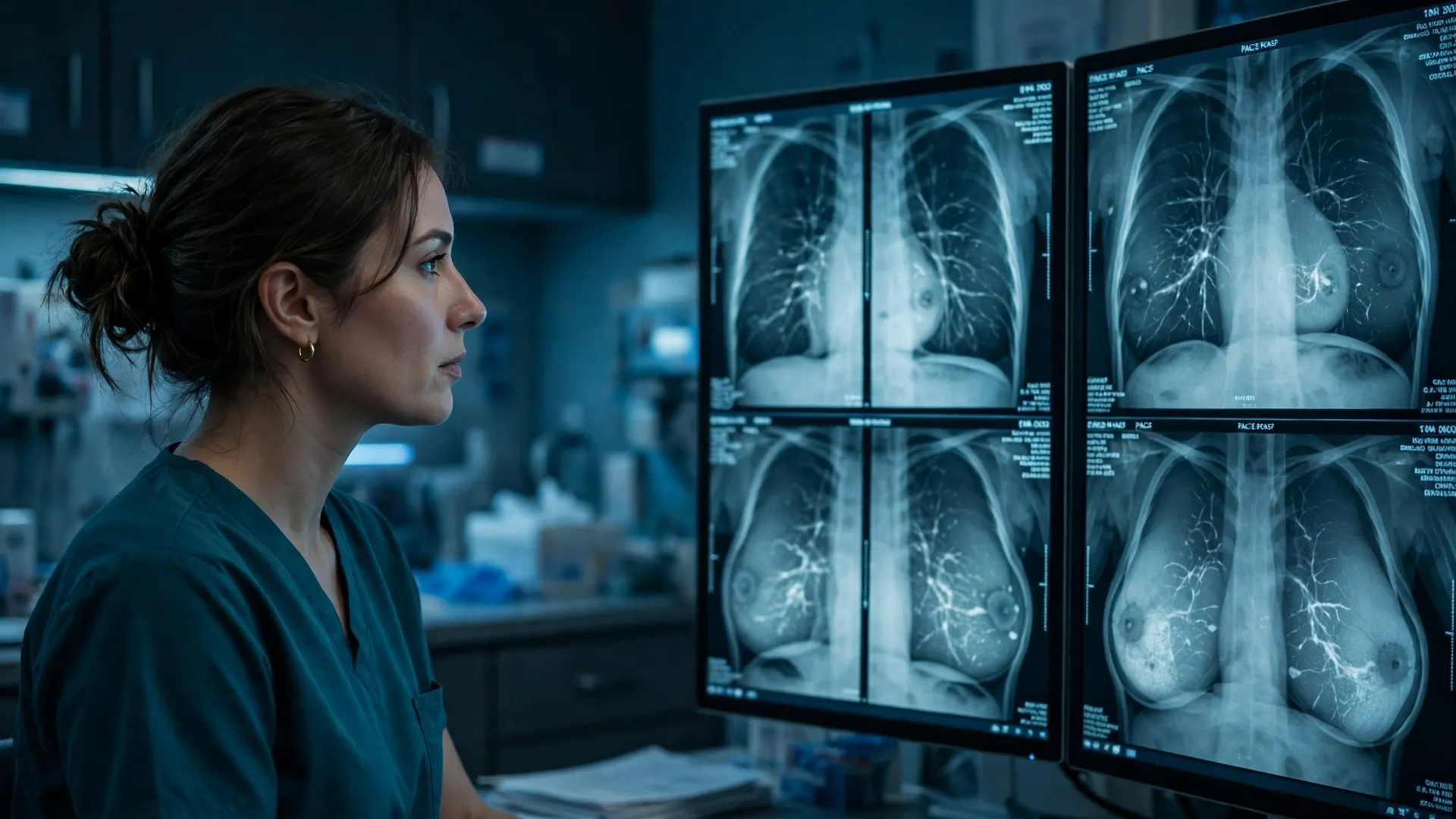
England's National Health Service has begun recruiting for the world's largest trial of AI-assisted breast cancer screening, with nearly 700,000 women expected to take part over the next three years.
The trial, known as EDITH — short for Early Detection using Information Technology in Health — will test whether artificial intelligence can help specialists detect cancers earlier, and whether it can safely take on part of the work of reading mammograms.
Recruitment has started at Cambridge University Hospitals, the first of 30 NHS sites taking part across the UK. More sites will open over the coming months, and women attending routine breast screening will be given details of the trial and invited to take part unless they choose to opt out.
What the trial will test
At present, two specialists review every mammogram in the NHS Breast Screening Programme to look for signs of cancer. The EDITH trial will test whether AI can support that process so that most images only need to be checked by one specialist, with the AI acting as the second reader.
Researchers will assess whether the technology helps flag signs of cancer that are too small to see or feel, whether it cuts the time needed to check images, and whether it can do all of that without lowering the safety or quality of screening.
The £10 million study is funded by the National Institute for Health and Care Research (NIHR) and is being led by the University of Warwick, the University of Cambridge and Cambridge University Hospitals NHS Foundation Trust, working with NHS England.
Why the NHS is turning to AI
Breast cancer is the most common cancer in women, with around 55,000 people diagnosed each year in the UK. Women aged 50 to 71 are invited for screening every three years, and around 2.1 million screenings are carried out each year. The programme helps prevent around 1,300 deaths annually.
But only a small fraction of mammograms show cancer — less than 1%, according to Professor Fiona Gilbert of the University of Cambridge, one of the trial's co-chief investigators. That means specialists spend much of their time reviewing images that turn out to be clear.
If the trial succeeds, it could free up hundreds of radiologists and other specialists across the country to see more patients who need cancer tests and treatment, helping to cut waiting lists.
Health Secretary Yvette Cooper, who visited the trial team at Addenbrooke's Hospital in Cambridge, said the technology could help women get a diagnosis and start treatment more quickly — while stressing that proper safeguards must be in place to make sure AI is used safely and effectively.
What happens next
The trial was first announced in February 2025, and recruitment is now under way. It is expected to run for around three years, with results determining whether AI-assisted reading becomes a permanent part of breast screening in the UK.
For now, the trial changes nothing about the screening appointment itself: women will still attend as normal, and a human specialist remains at the centre of every decision. The question EDITH is designed to answer is whether AI can make that human expertise go further.


