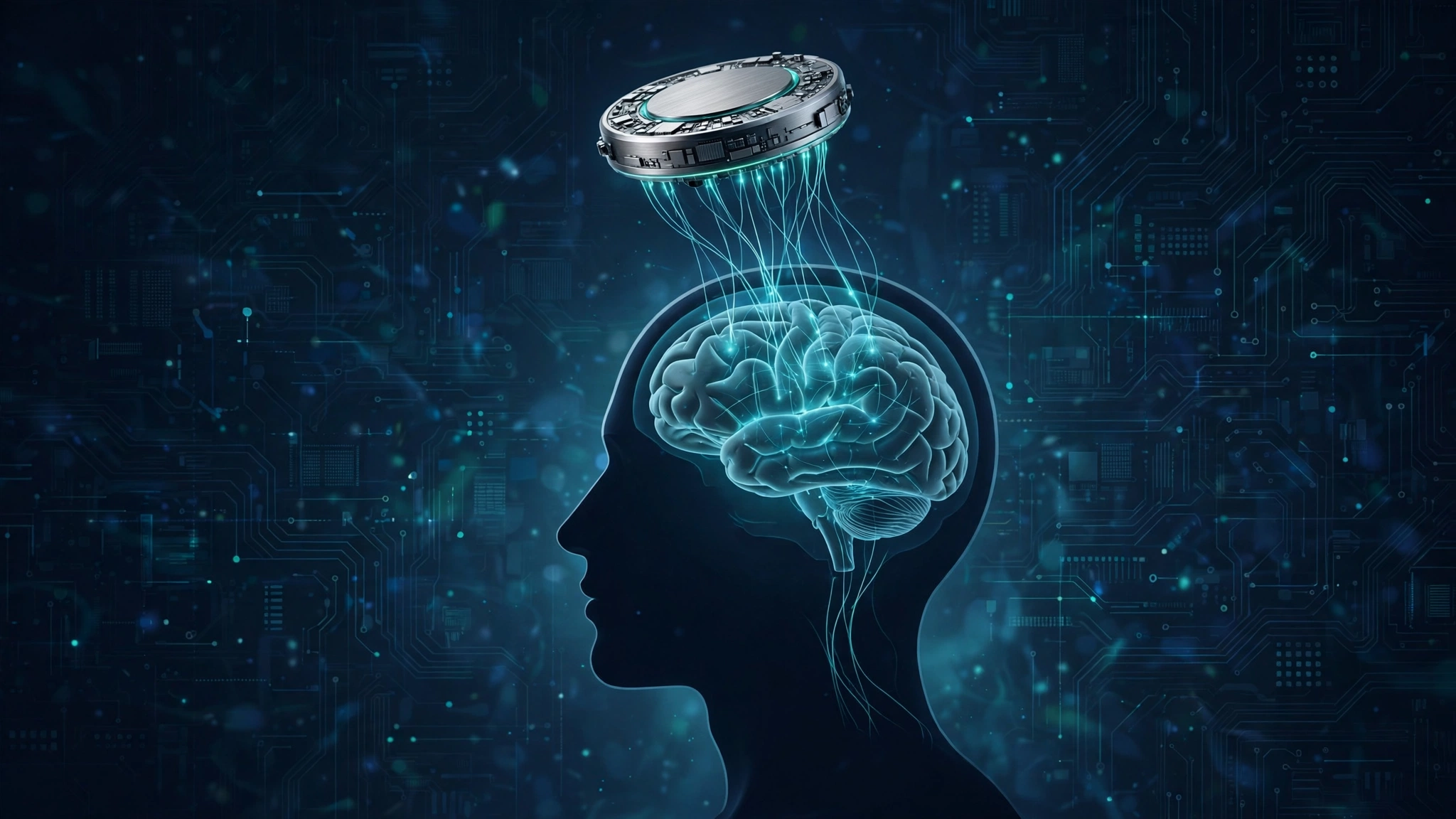
Neuralink has received approval from the US Food and Drug Administration to launch LINK, the first pivotal clinical trial in the United States for an implantable brain-computer interface, the company announced on Wednesday. The study will test its N1 implant in adults living with severe paralysis caused by ALS.
The trial will evaluate whether participants can control digital devices using thought alone, with a focus on functional outcomes that improve independence in daily life — moving a cursor, typing, and operating assistive technology without muscle movement.
What the LINK trial will test
LINK builds on Neuralink's early feasibility studies in the United States, Canada and the United Kingdom, which have involved more than 30 implanted participants. The N1 implant is a coin-sized device placed in the skull, and the company's R1 surgical robot inserts ultra-thin electrode threads into the motor cortex, the part of the brain that controls movement.
Enrolment in the study is now open, and Neuralink says it expects the trial to expand across multiple clinical sites in the US. The company has not disclosed its target enrolment, how long the study will run, or which hospitals will take part.
A pivotal trial is a later-stage clinical study designed to generate the safety and effectiveness evidence regulators need before a device can be considered for marketing approval. Results from LINK could support a future application to the FDA — though completing the trial does not guarantee approval.
Approval to run a trial is not approval to sell
The FDA's decision allows Neuralink to conduct the study under an approved clinical protocol. It does not authorise the company to market the N1 implant commercially. The device remains investigational and is available only through authorised clinical research.
The milestone follows Neuralink's earlier work with ALS patients, including Bradford Smith, the first participant with ALS, who was able to communicate using brain signals alone. Neuralink's earlier PRIME feasibility study continues in parallel; its trial registry entry was recently updated, moving the expected primary completion date to September 2027.
Why it matters
If LINK succeeds, it would put the first implantable brain-computer interface through the pivotal-trial bar in the US, moving Neuralink closer to a regulated product for people who have lost the ability to move or speak. ALS is a progressive neurodegenerative disorder that damages the nerve cells controlling voluntary muscle movement, and there are few options for patients who lose the ability to communicate.
Competition in the field is also heating up. Science Corp, led by a former Neuralink executive, raised $400 million earlier this month at a $3.5 billion valuation to bring a vision-restoring eye chip to the US. The race to turn brain-computer interfaces from laboratory demonstrations into approved medical devices is now firmly under way.