By Hamza Faisal
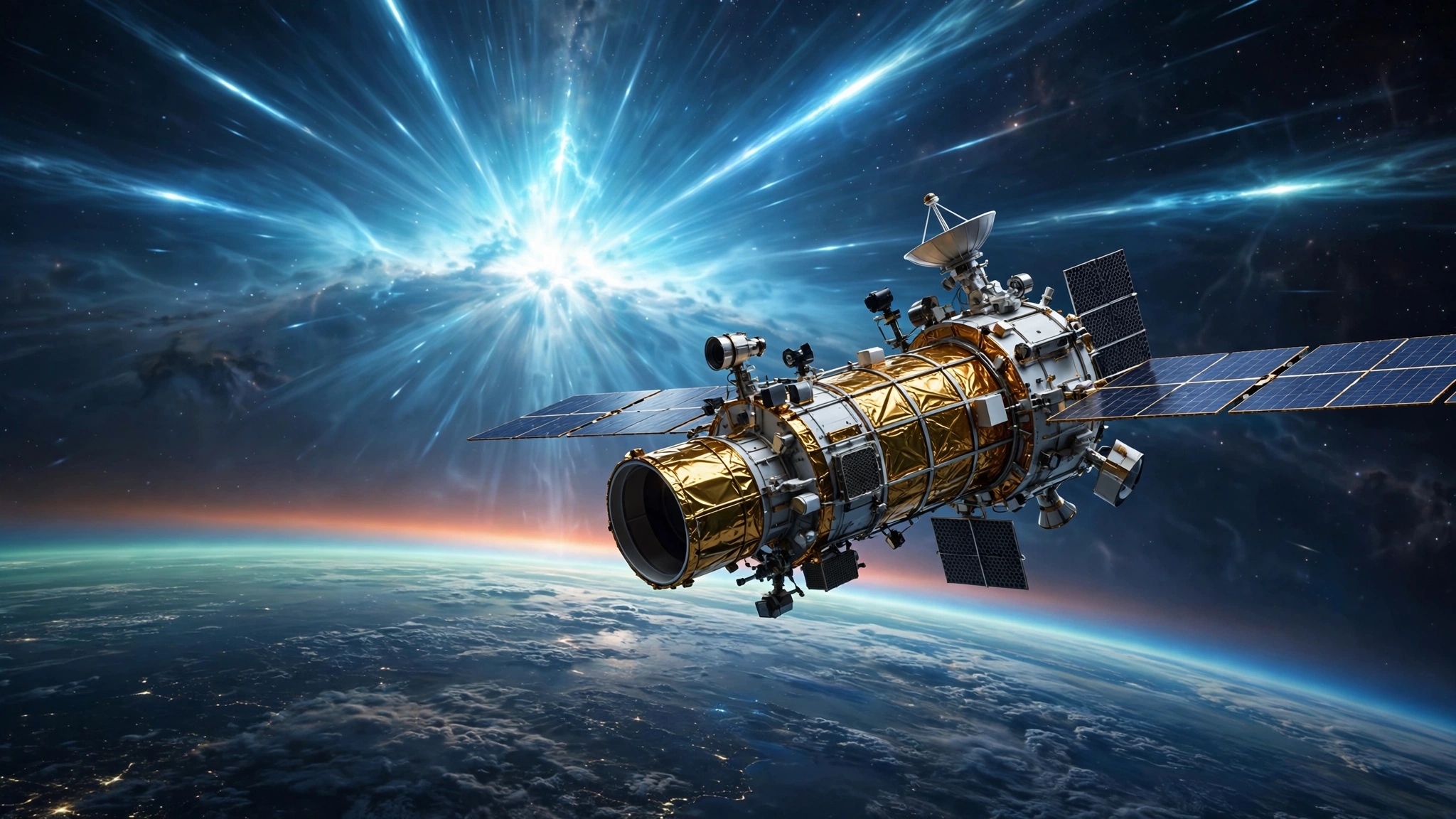
NASA has switched off the Neil Gehrels Swift Observatory, ending a nearly 22-year mission that turned the fleeting flashes of gamma-ray bursts into one of astronomy's richest fields of study. The spacecraft made its final observation on October 20, 2026, and is now falling back toward Earth, with re-entry expected within the next few weeks.
The end came quietly, on the ground. Swift had sunk to just 171 miles (275 kilometers) above Earth, so low that the thin upper atmosphere was dragging on it too hard for its telescopes to hold steady on a target. The spacecraft slipped into safe mode, and the operations team at Penn State in University Park sent the command that effectively ended Swift operations to prepare it for re-entry, NASA said in a statement published on October 23.
A two-year mission that ran for 22 years
Swift launched on November 20, 2004, from Cape Canaveral on a Delta II rocket, built to solve a mystery that had stood for more than three decades: what causes gamma-ray bursts, the brief flashes of high-energy radiation that are the most powerful explosions known. It was designed for a two-year primary mission. It ran for nearly 22 instead, and NASA renamed it in 2018 after Neil Gehrels, its first principal investigator, who had died the previous year.
What made Swift special was speed. It could detect a burst, pinpoint it, and swing its telescopes onto it within minutes, letting observatories worldwide watch the afterglow before it faded. In May 2005 it recorded the afterglow of GRB 050509B, a burst lasting just 0.03 seconds, a finding consistent with the merger of two neutron stars. In October 2022 it caught the BOAT, the brightest gamma-ray burst ever seen.
By the end, Swift had observed more than 2,000 gamma-ray bursts and studied more than 1,400 supernova explosions. Its data has contributed to about 7,000 scientific papers, and its public archive holds more than 1.5 million telescope images and roughly 12 terabytes of data.
A rescue mission that ran out of time
Swift's end was accelerated by the Sun: recent solar activity increased atmospheric drag, and the spacecraft began to sink rapidly. NASA tried to save it, awarding Katalyst Space Technologies a $30 million contract for a servicing spacecraft called LINK, which launched on July 3, 2026, from Kwajalein Atoll to grab Swift and lift it higher.
The rescue never got its chance. Reaction-wheel failures and a spin used up LINK's propellant before it could attempt a capture, and NASA called the attempt off in August. LINK itself re-entered in late September. Swift, which has no engine to raise its own orbit, could not be saved any other way.
There was one brief reprieve: Swift had paused observations to extend its time in orbit for the boost mission, then resumed them, observing hundreds more targets. But returning to observations increased drag again, and it began to sink rapidly once more.
What falls, and what survives
Most of the roughly 1,450-kilogram spacecraft should burn up on re-entry, and tracking specialists say the chance of harm to anyone is very small, with any surviving debris most likely landing in the ocean or on uninhabited land. NASA has given no exact re-entry date; timing will depend on solar activity.
What survives is the data. NASA says Swift's archive will fuel new discoveries for decades, and astronomers will now lean on other telescopes to watch for bursts, though none matches Swift's rapid detection and multi-wavelength coverage in quite the same way.
By Hamza Faisal