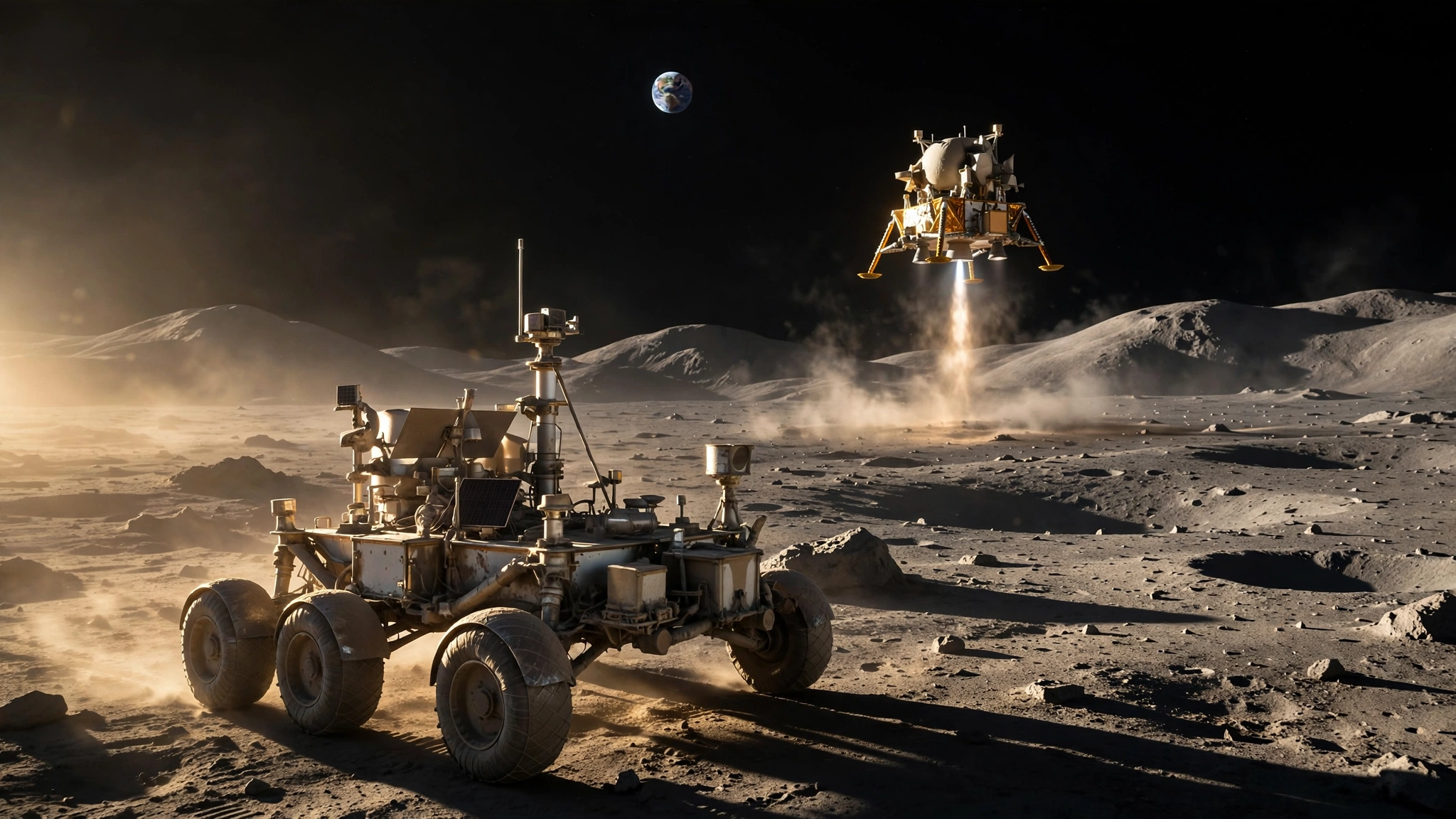
NASA has unveiled the commercial backbone of its planned Moon Base, naming eight American companies to compete for up to $10 billion in lunar cargo deliveries and ordering a nuclear-powered rover for the lunar South Pole. The agency announced the package on Saturday, November 7, at the MAX POWER aerospace expo at Kennedy Space Center in Florida.
The centrepiece is CLPS 2, a ten-year framework contract for Commercial Lunar Payload Services. Under it, Blue Origin, Firefly Aerospace, Intuitive Machines, ispace-U.S., Lockheed Martin Space, Northrop Grumman Space Systems, SpaceX and Voyager Technologies are now eligible to bid for individual delivery missions to the lunar surface. NASA Administrator Jared Isaacman said the agency is "building the Moon Base mission by mission" and that astronauts will arrive to find "the first elements of the Moon Base already waiting for them on the surface."
Eight companies, one $10 billion ceiling
The $10 billion figure is a combined ceiling, not money already spent. Each company is guaranteed only $25,000 under its base contract, and real funding will flow through individual task orders as NASA places them. No delivery mission has been awarded under CLPS 2 yet, so the final spend is still to be decided.
NASA also raised the ceiling on its existing CLPS contract from $2.6 billion to $4.2 billion. That framework stays in place through November 2028, with a further five-year period to finish deliveries already awarded. The package builds on the Moon Base plan NASA unveiled in May, when it laid out the first three missions and picked Blue Origin to deliver two lunar terrain vehicles, and on about $600 million in CLPS awards added in June for four deliveries landing in late 2028.
PROMISE, the nuclear rover built from Mars parts
The most striking project is PROMISE, the Polar Rover for Observation, Mapping, and In-Situ Exploration. The six-wheeled, nuclear-powered rover will land at the Moon's South Pole to map the surface and subsurface, assess resources and help NASA choose landing sites for the base. It will carry a drill able to collect material from about a metre below the surface, in regions where water ice may exist.
NASA's Jet Propulsion Laboratory will build the rover from spare flight hardware and engineering test models left over from the Curiosity and Perseverance Mars rovers, and will run the mission. Blue Origin won the only concrete payday of the day so far: a $94 million base contract, with a further $140 million available on performance, to deliver PROMISE aboard its Mark 1 lander. NASA is targeting a late-2028 launch and an 18-month mission.
Launches, drones and a power tower
The package also includes about $1.3 billion in six launch and in-space transport task orders under NASA's Venture-Class Acquisition of Dedicated and Rideshare contract, awarded to Arrow Science and Technology, Blue Origin and Impulse Space to carry Moon Base cargo, including NASA's MoonFall drones, which will survey the South Pole. SpaceX will also launch communications satellites to cislunar space on Starship in 2028, while Honeybee Robotics, Redwire and Yank Technologies won awards for parts of a mini communications and solar tower.
NASA said in October that the first element of the base is due to launch in December, with robotic missions following almost monthly from early 2027. The agency also plans a solicitation for the fully integrated surface power systems in early 2027, alongside a separate call to fill Moon Base data gaps. Lunar programmes have slipped before, but the contracts now put commercial hardware, and a nuclear rover, on the path to the South Pole.
By Hamza Faisal