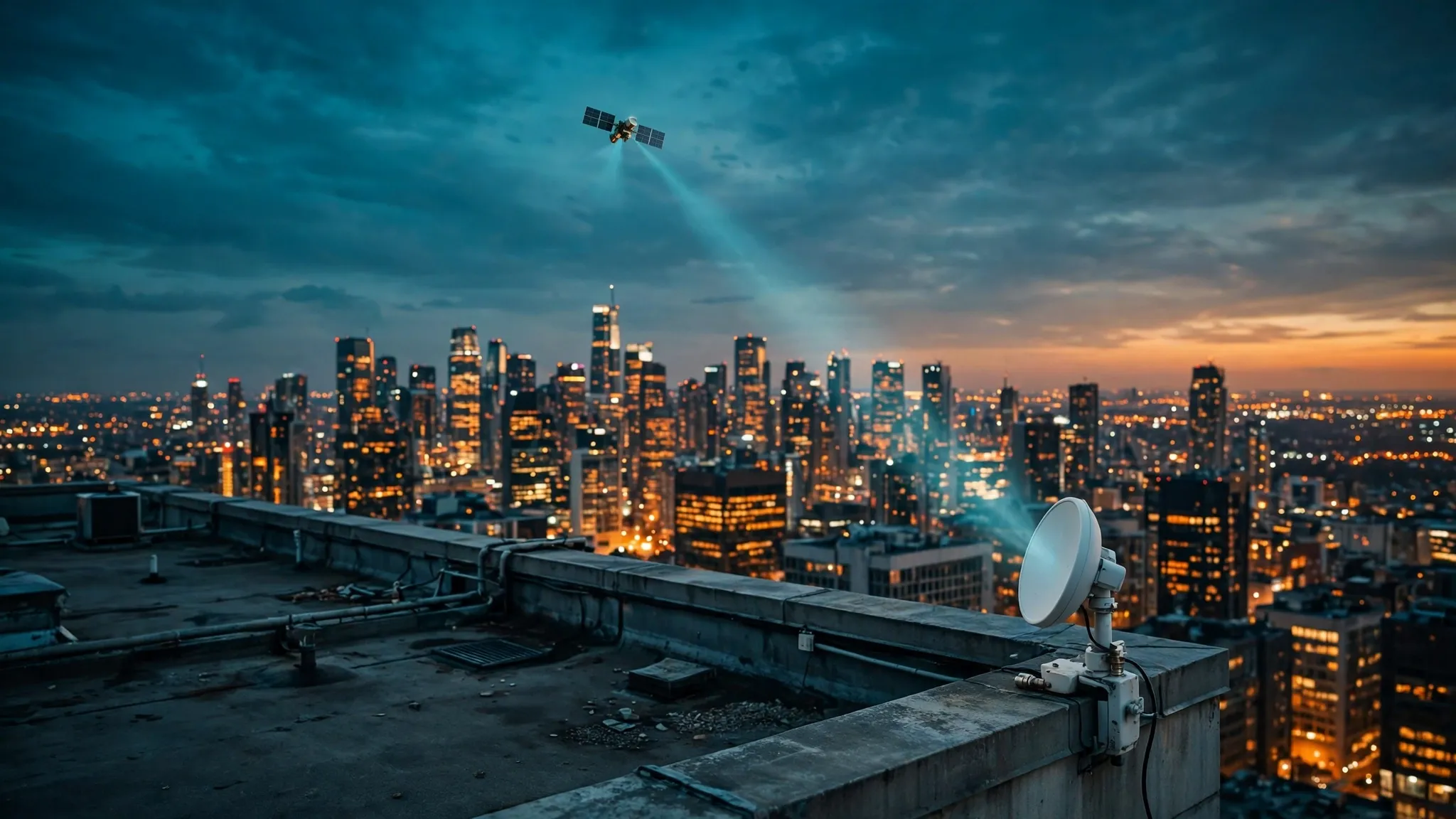
Elon Musk says SpaceX has finished designing a miniature cell tower that sits on a roof like a Starlink dish, filling the indoor gaps that satellite signals cannot reach. The device is expected to go into production in 2027, alongside a new generation of Direct-to-Cell satellites carrying 40 times the bandwidth of the current fleet.
Musk described the plan during a remote interview from China with Andrew Ross Sorkin at The New York Times DealBook Summit on November 18. "We've got a plan that enables ubiquitous access on Earth, including via cell phone," he said, adding that the company will launch its Direct-to-Cell V2 satellite constellation next year.
The problem the rooftop unit solves is a familiar one for satellite phone service: signals from space struggle to get inside buildings, and a metal or thick roof can block them entirely. Musk called the device "a micro cell tower thing that you just put on your roof, like a Starlink dish" — a terrestrial layer beneath the satellite network.
A terrestrial layer under the satellite network
Instead of giant towers, SpaceX plans a network of very small ground stations scattered through densely populated areas, using the 800 MHz low-band spectrum it is acquiring. Musk floated bundling the small base stations with Starlink terminals, though the company has not confirmed a bundling plan. SpaceX President Gwynne Shotwell said on the company's August earnings call that it would use small, low-power cellular base stations rather than large cell towers.
The spectrum behind the push has cost SpaceX billions. The company struck a $17 billion deal with EchoStar in 2025 and agreed this year to acquire a portfolio of low-band spectrum valued at $8 billion. Combining that spectrum with the mini cell towers, Musk said, should boost signals and end the dead-zone problem.
40 times the bandwidth from orbit
On the satellite side, the Direct-to-Cell V2 constellation is the bigger leap. Musk said the next-generation satellites, launching in 2027, will deliver 40 times the bandwidth of the current Direct-to-Cell version one fleet. That would let far more phones connect at once, and support faster data and richer services than today's satellite texting and emergency messaging.
The plan puts SpaceX deeper into territory long held by traditional carriers. AT&T, T-Mobile and Verizon launched a joint satellite venture of their own in October, and regulators have been clearing the way for satellite-to-phone service. SpaceX's hybrid approach — satellites overhead and microcells on rooftops — is its answer to the same dead-zone problem.
No price, no date — yet
For all the detail, SpaceX has announced no consumer launch date and no price for the rooftop unit, and no public specification sheet: how much of a building one unit can cover remains unclear. Musk put production in 2027, saying the devices were "going into production, I think, next year" — a tentative phrasing from a chief executive with a long history of missing his own deadlines.
What is firm is the design itself. SpaceX has completed it, the spectrum is bought, and the V2 satellites are on the launch manifest for next year. If the rooftop tower ships on schedule, the dead zone — the one place satellite phones have never worked — may finally have a fix that sits on the roof.
By Hamza Faisal