India's prime minister's office has summoned the country's most senior telecom official to explain how more than 100 websites were blocked on the basis of court orders that turned out to be fake, two government officials told Reuters on Saturday.
Telecom Secretary Amit Agrawal was called to appear before the prime minister's office, cutting short a trip to another state, the officials said. The summons follows a Reuters investigation published on Wednesday that found India's Department of Telecommunications had directed internet providers to block 129 illegal betting websites using orders purportedly issued by two state High Courts — orders that were never issued at all.
Two forged orders, 129 blocked sites
The department issued two blocking directions, on July 21 and September 2, each attached to emailed copies of court orders from the High Courts of Rajasthan and Allahabad. A Reuters review found neither order appears in the courts' online registration records.
The Allahabad High Court examined the order carrying its name and found it was fake, filing a police complaint on November 6. The order was dated August 14 and signed under the name of "Justice Garima Prashad". The Rajasthan order, meanwhile, was described by the court's registrar as appearing fraudulent and does not exist on its server.
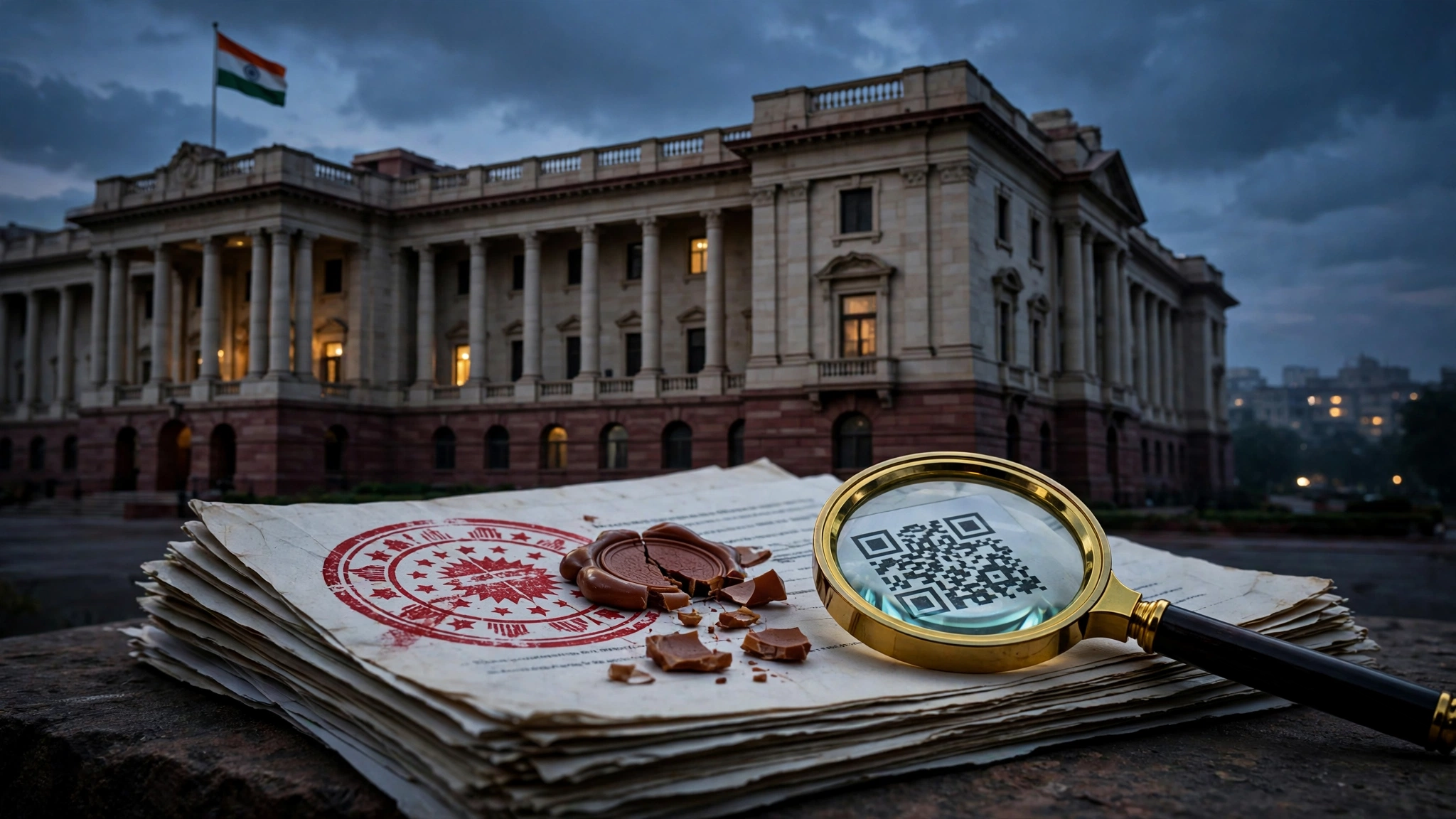
Both documents carried fabricated court logos and seals, along with a fake QR code — the kind of code that would normally let anyone verify an order's authenticity. One of the orders reached the department by email at 8:59 p.m. on July 19, sent by people posing as lawyers. The senders' identities remain unknown, and it is not clear how the orders were generated, or whether artificial intelligence was used.
A criminal case and an internal inquiry
State police in Uttar Pradesh have opened a criminal investigation against unknown persons for forgery and cheating, and have asked the telecom ministry for details of its content management system and digital logs, sending it 24 questions. Police have also sought ministry records as part of the investigation.
The telecom ministry has launched its own internal inquiry into how officials acted on the forged orders without checking them. A government official told Reuters the inquiry will review the ministry's procedures and add checks before officials act on future takedown orders. The ministry plans to revoke the blocking directions issued on the basis of the forged orders and remove the related documents from its website, and is trying to identify who was behind the email addresses that sent them.
As of Saturday, one of the two fake orders was still accessible on the department's website. The other had been removed.
A warning about the takedown system
The case has raised wider questions about safeguards in India's content-takedown system. While online betting is illegal in India, officials and experts warn that the same gaps could allow falsified court documents to be used to block legitimate websites.
The episode also echoes a growing problem with fabricated legal material. India's Supreme Court set aside a tribunal's orders in July after finding they relied on non-existent judgments, and a judge in the United States recently disqualified lawyers over the use of fabricated legal citations.
Neither Agrawal nor his ministry responded to Reuters' queries, and the prime minister's office did not respond either. The department said its action against the betting accounts had been carried out through its field officers.