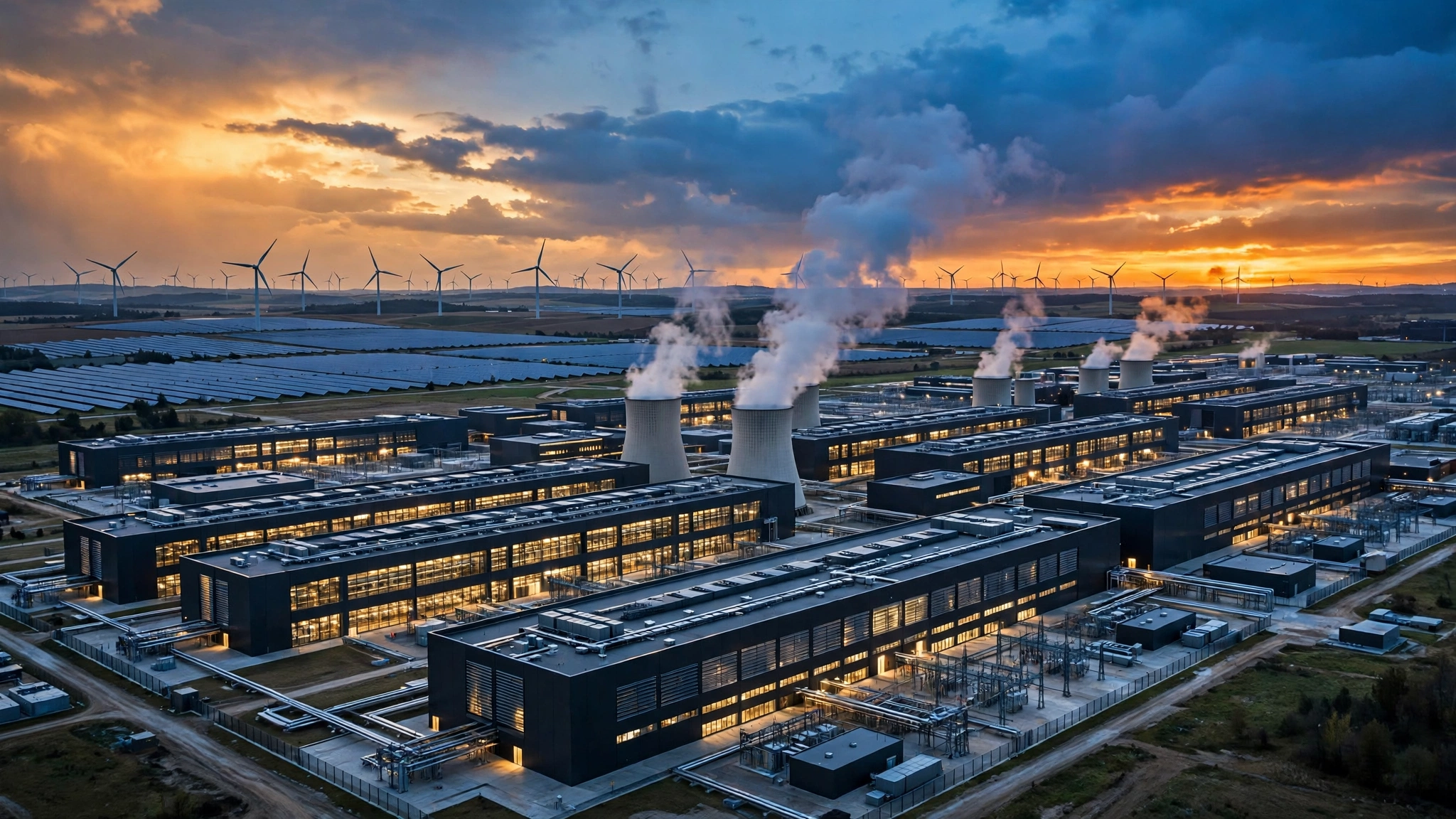
Meta has said it is reconsidering its pledge to reach net-zero emissions by 2030, after the artificial intelligence boom pushed its carbon footprint up 45 percent in a single year. The admission, buried in the company's annual sustainability report published on Thursday, makes Meta the first of the major cloud companies to openly question its climate deadline.
"We are re-evaluating our timelines, sequencing and interim milestones — including the 2030 timeframe for our net zero emissions goal," Rachel Peterson, Meta's vice president of data centres, and Blair Swedeen, its global head of net zero and sustainability, wrote in the report. They gave no new date, saying only that the company would "share where this work lands" once the review is complete.
Emissions jumped as AI demand surged
Meta reported that its net carbon-equivalent emissions rose 45 percent in 2025 to 11.8 million tonnes. Measured without carbon credits, its location-based emissions were almost twice as high, at 21.7 million tonnes.
Much of the increase came from the physical buildout itself. Emissions from purchased goods and services rose 36 percent, while emissions from capital goods — the servers, buildings and equipment going into new data centres — jumped 58 percent. Cumulatively, Meta's supply-chain emissions are now more than 105 percent above their 2021 levels, casting doubt on its supporting pledge not to exceed 2021 levels by 2030.
Electricity consumption rose 35 percent to 24.8 terawatt-hours. Meta says it matched all of it with clean and renewable energy and has contracted more than 30 gigawatts of low-carbon power, of which almost 12 gigawatts is operational. But where utilities cannot deliver power fast enough, the report says Meta may deploy on-site natural gas plants instead. The company left the RE100 clean-energy initiative in July, saying it could no longer meet its technical criteria because of its gas investments.
Meta stands alone among the hyperscalers
Other tech giants have also reported rising emissions — Google's rose 18 percent, Amazon's 16 percent and Microsoft's 25 percent — but Meta is the only one so far to say its 2030 commitment itself is under review. Meta set the goal in 2020, aiming for net zero across its entire value chain by 2030, in line with the Paris Agreement.
"When we set our net zero emissions goal, we anticipated steady growth, falling clean energy costs, and changes in the broader system," Peterson and Swedeen wrote. "The reality has been far more complex." They said delivering on Meta's vision "requires building the infrastructure that powers AI", while clean-energy deployments have stalled behind long permitting queues.
A study published this week in Nature Sustainability underlined the scale: the 403 most powerful data centres in the United States accounted for about 2 percent of the country's electricity use, with a carbon footprint comparable to Denmark's. About 1,200 hyperscale data centres are online, with hundreds more planned, and the International Energy Agency estimates global data-centre electricity use could nearly double by 2030.
Water use is rising where supplies are tightest
The report also revealed growing pressure on water. Meta's direct water consumption fell 4 percent overall, but consumption in highly water-stressed regions rose 24 percent. The water used to generate its electricity rose 37 percent before accounting for clean-energy purchases.
Meta says its long-term ambition has not changed: to establish a pathway to net zero, restore more water than it consumes, and build infrastructure that supports surrounding communities and grids. But with no new deadline offered, the report leaves open the question of whether the other hyperscalers will follow Meta's lead and reset their own climate targets as the AI buildout continues.


