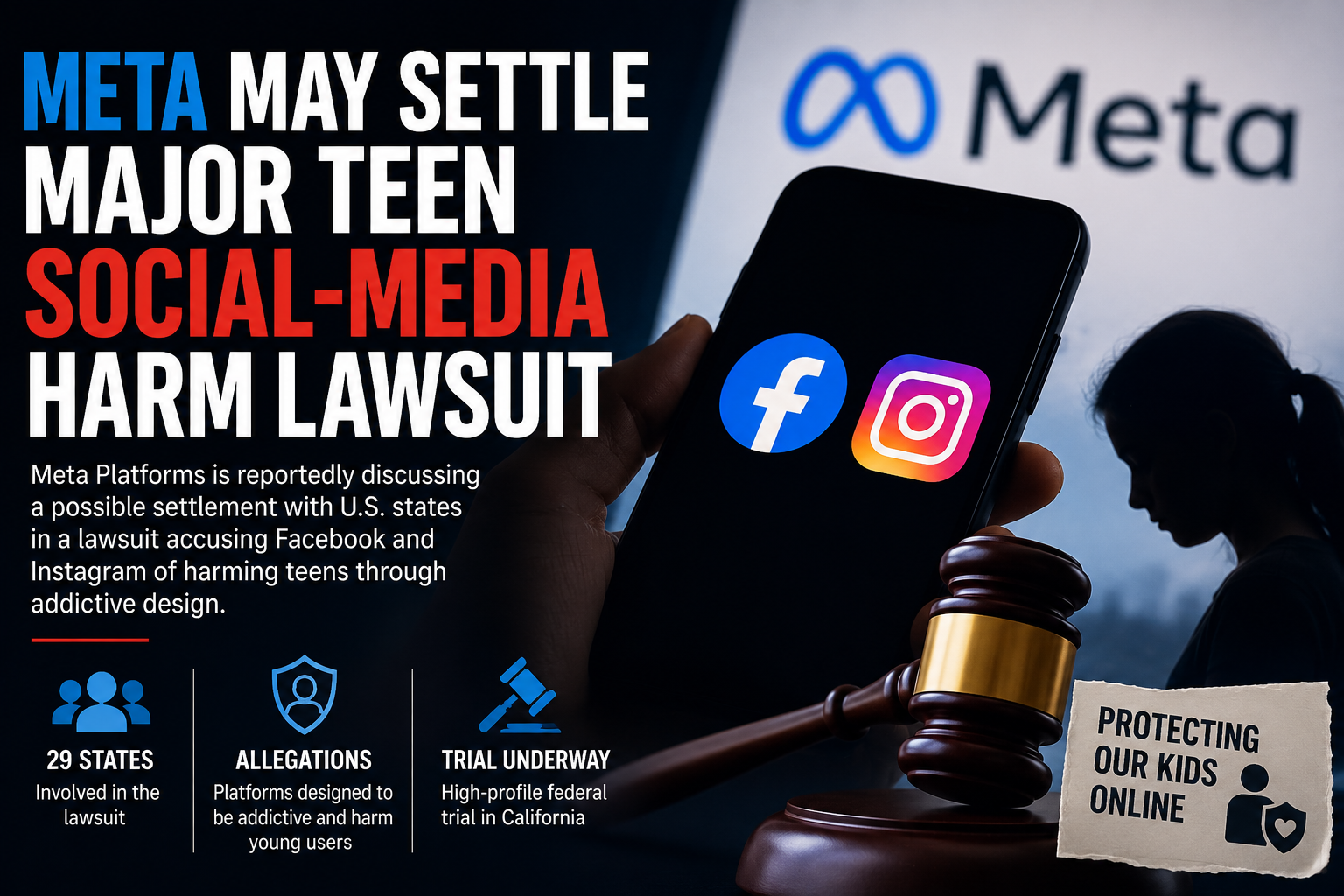
Meta May Settle Major Teen Social-Media Harm Lawsuit
Meta Platforms is reportedly exploring a possible settlement with U.S. state attorneys general in a major lawsuit accusing the company of harming young users through Facebook and Instagram.
According to reports, Meta and a coalition of state attorneys general have discussed a potential mid-trial settlement. The discussions come as the company faces a high-profile federal trial in California over allegations that its social media platforms were deliberately designed to be addictive to children and teenagers.
29 States Are Involved
The broader case involves 29 U.S. states, which accuse Meta of contributing to a nationwide youth mental-health crisis through the design and operation of its social media platforms.
Some of the claims are based on allegations that Meta violated state consumer-protection laws and federal children's privacy requirements. State officials have also accused the company of collecting information from children under 13 without proper parental consent and using that information for purposes including AI training.
Meta has denied the allegations and has argued that it has taken significant steps to improve the safety of young users on its platforms.
Trial Focuses on Instagram's Safety Features
The ongoing trial has placed particular attention on Instagram's “Take a Break” feature, which is designed to encourage teenagers to stop using the platform after spending a certain amount of time on it.
Instagram chief Adam Mosseri testified that relatively few teenagers used the feature when it was optional. The feature later became a default setting for teen accounts in 2024. Prosecutors have questioned whether Meta did enough to promote and implement tools designed to reduce excessive use.
Allegations of Addictive Design
The states argue that Meta deliberately developed features designed to maximize user engagement, including mechanisms that can encourage prolonged use.
The allegations include concerns surrounding infinite scrolling, recommendation algorithms, notifications and other engagement-focused features. Prosecutors argue that these design decisions can expose young users to harmful content and contribute to mental-health problems.
Meta has rejected the characterization of its products as intentionally harmful and has pointed to safety measures introduced for teenagers, including Teen Accounts, restrictions on interactions with unknown adults and warnings related to sensitive content.
Financial Stakes Could Be Significant
The lawsuit could have major financial consequences for Meta if the company loses. State officials are seeking substantial civil penalties and changes to how the company's platforms operate.
Reuters reported that the states' case could involve significant financial exposure, while other reports have put potential penalties at much higher levels depending on the claims and remedies ultimately pursued.
A settlement could therefore allow Meta to resolve at least some of the litigation without waiting for a final trial judgment, while potentially requiring the company to make additional changes to its products and youth-safety policies.
Meta Already Faces Major Youth-Safety Ruling
The latest settlement discussions come shortly after a separate major legal setback for Meta in New Mexico.
A state court ordered Meta to pay $567 million toward addressing youth mental-health harms and imposed court-supervised changes to Facebook and Instagram. That amount came on top of a $375 million civil penalty previously imposed by a jury, bringing Meta's financial exposure in that case to $942 million.
The New Mexico case also required changes affecting how minors use the platforms, including restrictions around notifications and engagement features.
Settlement Is Not Yet Confirmed
Despite reports of settlement discussions, Meta has not announced a finalized agreement with the states.
The negotiations are taking place while the California trial continues, meaning the final outcome could still involve a settlement, continued litigation or a court ruling.
For Meta, the case represents one of the most significant legal challenges yet to its approach to youth safety and engagement. For regulators and families, the outcome could help establish how far social media companies can be held responsible for the effects of platform design on children and teenagers.
Why the Case Matters
The outcome could extend beyond Meta. A settlement or court ruling could influence how other social media companies design products for younger users, handle children's data and balance engagement with safety.
As governments around the world increase scrutiny of social media's impact on children, the Meta case could become an important precedent for future regulations and lawsuits involving youth safety, privacy and addictive platform design.