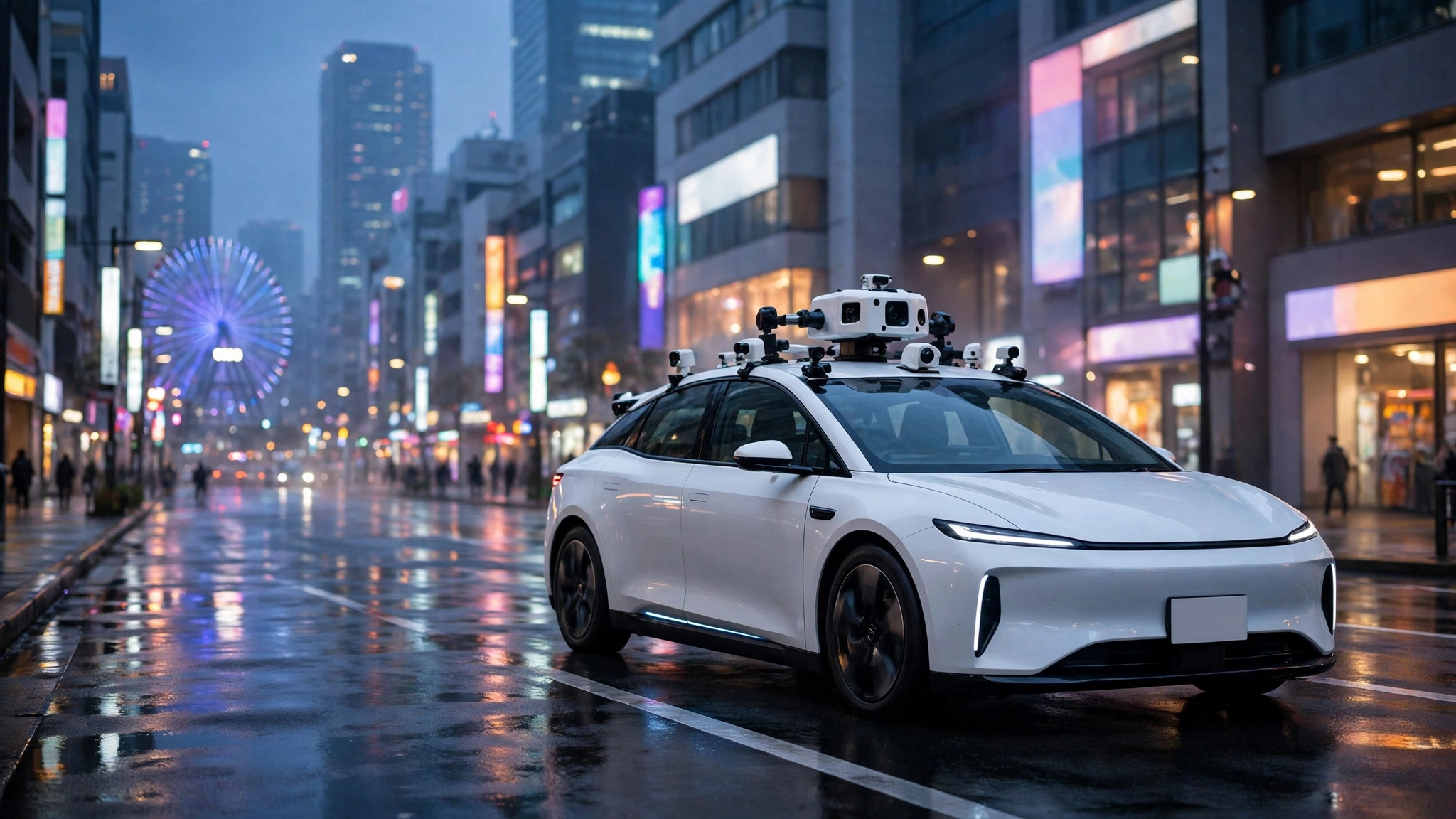
Tokyo-based mobility startup Newmo has raised $135 million in a Series B funding round led by Japanese telecom giant KDDI, giving it fresh fuel for its plan to put commercial driverless taxis on the roads of Osaka by 2028. The round takes Newmo's total funding to $313.1 million, according to Dealroom, which reported the raise on Monday.
Founded in 2024, Newmo already operates about 1,900 taxis across six regions of Japan. The fleet is more than a business: every trip collects driving data that feeds the company's autonomous-driving technology, and its vehicles have been testing self-driving systems in real traffic conditions while carrying paying passengers.
A taxi fleet that doubles as a test bed
Newmo has been running autonomous taxi trials in Sakai City, Osaka Prefecture, since April, and the commercial launch is planned there first. The company is targeting a limited-area service in 2028, initially with a safety driver on board, before moving toward fully driverless operation. Longer term, it aims to build a 1,000-vehicle autonomous fleet.
The timing is deliberate. Japan faces a deepening shortage of taxi drivers as its population ages, and rural and suburban areas in particular are struggling to keep services running. Driverless taxis are increasingly seen as a practical answer rather than a futuristic experiment, and the government has thrown its weight behind them: a transport plan approved in January 2026 set a target of 10,000 autonomous-service vehicles on Japanese roads by fiscal 2030.
KDDI brings the network and the compute
The funding round builds on a capital and business alliance KDDI and Newmo announced on November 6. Under that deal, KDDI will supply the telecom lines linking vehicles to remote monitoring centres, the AI computing infrastructure used to train Newmo's driving models, remote-monitoring technology and high-precision positioning. KDDI Smart Mobility, the telecom group's mobility arm, joins as a third partner in the effort.
Other new investors joined the Series B as well, including DG Daiwa Ventures. KDDI's own investment amount and shareholding were not disclosed, but the telecom operator's involvement goes well beyond writing a cheque: Newmo already uses KDDI's AI computing infrastructure to train its autonomous driving systems, and the two companies plan to extend the operating model to regional transport providers across Japan after the Sakai launch.
A crowded race to Japan's driverless future
Newmo is not alone in chasing Japan's driverless market. Toyota and Waymo announced on October 30 that they will begin initial autonomous taxi operations in Japan from 2027, putting the world's biggest robotaxi operator on Newmo's home turf a year before its planned launch. Several domestic rivals are also testing services in Japanese cities.
That competition makes the next two years decisive. Newmo's advantage is that it already runs a real taxi business, with vehicles, drivers, dispatch systems and customers in place, rather than starting from a technology demo. The risk is that commercialisation remains a goal, not a proven business: regulatory approval, safe operations at scale and viable economics are all still hurdles to clear. If Newmo hits its 2028 target in Sakai, though, Japan's taxi shortage may finally have a driverless answer.