By Hamza Faisal
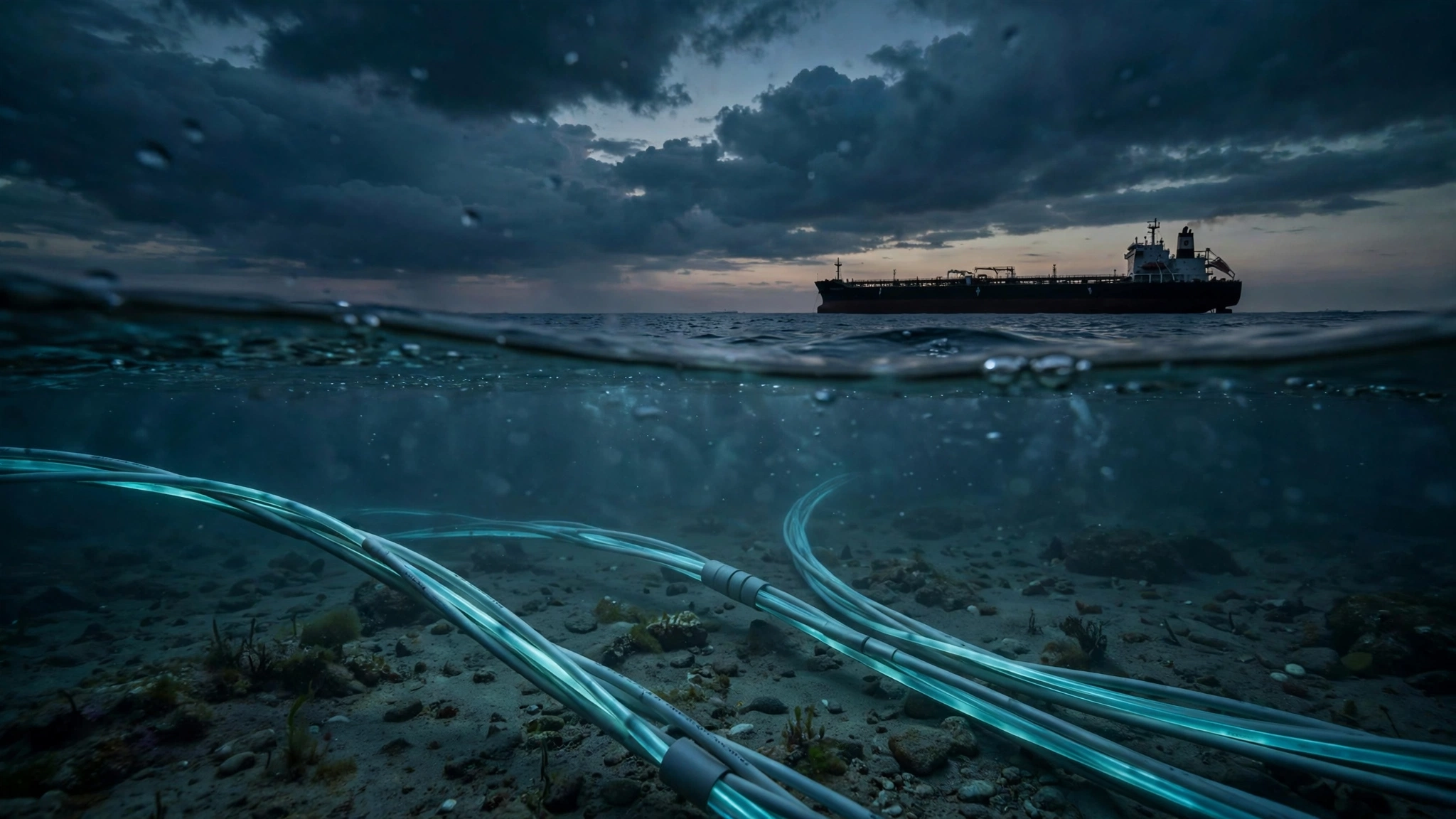
Three sanctioned tankers linked to Iran and an Iranian fishing boat spent days drifting over some of the world's most important undersea internet cables in October, raising fears that Tehran is preparing to target the Gulf's digital lifeline if fighting with the United States and Israel resumes.
The movements were tracked by maritime intelligence firm Windward using ship-tracking data and satellite imagery, and first reported by the Financial Times. The vessels slowed, looped and circled over cable routes in the Gulf of Oman, near the Strait of Hormuz — and some switched off their tracking transponders while they did it.
Windward said the behaviour could mean the ships were mapping the cable routes — or placing charges or mines on them while dark. No damage or attack by the vessels has been reported, and the movements alone prove nothing. But analysts say the pattern is hard to explain any other way: the ships sailed normally until they reached a cable corridor, then slowed, looped, turned back or went dark.
A chokepoint the internet depends on
Six active subsea cables cross the Strait of Hormuz, linking the Middle East with Europe, Africa and Asia, with segments of two more under construction. Four countries — Iraq, Kuwait, Bahrain and Qatar — rely entirely on cables passing through the strait for international connectivity, and about a third of India's westbound internet traffic runs through the area.
One of the corridors the ships visited includes the 2Africa cable, a vast system owned by a consortium that includes Meta. Windward said one tanker, the Celestial Sea, circled the 2Africa cable for slightly more than four hours on October 14, then disabled its tracking system the next day between 2Africa and the Bay of Bengal Gateway cable. The fishing vessel, meanwhile, hovered above the Europe India Gateway and Transworld cables between October 21 and 26.
In an October 26 blog post, Windward described two of the sanctioned tankers drifting for days directly over regional cable corridors with no commercial reason to stop — and neither ship was carrying commercial cargo.
Threats made openly
The loitering comes against a backdrop of explicit Iranian threats. The United States and Israel launched a major war with Iran in February 2026, and Iranian officials and Revolutionary Guard commanders have repeatedly warned they could attack undersea cables in the Strait of Hormuz if strikes resume. In May, a Guard spokesperson said Iran would impose fees on cables owned by US tech firms and others; on October 20, another spokesperson noted that seven major cables run through the strait.
Reuters reported on October 23 that Tehran had drawn up detailed plans to attack seven major internet cables if the United States and Israel resumed strikes. October also saw the most ship attacks in the Gulf since the war began.
Repairs already impossible
Even without an attack, the region's cable infrastructure is already under strain. Specialised cable-laying and repair vessels have been unable to operate safely in the area since the war began, meaning any damage would be slow and difficult to fix.
Subsea cables carry almost all intercontinental internet traffic, and the Strait of Hormuz is one of the narrowest chokepoints they pass through. For now, the ships have moved on and the cables are intact. But the tracking data shows how easily a handful of darkened vessels could put the Gulf's connection to the rest of the world at risk — and how little warning there might be.