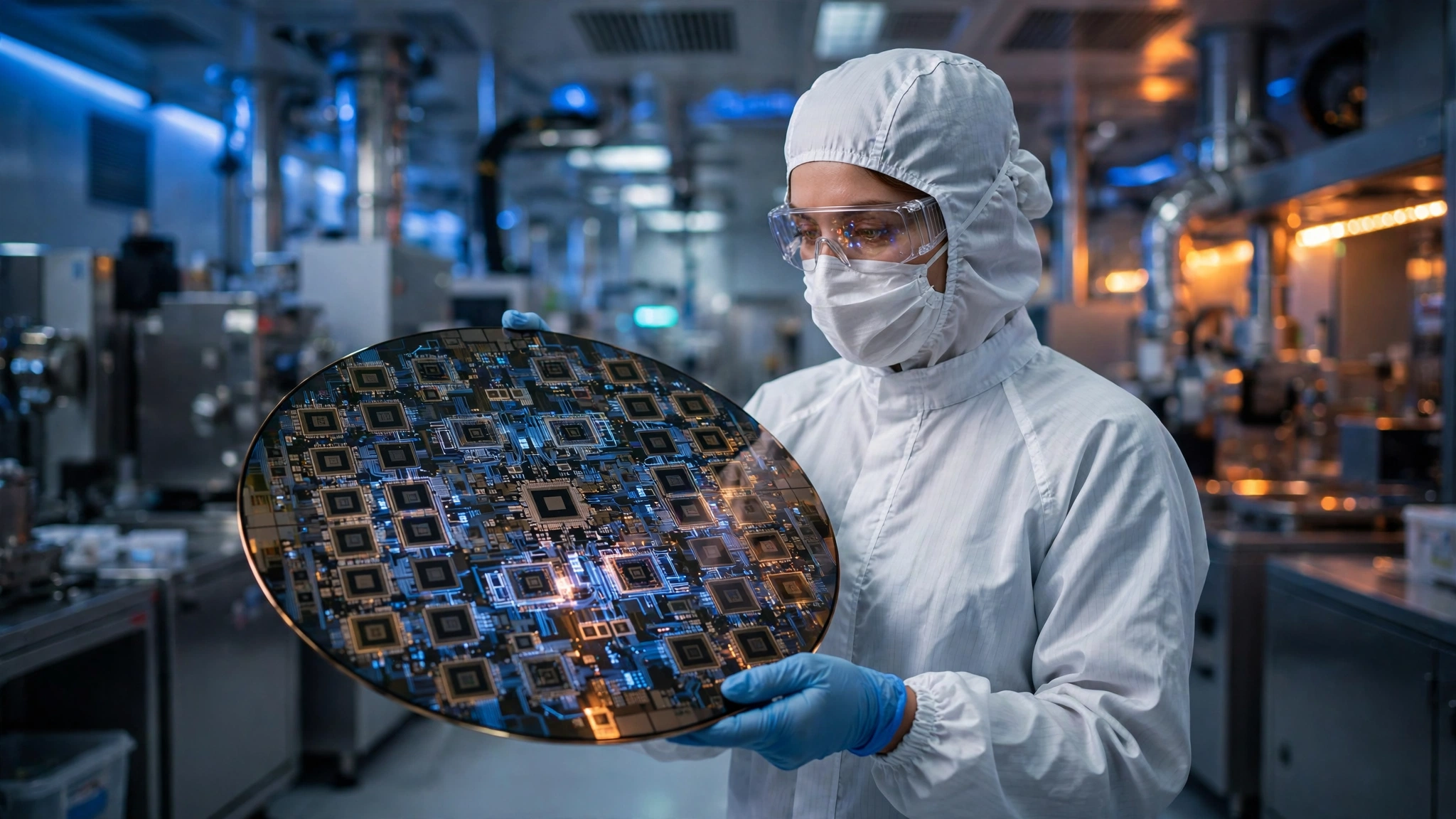
Intel has signed its first external customer for its most advanced chipmaking process, CEO Lip-Bu Tan said on Wednesday, the first real proof point for the company's five-year foundry turnaround. Tan made the announcement at the TomorrowX Summit in Austin, Texas, saying: “Resilient supply on the foundry is very important… And then 18A, I’m involved in production and we just signed the first customer.”
Intel did not name the customer, disclose the size of the deal, or issue a press release or regulatory filing — the whole announcement is one sentence from a conference stage. Intel technology chief Pushkar Ranade later clarified on X that the customer signed up for 18A-P, a refined 18A variant that entered risk production — early, low-volume runs used to iron out defects — in June 2026.
A name withheld, a milestone claimed
The secrecy has not stopped the guessing. Analyst Ben Bajarin of Creative Strategies called the signing “a huge win for foundry” and suggested the customer is likely Nvidia, Apple, or a major cloud provider needing an alternative to TSMC. Reports in May said Apple and Intel were nearing a deal for Intel to manufacture some chips for Apple devices, and October 2025 reports claimed Intel would make Microsoft’s Maia 2 AI chip on 18A or 18A-P — unconfirmed by Intel.
On Intel’s third-quarter earnings call, Tan had already said the company was engaged with “a couple of highly strategic customers” on 18A. Wednesday’s announcement turns that engagement into a signed deal — though until the customer steps forward, the market takes Tan’s word for it.
Why 18A is the bet Intel has to win
18A is the most advanced node Intel has ever built and the one its foundry ambitions hinge on. It is the final node of the company’s “5 Nodes in 4 Years” roadmap and the first to combine PowerVia underneath power delivery with RibbonFET gate-all-around transistors. 18A-P is designed to extend the node’s life and is fully compatible with 18A designs.
Tan also offered a data point on manufacturing health: he said 18A yields have climbed to roughly 70%, a marked improvement on the “horrible” figures he inherited on taking over in March 2025. Yields — the share of working chips on each wafer — are what foundry customers watch most, and 70% puts Intel within reach of volume credibility.
The TSMC problem — and the Microsoft side deal
The stakes are plain. TSMC builds the overwhelming majority of the world’s most advanced chips, and every big tech company that designs its own silicon — from Apple to Nvidia to the cloud giants — depends on it. Intel’s pitch is a second source: resilient, Western-based supply for an industry learning how fragile a single-supplier chain can be.
Alongside the 18A announcement, Tan named Microsoft as the first publicly disclosed customer for Intel’s EMIB advanced packaging technology, which links multiple chips at high speed in one package. Microsoft will apply EMIB to its in-house designed semiconductors for Azure — a separate deal from the 18A-P manufacturing agreement, but part of the same diversification story.
For Intel, whose stock has collapsed as its turnaround dragged on, this is the milestone investors have awaited since Tan took over. The unanswered question — who the customer is — is also the test: a marquee name would validate the foundry, a small one would leave the doubts in place. Either way, Intel must now prove it can build someone else’s chips at volume, on time, at the yields it claims.


