By Hamza Faisal
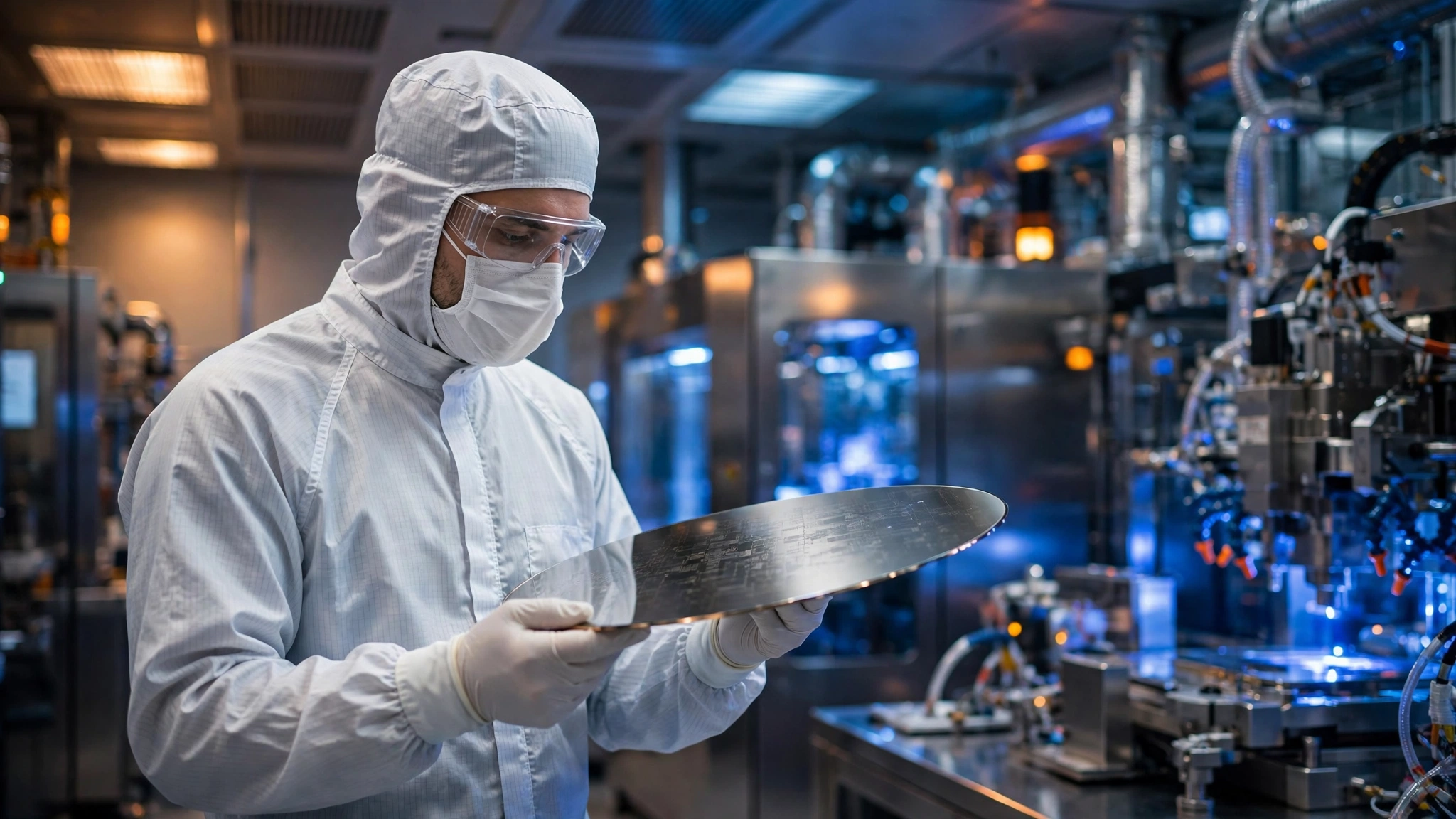
German chipmaker Infineon said on Tuesday it will invest around €1.1 billion ($1.23 billion) to build the world's first high-volume production line for gallium nitride (GaN) power semiconductors on 300-millimetre wafers at its site in Villach, Austria. The company plans to start production by the end of 2027, turning a technology it has been refining for years into a mass-market product.
The investment, spread out to 2034, will go into Infineon's existing cleanroom facilities in Villach, which the company says lets it expand capacity efficiently and at lower cost than building a new fab from scratch. The ramp-up will be adjusted to market demand. The European Commission has approved €319 million in state aid for the project under the European Chips Act, with the formal funding commitment from Austria's economy ministry still to come.
Why gallium nitride, and why 300 millimetres
Gallium nitride switches and converts power more efficiently than conventional silicon, allowing smaller and more energy-efficient systems — a decisive advantage as AI data centres, electric vehicles and renewable-energy systems demand ever more power without ever more heat. Infineon processed its first 300-millimetre GaN wafers two years ago and is now moving the technology into volume production.
The wafer size matters as much as the material. A 300-millimetre wafer holds 2.3 times as many chips as the most commonly used 200-millimetre version, cutting the cost per chip and making GaN economical for far more applications. Infineon is targeting AI data centres, energy infrastructure, electric mobility, robotics and consumer electronics, and cites Yole Group's estimate that the market for GaN power semiconductors will grow by around 35 percent a year to roughly $3.5 billion by 2031.
A bet on Europe's chip sovereignty
Chief executive Jochen Hanebeck framed the project as a statement of intent for European manufacturing. "This substantial investment shows our clear commitment to strengthening the European semiconductor ecosystem and Europe's technological sovereignty," he said. "By establishing high-volume manufacturing on 300-millimeter wafers, we will be the first company in the world to bring gallium nitride power electronics into volume production."
Austrian Chancellor Christian Stocker called it one of the largest single investments in the country's high-tech industry. Infineon Austria employs about 5,800 people, including around 4,800 in Villach, and the company says the project will strengthen the city's role as a global centre for power semiconductors. The company has not said how many new jobs the GaN production line will create.
What it means for the AI power crunch
The timing is no accident. AI data centres are straining power grids and cooling systems, and every percentage point of efficiency gained in converting power translates directly into lower electricity bills and less waste heat. GaN's efficiency edge positions Infineon to sell into that bottleneck just as data-centre construction peaks — provided demand holds up long enough for the 2027 production start to meet it.
Investors gave the announcement a cautious welcome: Infineon's share price, which has fallen around 40 percent since the middle of June, rose nearly 1 percent in early Frankfurt trading. The market's verdict, in other words, is that the world's first high-volume GaN fab is a real milestone — but one whose payoff depends on the AI buildout continuing to need more power, more efficiently, for years to come.