By Hamza Faisal
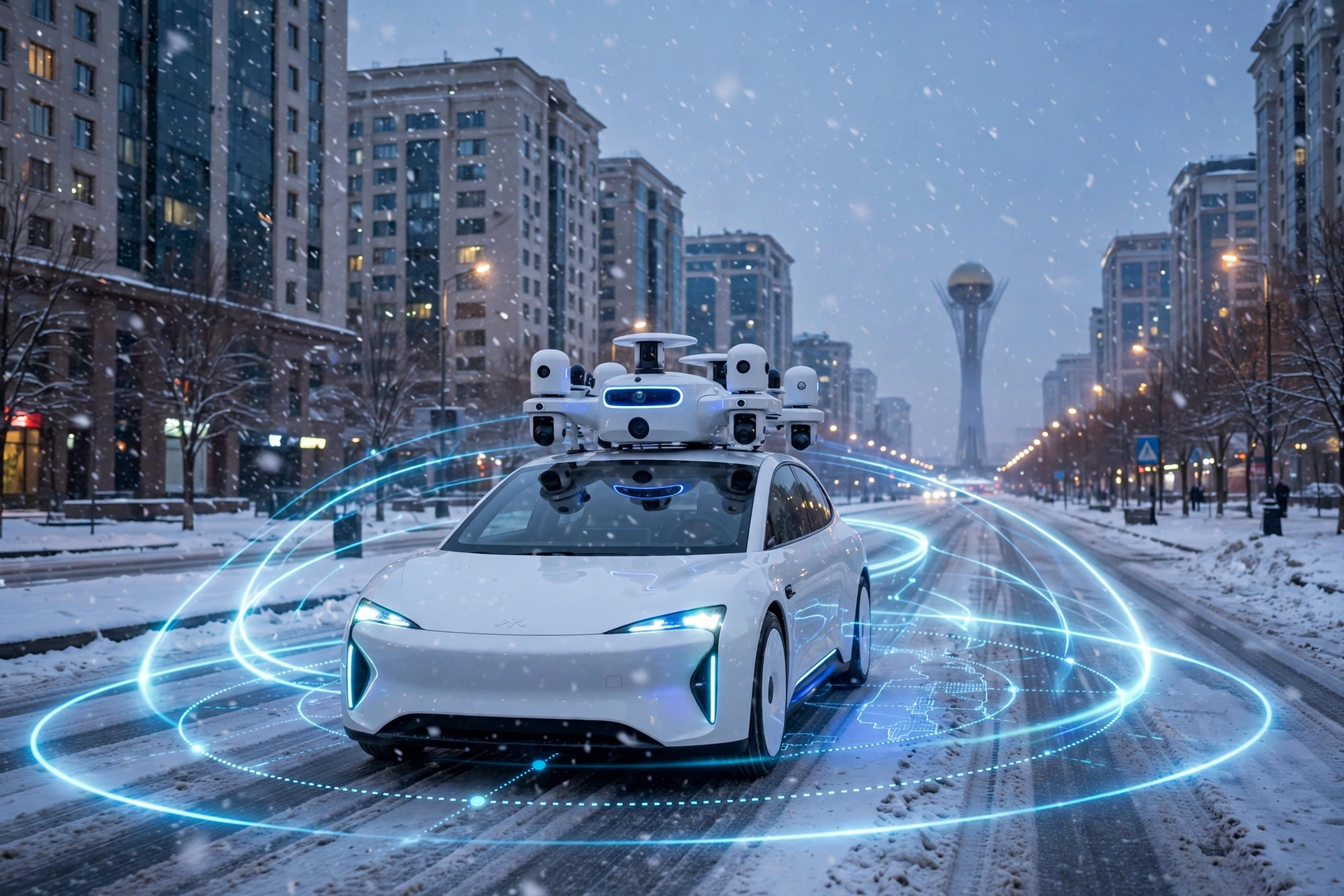
Ride-hailing company inDrive has signed a deal with Chinese autonomous-driving firm Pony.ai and chip giant Nvidia to begin testing robotaxis in Kazakhstan, pushing the race for driverless rides deeper into Central Asia. The companies announced a memorandum of understanding on Friday to explore adding Pony.ai's robotaxis to inDrive's ride-hailing platform, with testing slated to start in the Kazakh capital Astana in the first half of 2027.
Under the plan, Pony.ai will supply its seventh-generation robotaxis, inDrive will offer and operate the service through its app, and Nvidia will provide the AI infrastructure, including its Hyperion reference platform for Level 4 autonomous vehicles and its Halos full-stack safety system. Testing will initially run with a safety operator on board, with fully driverless rides as the longer-term goal.
A capital-light entry into a new frontier
inDrive, known for letting riders and drivers haggle over fares, is pursuing what its chief technology officer Yuri Misnik calls a capital-light approach to autonomy. "We work with a range of partners in different markets, combining their expertise with ours to deliver a better customer experience," Misnik told TechCrunch.
The split divides the work cleanly: Pony.ai brings vehicles proven in commercial service across China, inDrive brings a rider base it has built in Kazakhstan since its founding in 2014, and Nvidia brings pre-integrated sensors and computing that it says cut robotaxi development costs. Nvidia automotive vice president Ali Kani said those savings are especially relevant in emerging markets, where ride-hailing is already cheap and autonomous services must compete on price.
Why Astana
Kazakhstan was picked for its regulatory readiness. Memoranda signed between inDrive and Kazakh authorities across 2025 and 2026 created a sandbox-style framework for piloting autonomous vehicles, including a potential pilot route from Astana's airport. The country also declared a "Year of Digitalization and Artificial Intelligence," building the first structured legal framework for driverless transport in the region.
Astana also offers something few robotaxi testbeds do: a real winter. The city of 1.7 million endures months of snow and ice each year. inDrive founder and CEO Arsen Tomsky said success in Astana could yield valuable insights for expanding autonomous mobility to other cities facing similar conditions. Kazakhtelecom is meanwhile stacking GPUs in the capital — 400 Nvidia H200 and 480 B300 units deployed so far, with 1,000 Vera Rubin GPUs expected in 2027.
The robotaxi land grab accelerates
The deal adds another front to the global autonomous ride-hailing push. Earlier this month, Uber announced plans to test Pony.ai's robotaxis in London, alongside supervised rides with British startup Wayve, and continues working with multiple robotaxi partners across the Middle East. Pony.ai says it is targeting more than 3,500 robotaxis across over 20 cities by the end of 2026, up from 1,975 in June.
For Nvidia, the partnership is another foothold for Hyperion in the race to power the world's robotaxi fleets. For inDrive, it is a hedge on the future of a business model built on human drivers. And for Kazakhstan, it is a chance to leap from haggling over fares to hailing cars with no driver at all.
By Hamza Faisal


