By Hamza Faisal
IBM, the US Department of Energy-funded Quantum Science Center at Oak Ridge National Laboratory and AMD have unveiled a new co-design platform for quantum error correction, pairing quantum hardware with classical supercomputing in a single research environment. The announcement, made on November 5, is aimed at one of the hardest problems in quantum computing: keeping fragile quantum information intact long enough to be useful.
Quantum bits, or qubits, are notoriously error-prone. Tiny disturbances from heat, vibration or electromagnetic noise can corrupt a calculation, so practical quantum machines need error correction — extra qubits and fast classical processing that constantly detect and fix mistakes as they happen. Until that works reliably at scale, quantum computers remain research machines rather than practical tools.
A 120-qubit processor next to a GPU supercomputer
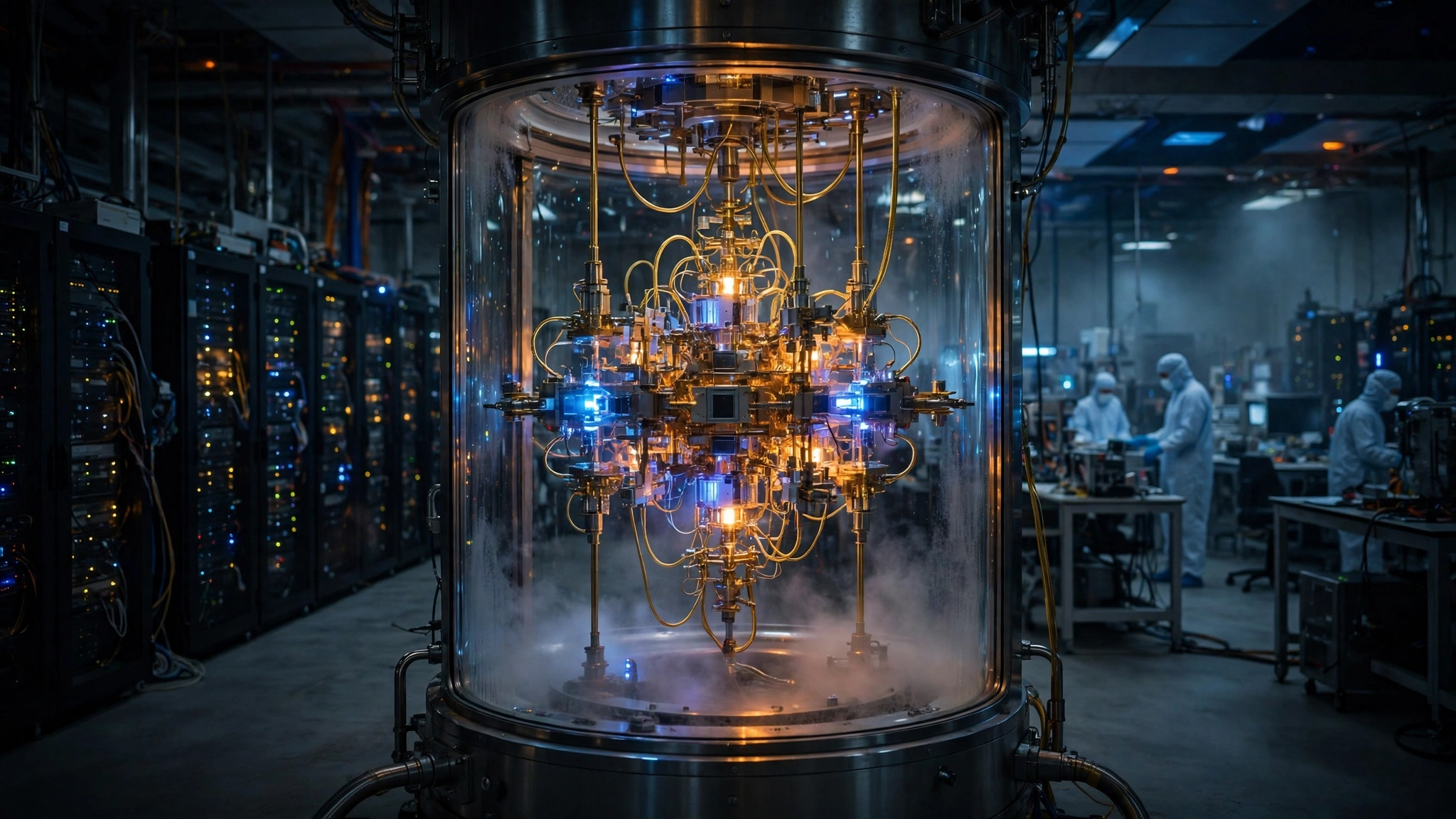
The first deployment of the platform sits at IBM's site in Poughkeepsie, New York, where it brings together IBM's quantum computers — including the 120-qubit IBM Quantum Nighthawk processor — with Oak Ridge's Umbra high-performance computing system. Umbra runs on AMD Instinct MI355X graphics processors and fifth-generation AMD EPYC CPUs, giving researchers a powerful classical engine sitting right beside the quantum hardware.
That closeness matters. Error correction is a race against time: measurement results from the qubits must be decoded and acted on within microseconds, and the classical side has to keep up. By colocating the two systems, the partners can test how tightly quantum and classical computing can be integrated, rather than treating them as separate machines that exchange data over a network.
Testing which error-correction ideas actually scale
The platform is designed as a comparison engine. Researchers will be able to test different error-correction approaches side by side — measuring each one by the qubits, time, samples and classical resources it needs — with planned work spanning concatenated codes, space-time codes, algorithm-aware decoders and hardware-aware circuit optimisation. The idea is to find out which approaches genuinely scale, instead of guessing from theory alone.
The partners also plan to connect the platform to the Oak Ridge Leadership Computing Facility and its Lux supercomputer, also built on AMD processors and GPUs, creating a pathway to explore quantum computing as part of a broader AI and scientific computing infrastructure.
A 2028 target — and a long road
The work feeds into the US Department of Energy's Quantum Genesis Mission, which has set a target of a scientifically relevant quantum computer by 2028 — defined in its Q Competition as 100 logical qubits running 100,000 hard operations by late 2028. IBM's own public tracker currently sits at 70 logical qubits running 438 hard operations, a reminder of how far the field still has to go.
"The question is no longer if error correction will work on quantum hardware," said Jay Gambetta, an IBM Fellow and director of IBM Research. But the announcement is a research platform, not a breakthrough result: no performance numbers from the platform itself have been published, and no independently verified benchmark shows a complete application running error-free. What has launched is a shared testbed — and what gets learned on it could shape IBM's path toward a genuinely fault-tolerant quantum computer.
By Hamza Faisal


