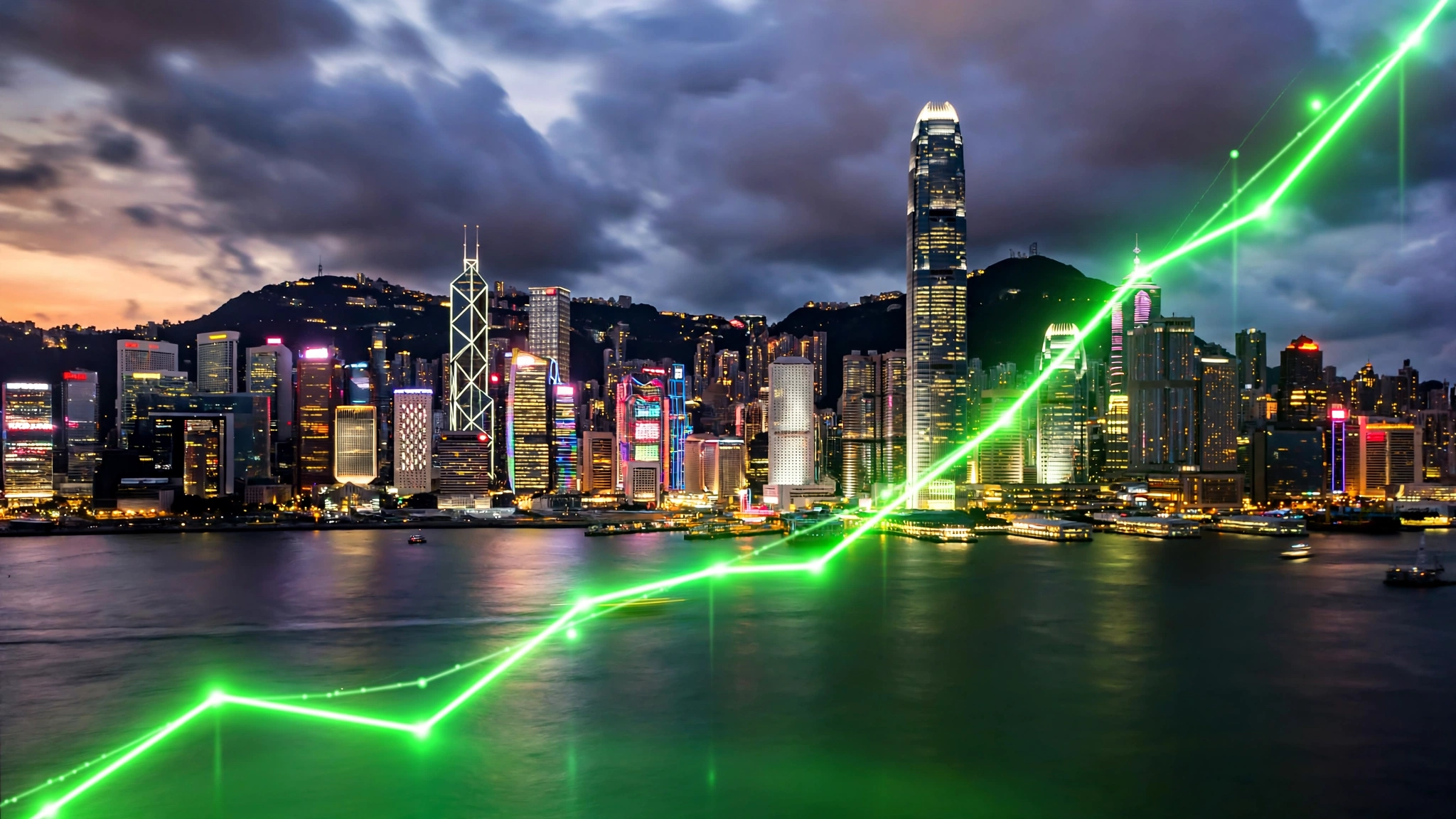
Hong Kong's technology stocks staged a sharp rebound on Friday, with the Hang Seng Tech Index jumping 6.45 percent in a single session after China's State Council pledged stronger support for the country's capital markets. The rally offered a rare bright day for a sector that has spent most of 2026 in a steep selloff.
The benchmark Hang Seng Index rose 2.11 percent to close at 22,694.77, while the Hang Seng Tech Index — which tracks 30 of Hong Kong's largest listed technology companies — finished at 3,637.88. Chipmakers and artificial intelligence developers led the advance, with several of the market's most beaten-down names posting double-digit gains.
AI model stocks lead the rebound
The two Chinese AI model developers that have become the market's bellwethers both surged. Zhipu, the large language model developer also known as Z.ai, climbed 18.57 percent to close at 347.40 Hong Kong dollars. MiniMax rose 17.19 percent to 110.10 Hong Kong dollars. Both stocks had been heavily sold in recent weeks as investors worried about US chip restrictions and lofty valuations.
Semiconductor names were just as strong. Semiconductor Manufacturing International Corp, China's largest chipmaker, jumped 16.4 percent, Hua Hong Semiconductor surged 20.7 percent, and Shanghai Iluvatar CoreX Semiconductor soared 26.3 percent. Among the heavyweights, Alibaba climbed 7 percent, Tencent advanced 3.2 percent and Meituan rose 8.2 percent ahead of its quarterly results — results that later showed the delivery giant swinging back to profit.
A pledge from Beijing
The trigger was a State Council meeting that signalled fresh market-stabilisation steps, lifting mainland shares and spilling over into Hong Kong. The pledge came after a punishing run for Chinese tech: the Hang Seng Tech Index has fallen 38 percent in 2026, its worst year on record, with about $1.7 trillion in market value wiped out across Hong Kong and mainland tech benchmarks since the end of June.
The rebound also reflects a market trying to price in a new reality for China's AI industry. US rules that took effect on November 19 require overseas data centres to obtain licences before supplying advanced computing power to Chinese companies, closing a route many labs used to rent Nvidia chips abroad. Moonshot, the developer of the Kimi chatbot, has scrapped a $150 million deal to lease Blackwell chips through an Indonesian data centre, and MiniMax founder Yan Junjie has told staff the company will speed up its adoption of Huawei and Alibaba chips. Investors, for now, are betting the domestic chip industry can fill at least part of the gap.
What comes next
Whether Friday's rally marks a turning point or just a pause in the selloff will depend on what Beijing does next. Traders will watch for concrete follow-through on the State Council's pledge, and for signs that mainland investors keep buying. The rally even spilled into crypto, with bitcoin climbing back above $60,000 as Asian tech shares rose.
For now, the market has given China's AI stocks a breather — their biggest single-day gain in months. Holding on to it will be the harder part.


