Google has launched its screenless fitness tracker, the Fitbit Air, in India. Announced on Wednesday, the device goes on sale on October 2 — Gandhi Jayanti — priced at Rs 13,999, and will be sold through the Google Store, Flipkart, Croma, Reliance Digital, Vijay Sales and other retail partners.
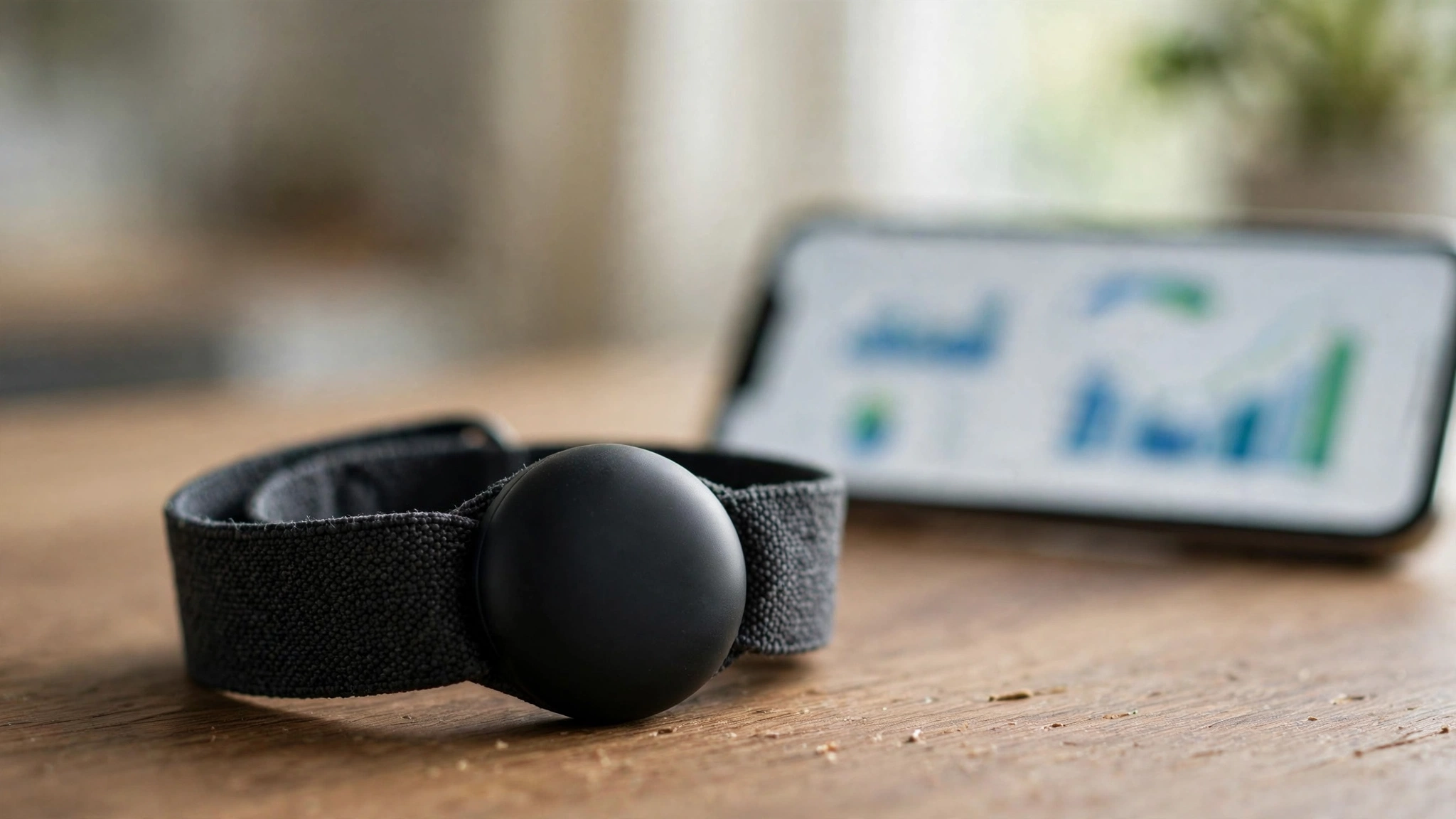
The Fitbit Air is Google's smallest and lightest Fitbit tracker to date. It does away with a display entirely: there is no screen to check, no notifications to dismiss and no watch face to customise.
Instead, the compact "pebble" module simply sits in a wristband and collects health data around the clock, sending everything to the Google Health app on the wearer's phone.
Google says the device weighs just 12 grams with its band. The pebble pops out of its holder, so users can swap bands to match their outfit or activity.
A Pebble, Not a Screen
The tracker ships with a breathable Performance Loop band made from recycled materials. A sweatproof silicone Active Band with a ribbed texture, aimed at high-intensity training, and a dressier Elevated Modern Band in a bracelet-style metal-and-leather look are sold separately.
It comes in four colourways — Obsidian, Berry, Lavender and Fog. Every unit also includes a three-month trial of Google Health Premium, which is bundled at no extra cost for Google AI Pro and Ultra subscribers as well.
Launch offers include Rs 1,000 cashback on select HDFC Bank and ICICI Bank cards, bringing the effective price down to around Rs 12,999, along with no-cost EMI options of up to 12 months on consumer loans.
Health Coach Takes the Wheel
Despite the lack of a screen, the Fitbit Air packs a full set of health sensors. It tracks heart rate 24/7 along with resting heart rate and heart rate variability, flags irregular heart rhythm with AFib alerts, and monitors blood oxygen (SpO2), sleep stages and sleep duration.
Workouts are auto-detected, and Google says detection learns a wearer's routine over time.
All interaction happens through the Google Health app on a paired smartphone, compatible with Android 11 and above and iOS 16.4 and above. There are no buttons or gestures on the device itself.
The headline software feature is Google Health Coach, an AI-driven personal wellness system. It turns health and activity data into daily, personalised guidance, logs workouts automatically, and can even interpret a photo of gym equipment or a circuit-training routine written on a whiteboard to record a session.
Battery life is rated at up to seven days, and Google says five minutes of fast charging delivers a full day of power.
A Premium Bet on a Niche Market
The Fitbit Air first launched in the United States in May for $99, where it was pitched as a direct rival to Whoop. Its India pricing of Rs 13,999 — roughly $146 — positions it considerably higher relative to the US price, which some reviewers noted could limit its appeal in a price-sensitive market.
Google is nevertheless betting that screen fatigue is real. The screenless design joins a growing category of distraction-free wearables that includes Whoop bands and Oura rings — devices aimed at people who want health tracking without another screen buzzing on their wrist.
Research firm IDC has noted that screenless trackers are carving out a niche even as overall wristband shipments decline.
In India, the competition includes local players as well as international brands.
Counterpoint Research estimates India accounts for only about 5 percent of the global screenless wearable market — suggesting the Fitbit Air is chasing a small but growing audience willing to pay a premium for a minimalist tracker backed by Google's app ecosystem and AI coaching.