By Hamza Faisal
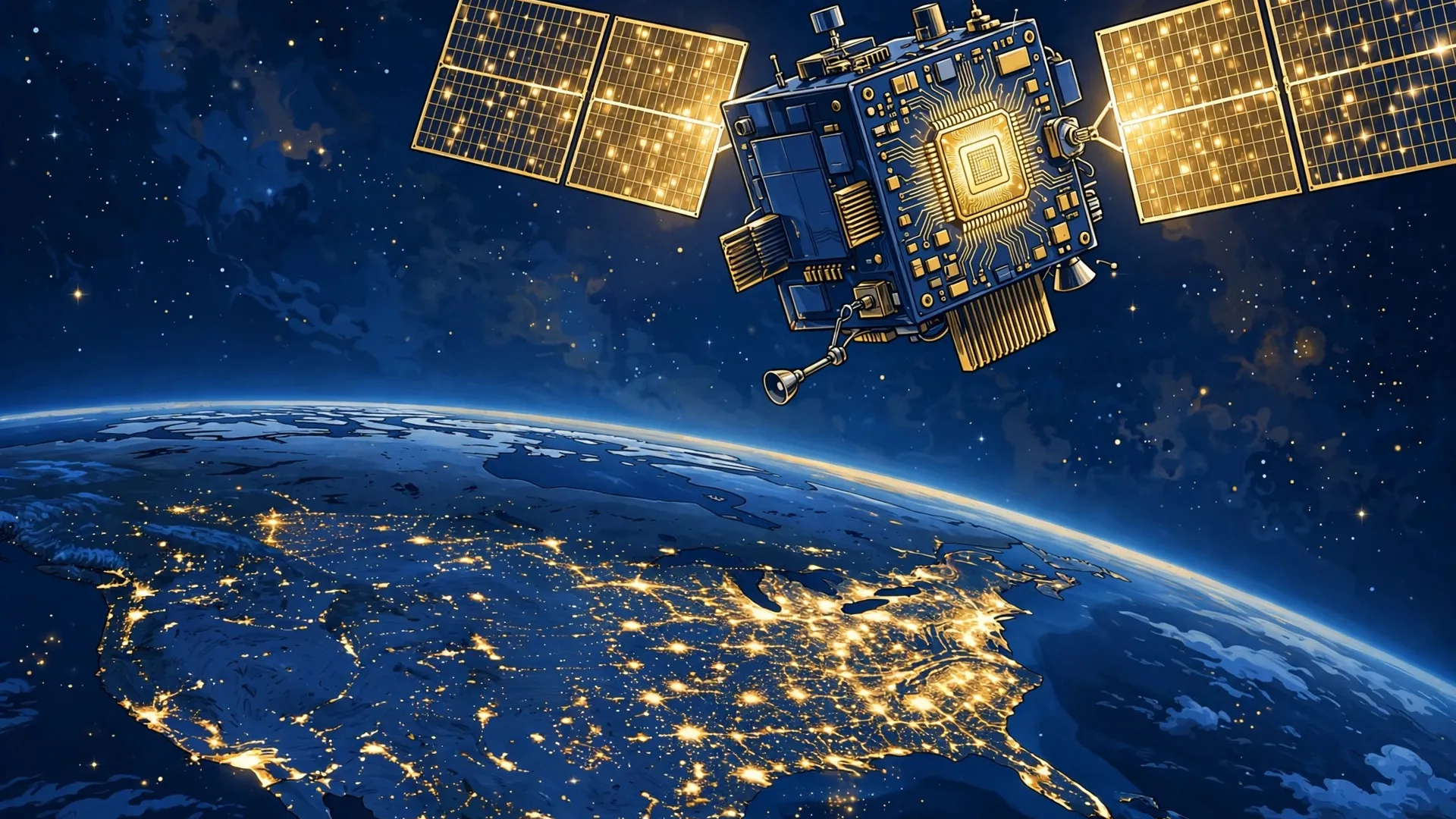
Google's first data center in space is officially online. The company's Project Suncatcher prototype, which rode into orbit on a SpaceX Falcon 9 rideshare mission on October 1, has completed about three weeks of commissioning and is now communicating with the ground — and its first real job was writing poetry.
Engineers sent the satellite's onboard AI model, Google DeepMind's Gemma 4, a simple first prompt: write a haiku about being in space. As the spacecraft passed over a ground station in Svalbard, Norway, it beamed back its answer: “Blue marble below / Data streams in silent grace / Starlight feeds my core.” Google described the moment as its “Hello World” for computing in orbit, and said the team also tried space-themed limericks and asked the payload to report its own technical status. A company spokesperson told TechCrunch the satellite is operating nominally.
One satellite, four chips, twenty minutes at a time
The prototype, built with satellite company Planet, carries four of Google's Tensor Processing Units — the same class of chip that powers its data centers on Earth — but it generates only about one kilowatt of electricity. That tight power budget means it can switch on just one TPU at a time, in bursts of roughly 20 minutes, which makes timing each contact with the ground a careful exercise.
The pitch behind Suncatcher is straightforward: satellites in the right orbit sit in near-constant sunlight, so their solar panels could run AI computing on clean power around the clock. Google's longer-term vision is networks of close-flying satellites sharing large inference workloads over high-speed laser links, rather than a single machine working alone.
The hard parts: heat, radiation and repair
What the prototype actually proves so far is modest — a small-scale AI workload running in orbit, not a working orbital data center. The ongoing test campaign will now examine how the chips handle thermal stress and the space radiation environment, two of the biggest open questions for computing off Earth.
Radiation is the subtler threat: high-energy particles can flip bits and quietly corrupt data. Google has already tested its TPUs in particle accelerators, and those tests suggested radiation would matter little for running models but more for training them. Now the company gets real data from orbit, where no technician can ever pop open the case.
What comes next: twin satellites in 2027
If the TPUs hold up, Google plans to launch two more satellites in 2027 with higher power generation, designed to demonstrate inter-satellite optical links — the key step toward satellites that can genuinely share a workload. Suncatcher is largely alone in planning high-speed links for coherent distributed workloads; SpaceX's planned orbital data centers are also expected to use laser links, but their satellites will orbit too far apart to share processing effectively, while startups such as Starcloud aim to run AI on single satellites instead.
From launch to haiku in under a month, Suncatcher has taken its first small step. The poetry was the easy part — the real test is whether data-center silicon can survive, and thrive, hundreds of kilometers above the nearest power grid.
By Hamza Faisal


