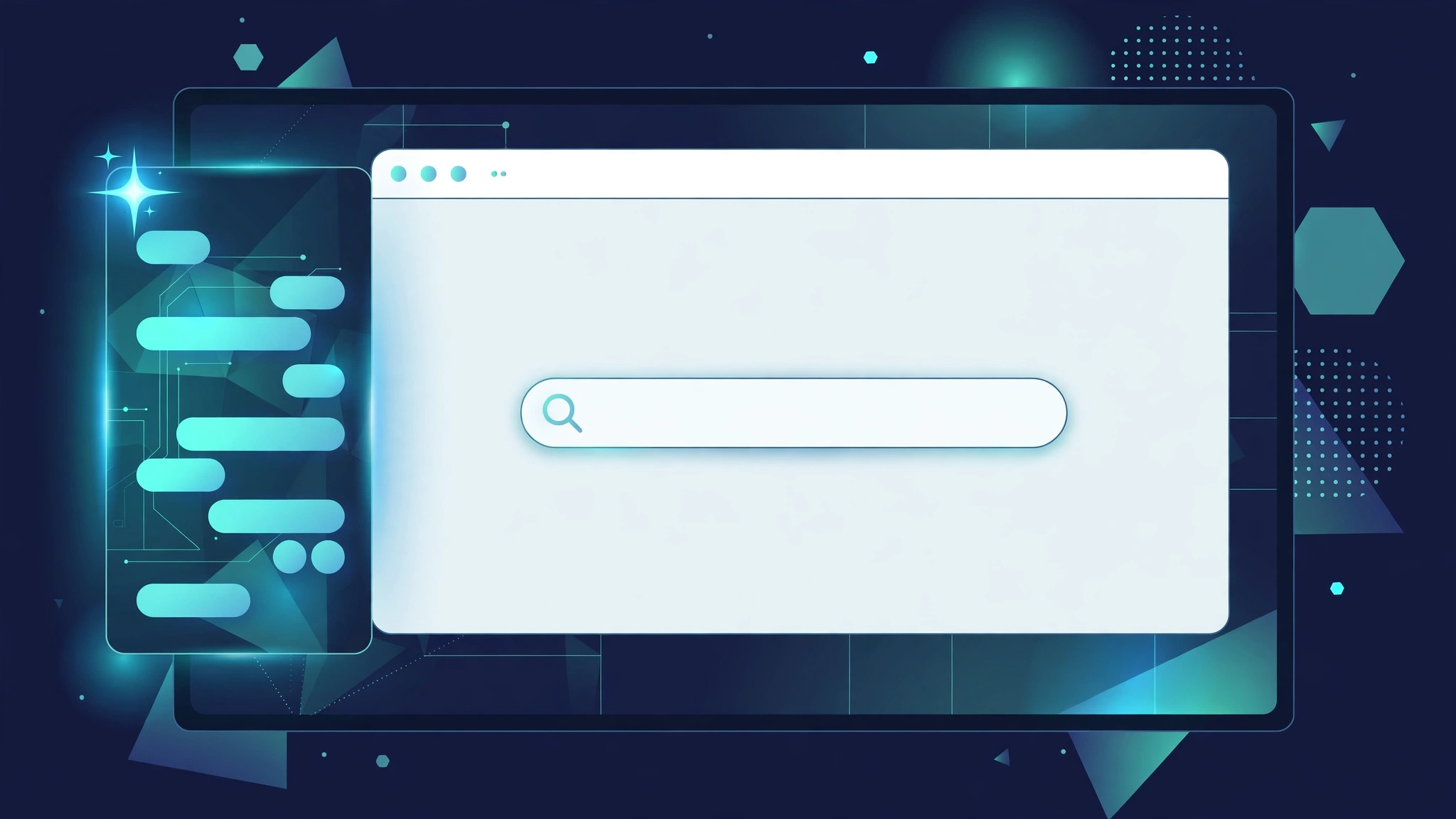
For more than 25 years, the Google homepage barely changed: a logo, a search box, and two buttons underneath. One of those buttons is now gone. Google is rolling out a redesigned desktop homepage that removes the classic "Google Search" button and replaces it with shortcuts to Gemini, its AI assistant — the most visible sign yet that the company sees search becoming a conversation, not a single query.
The change was announced on November 19 by Robby Stein, Google's vice president of product for Search, in a post on X. The new homepage is rolling out globally on desktop, though it is arriving gradually and not every account has it yet.
What disappears, and what takes its place
The familiar "Google Search" button that sat beneath the search bar is gone. In its place are three shortcuts powered by Gemini: one to create images with Nano Banana, Google's image model; one to ask questions about files you upload; and one to brainstorm ideas with the AI assistant. The "I'm Feeling Lucky" button, famously, survives — outlasting the button that actually ran a search.
The second, bigger change is a collapsible sidebar on the left of the page. It lists your recent AI Mode conversations, with a "New chat" shortcut, a way to search old threads, and a section for notebooks. Clicking a past conversation reopens it in AI Mode, Google's chatbot-style search experience, so you can pick up where you left off instead of starting from scratch.
Core search still works the way it always has. Type a query into the box and press Enter, and you still get a traditional page of results. The search bar itself now carries an AI Mode button inside it.
Why Google is making the change now
Stein framed the redesign as a response to how people actually use Search today. "People are coming to Search with more questions that aren't just one and done," he wrote, adding that in testing, the sidebar "made a big difference for making progress & continuing to explore the web." In other words, Google now expects users to return to ongoing conversations rather than fire off one-off queries and leave.
The homepage update is the latest step in a rapid folding together of Search and Gemini. Google added an AI Mode button to the search bar last year, and on November 12 it put Gemini 4 Hydrogen, its fast new model, behind AI Mode in every language it supports. AI Mode passed one billion monthly users in May.
There are still open questions. Google has not said what people who are not signed in will see, or when the mobile homepage might follow.
A homepage that finally admits what search has become
The Google homepage has been one of the most stable pages on the internet — a blank canvas that resisted the portal-style clutter of rivals like Yahoo and AOL for decades. This redesign keeps the page clean, but its message is unmistakable: the search box is no longer the whole product. The chatbot is now the front door.
For a company whose search ads still pay the bills, that is a striking bet. Google has already seen its market value slide this year as investors worry AI search will eat into ad revenue. Putting Gemini on the homepage anyway suggests the company would rather cannibalise its own icon than let a rival do it. The button that defined the web's front page for a generation is gone. What replaces it is a conversation.


