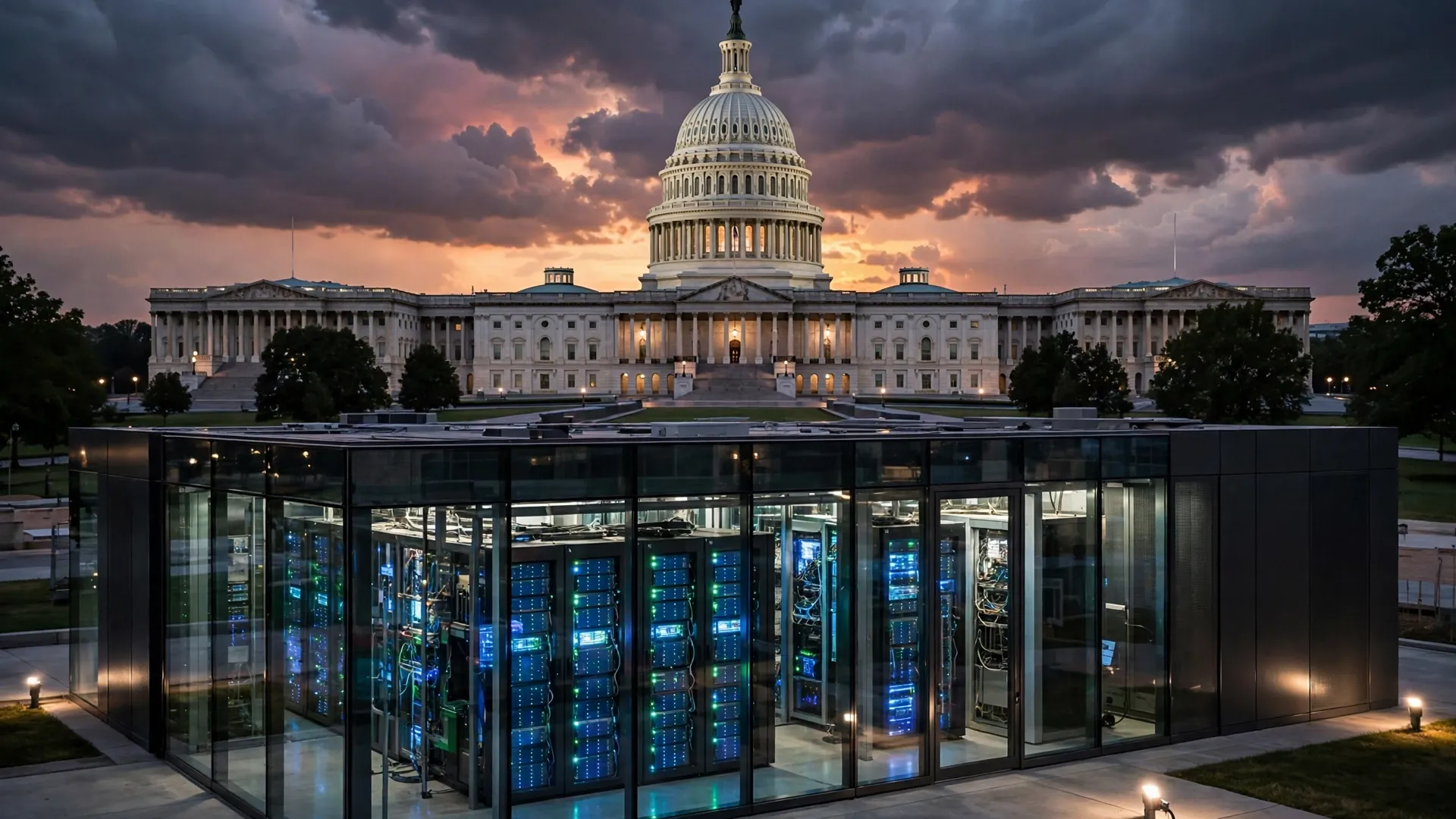
Four US senators want public companies to show investors exactly how they are paying for the artificial intelligence boom — including the debt and side deals that sit outside the main company. The bipartisan AUDIT AI Act, introduced on November 19, would force new disclosures about AI spending, financing and risk, and direct the Securities and Exchange Commission to write the rules within 180 days.
The bill's sponsors are Sens. Mark Warner of Virginia and Angela Alsobrooks of Maryland, both Democrats, and Sens. John Kennedy of Louisiana and Mike Rounds of South Dakota, both Republicans. All four sit on the Senate Banking Committee. The proposal — formally the Advancing Uniform Disclosure of Investments and Transparency of Artificial Intelligence Act — arrives as investors grow uneasy about the scale of AI spending and the financing behind it.
What companies would have to disclose
The bill targets three gaps. The first is money. Non-financial public companies would have to identify their AI-related joint ventures, special purpose vehicles, variable interest entities and other major debt arrangements in annual and quarterly reports and in offering statements. The aim is to expose financing that currently sits off the balance sheet — including arrangements some observers call round-trip financing, where suppliers help fund the data centres buying their products.
The second gap is governance. Companies would have to say whether they maintain an AI governance policy and whether their board has a committee dedicated exclusively to AI — and explain why not if they do not. Companies that do have a policy would have to make it publicly available.
The third gap is risk. Companies with significant AI exposure would have to add a standardised AI risk section to their annual report, covering dependence on third-party foundation models, concentration of compute providers, volatility in inference and training costs, liabilities tied to data licensing, and reliance on foreign frontier models. The SEC would also study how companies account for AI research, revenues and capital spending, and report annually on how automated trading affects price discovery.
Why now: a selloff and a 'systemic risk' warning
The timing is no accident. The bill landed in the middle of a sharp AI stock selloff — the Nasdaq lost 10 percent in a week, its worst since the early Covid turmoil — and as Anthropic's record IPO failed to steady the market. Warner described the web of AI funding as a potential systemic risk, and said the bill would scrutinise the financial risks posed by businesses at the centre of the boom, including chipmaker Nvidia.
"Ordinary investors deserve to know who is behind the systemic shifts that AI will soon bring — and how they're paying for it," said Robert J. Jackson Jr., a former SEC commissioner who has endorsed the bill.
A proposal, not yet a law
For now, the AUDIT AI Act is only a proposal. The released draft carries no assigned Senate bill number, and nothing changes for companies unless it passes both chambers and is signed into law. Warner said his priority in the lame-duck session is passing bipartisan AI safety legislation, and he hopes to advance the disclosure bill soon after.
But the direction is clear. After years in which AI spending was judged mainly on growth, lawmakers are now asking who bears the risk when the bills come due — and whether investors can even see it. If the bill advances, earnings season could soon disclose not just how much companies spent on AI, but how they financed it and what happens if the bet goes wrong.