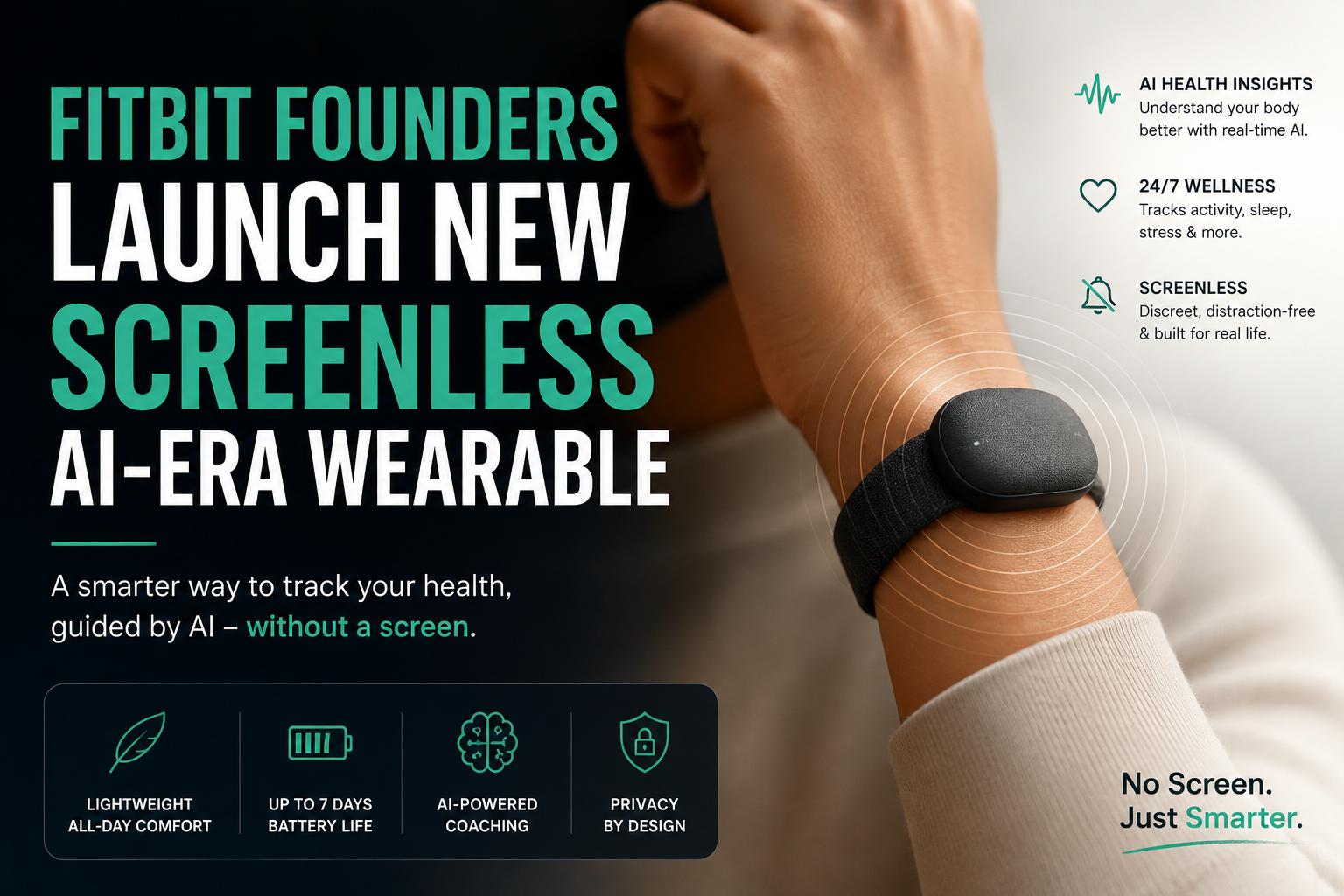
Fitbit co-founders James Park and Eric Friedman have returned to the wearable technology market with Luffu Link, a new screenless health and safety band built for the AI era.
Unlike traditional smartwatches and fitness trackers, Luffu Link has no display. Instead, it is designed to operate quietly in the background, continuously tracking health and wellbeing while connecting users with their families and trusted contacts.
The wearable tracks key health metrics including activity, steps, sleep, heart rate and heart-rate variability (HRV). The collected information syncs with the Luffu app, where AI analyzes patterns and can help identify meaningful changes in a person's routine or wellbeing.
One of its standout features is AI-powered voice logging. Users can press a button and verbally record information about medications, meals, symptoms, mood, reminders or other health details. The Luffu platform then organizes this information alongside data collected automatically from the wearable.
Luffu Link also includes built-in GPS and 4G LTE-M connectivity, allowing location sharing, check-ins and help requests even when the user's smartphone is not nearby. LTE service is included with the device and does not require a separate carrier plan.
The device is particularly aimed at family caregivers, older adults living independently and health-conscious users. Rather than presenting users with another screen full of charts, Luffu wants its AI platform to identify changes and surface information that families may actually need to act on.
Battery life is rated at up to five days, and the device is water resistant to 50 meters. It will initially be offered in Halo Gold, Onyx Black and Sterling Blue.
Luffu Link is currently available for preorder at $249.99, discounted from its expected $299.99 retail price, with shipments planned for early 2027. A Luffu Family Plan subscription will also be required.
The launch highlights a broader shift in wearable technology toward screenless devices and AI-powered health insights, as companies look beyond traditional step counting and smartwatch notifications toward more passive, personalized health monitoring.