By Hamza Faisal
Firehawk Defense has raised more than $150 million in an oversubscribed Series D funding round that values the defence technology company at more than $1.4 billion, making it the latest rocket propulsion maker to reach unicorn status as the United States rushes to rebuild its munitions supply chain.
The Dallas-based company, formerly known as Firehawk Aerospace, said the round was co-led by Advent and Rochefort Asset Management, with additional new and existing investors and strategic partners also taking part. The financing was upsized from an original target of around $100 million, according to reports.
Firehawk plans to use the new capital to expand its patented propulsion manufacturing platform, including its production facility in Lawton, Oklahoma, and its missile integration facility in Crawford, Mississippi. The money will also fund more hiring and research sites as production of artillery motors, solid rocket motors, energetics and propellant scales up.
A faster way to make rocket propellant
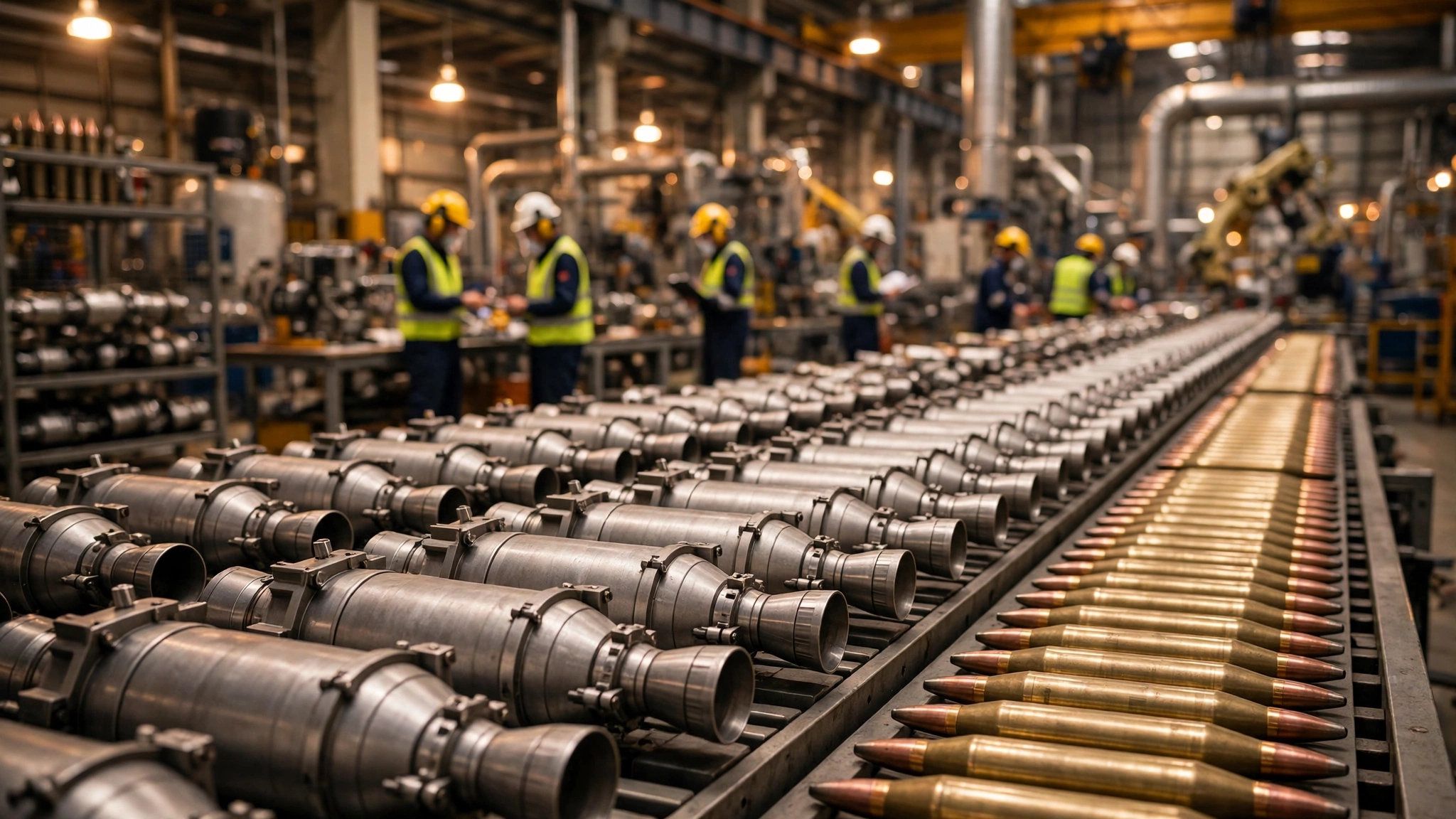
Firehawk's pitch is speed. Traditional rocket propellant production relies on batch mixing, casting and curing, a process that can take weeks. Firehawk replaces it with a thermoplastic process in which the material is produced continuously, stored, and then moulded, extruded or 3D-printed into shape for different motors — cutting what the company describes as a 60-day process down to about six hours.
The company's portfolio covers the full chain from propellant to finished motors, including rocket-assisted projectile motors, rocket-assisted take-off motors and smaller solid rocket motors.
Army contracts and a General Dynamics partnership
Firehawk already has real demand behind the fundraising. In May 2026, General Dynamics Ordnance and Tactical Systems signed a teaming agreement with the company to accelerate development and production of 155mm base-bleed motors, which extend the range of artillery shells by up to 35 percent. Under a commercial agreement with General Dynamics, Firehawk plans to produce more than 100,000 artillery motors in 2027.
In August 2026, Hydra-70 rockets built at its Crawford facility passed a live-fire test with a 100 percent success rate at Yuma Proving Ground. The test followed a US Army award aimed at diversifying the Hydra-70 rocket supply chain, and Firehawk separately won a $24 million, 22-month Pentagon contract to expand propellant production for the M1128, a 155mm extended-range artillery projectile.
At its Mississippi facility, Firehawk says it has capacity for 40,000 Hydra-70 rockets and wants to grow that to about 10,000 per month. The Army buys more than 330,000 of the rockets a year, giving the company a large market to chase if it can scale.
From a $290 million valuation to $1.4 billion in a year
The Series D is a sharp step up from Firehawk's last round. The company closed an oversubscribed $60 million Series C in September 2025 at a $290 million valuation, followed by a strategic investment in November 2025 to accelerate solid rocket motor production. The new valuation is nearly five times that level in just over a year.
Founded in 2019 by chief executive Will Edwards, Firehawk says its Oklahoma plant — a 320-acre site it calls the Great Plains Arsenal — is expected to begin low-rate production by mid-2027 and produce roughly 3 million pounds of propellant a year by the end of next year. By the end of 2027, the company expects to be the country's largest producer of artillery motors and its third-largest producer of propellant.
Whether it hits those targets will depend on execution, hiring and military orders. But with fresh capital, signed partnerships and live-fire tests behind it, Firehawk has moved from a manufacturing experiment to one of the defence industry's most closely watched suppliers.