By Hamza Faisal
OpenAI's former research chief is back, and he's building factories. Bob McGrew, who served as OpenAI's Chief Research Officer from 2017 to 2024, emerged from stealth on Tuesday with Arda Industries — an AI startup for manufacturing engineering that has raised $232 million at a $1.5 billion valuation, the company disclosed in an exclusive interview with CNBC.
The financing comes in two parts: a $160 million Series A at the $1.5 billion valuation, co-led by Altimeter, Accel, and Khosla Ventures, on top of a $72 million seed round led by Accel and Founders Fund. The round values Arda at more than double what it was chasing just months ago — back in March, the company was seeking $70 million at a $700 million valuation. Other investors include XYZ Venture Capital, 8VC, SVAngel, and Felicis.
McGrew's exit continues a wave of high-profile departures from OpenAI, following chief technology officer Mira Murati and co-founder Ilya Sutskever. But where most alumni have gone on to build bigger language models, McGrew is betting on a sector AI has barely touched: the factory floor. His pitch is that manufacturing, not chatbots, is where the next leap in AI value will come from.
What Arda actually builds
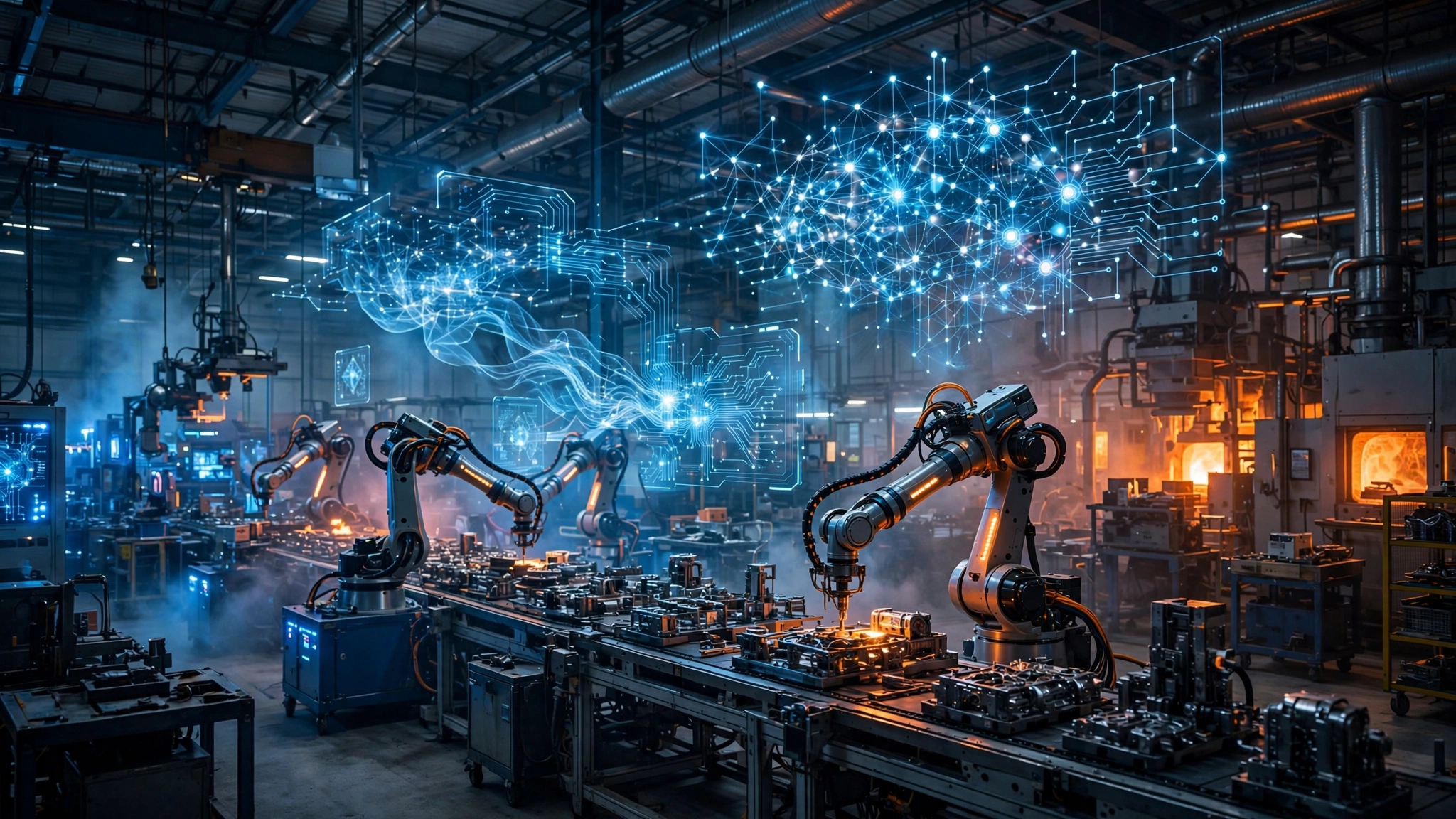
Arda builds AI software that turns a product design into an assembly line — and keeps that line current as the design changes. In traditional manufacturing, a small design change can idle production for months while engineers reprogram the automation. Arda says its models shrink that process to minutes.
"It's a user interface and an agent that does for manufacturing engineers what Claude or Cursor does for programmers," McGrew told CNBC. "When a design changes, you can retrain a human in a day — but it takes three to six months in order to change the automation to reflect the new design."
The company describes its technology around three jobs: analyzing video of production, helping operations adapt quickly when a product's design changes, and coordinating work between robots and human workers. The approach is designed for the messy reality of factory floors, where sensor data, supply-chain variables, and the physics of materials matter more than anything a language model can scrape from the internet.
A Palantir veteran's playbook for American factories
McGrew knows industrial software. Before OpenAI, he spent more than a decade as Palantir's product and engineering lead, and at OpenAI he worked on the reasoning capabilities of early models before the launch of ChatGPT. He stayed through the famous November 2023 weekend when Sam Altman was fired and rehired, leaving only after shipping OpenAI's reasoning product — which he has called "the last key breakthrough left before AGI."
He is joined by co-founders Augustus Odena, Alex Mark, and Jakob Frick, and the team mixes software engineers from Palantir, manufacturing engineers from Tesla, and AI researchers from MIT, working directly on customers' factory floors. Arda's AI models are already deployed with Anduril, the defense technology company, and the startup is working with companies in the data center supply chain, defense, and electronics.
The funding will go toward growing the engineering and research teams, expanding deployments with manufacturers, and developing the robotics models needed to automate assembly. McGrew's stated mission is bigger than one company: he wants to make American manufacturing competitive again by giving engineers tools that adapt as fast as products change. In a sector where a redesign has always meant downtime, that promise is worth $1.5 billion.
By Hamza Faisal