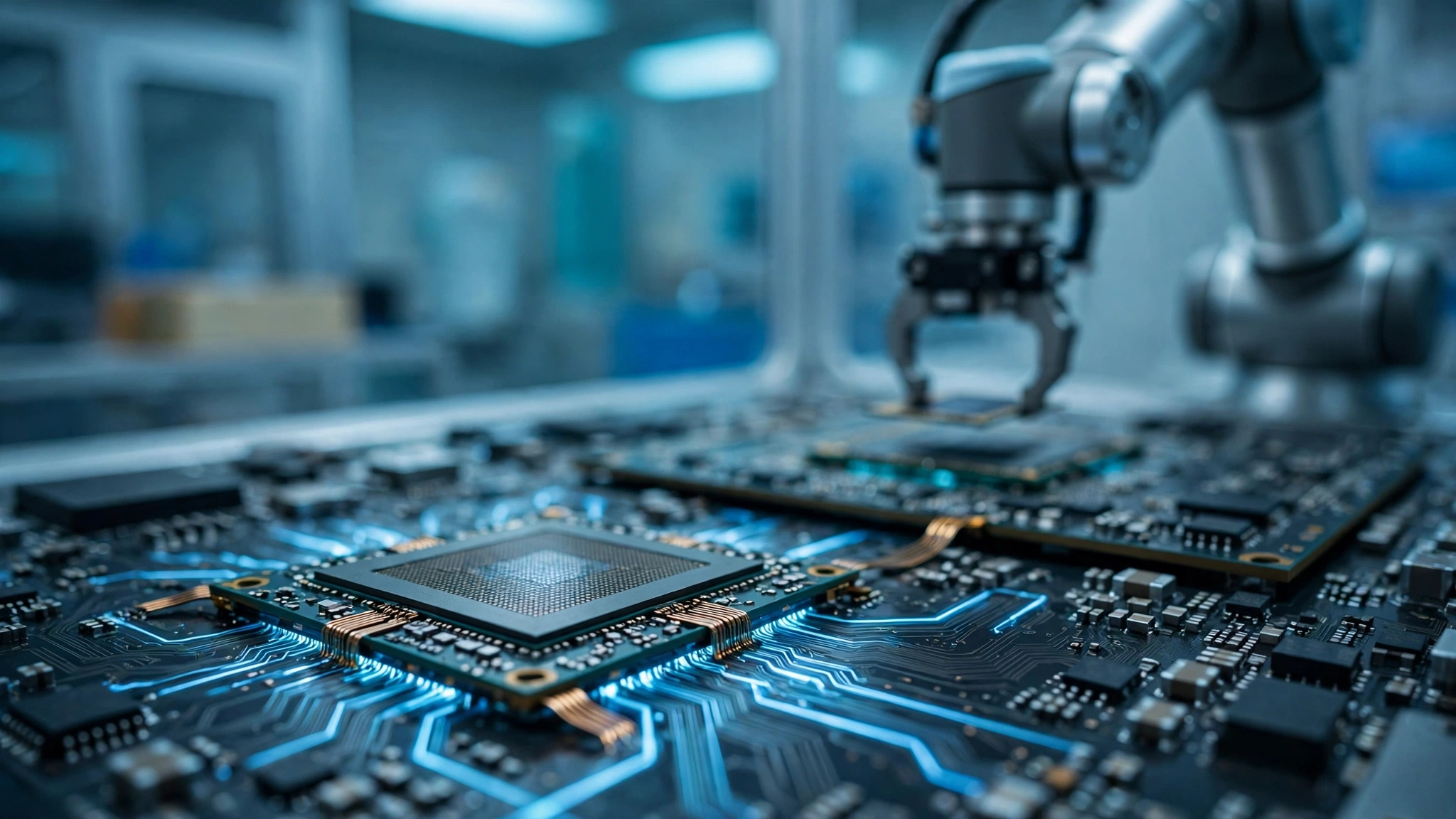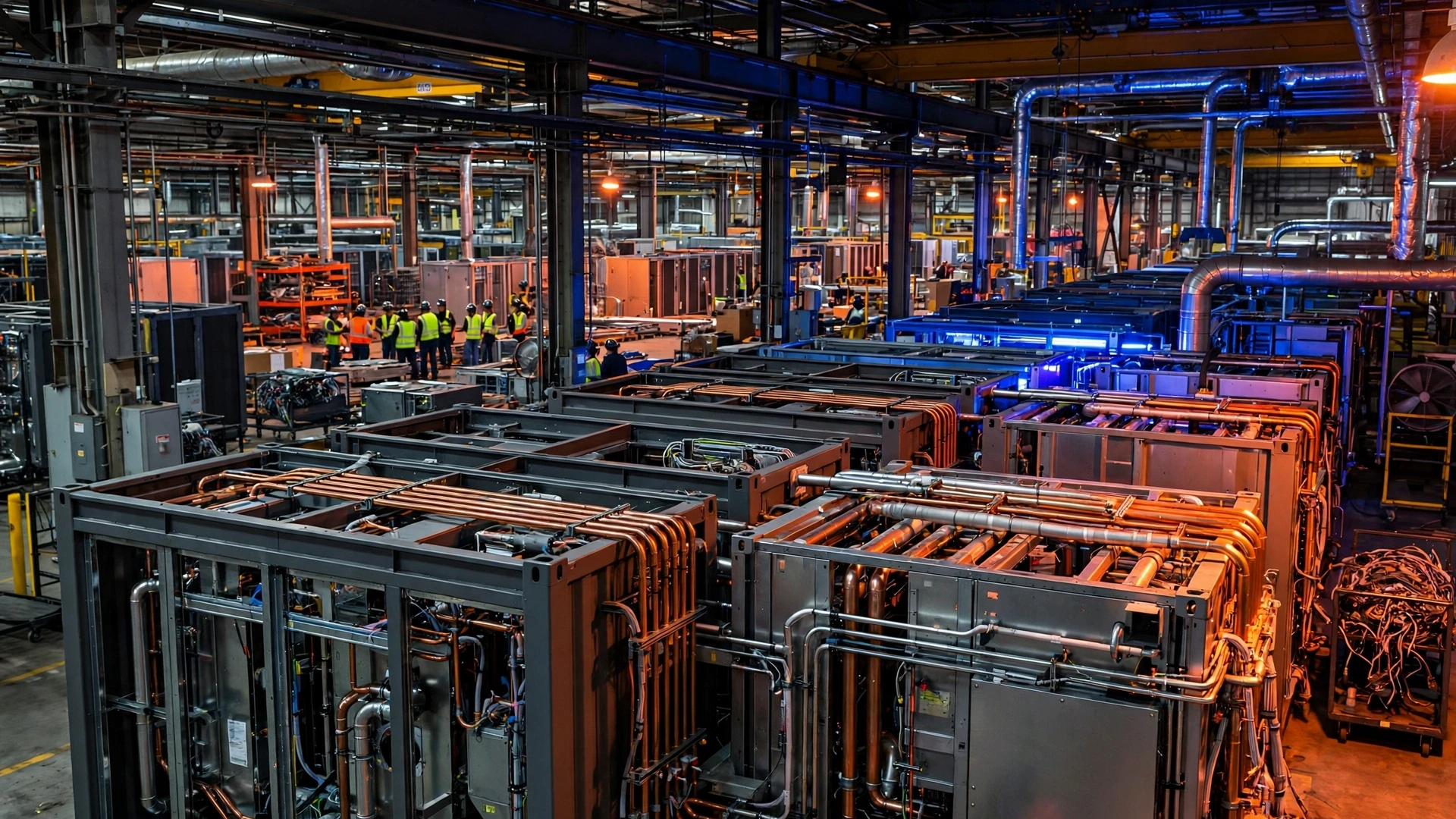
A startup founded by three former US Department of Energy officials has raised $130 million at a $1 billion valuation to build AI data centers in a factory instead of on a construction site. Mavria, based in The Woodlands, Texas, unveiled its business on November 9, arriving with a billion-dollar price tag, a product already on the production floor and no customers yet named.
The total covers pre-seed and seed rounds, according to the company's announcement. The latest round was led by Paradigm, the crypto-focused investor, with AMP PBC, Liquid 2, Critical Frontier and Dream Ventures also taking part. Some reports describe the newest round as a $100 million check inside the $130 million total; an SEC filing dated October 21 showed $75 million sold from a $100 million offering to 16 investors. Mavria has not published a breakdown by round.
Data centers as a product
Mavria's first product is called Terrain, and it treats the entire data center as a repeatable manufactured product. Each unit is a standardized 5 MW block that bundles power distribution, cooling, controls and IT pods into a single package, designed, integrated and tested at the factory before it is shipped to a site. The idea is to replace years of custom on-site construction with factory-based manufacturing that can be repeated at scale.
The first unit, Terrain 01, is currently in production in Houston. Mavria says the blocks are built for high-density AI workloads and aimed at frontier AI labs, neoclouds, developers and infrastructure owners. The company stresses it does not operate a cloud or sell compute itself — it sells the building, not the processing.
From the Energy Department to the factory floor
The founding trio comes from an unusual place for a hardware startup. Chief executive Adam Blake, Seth Cohen and Nick Poradek all worked at the US Department of Energy, where Blake and Cohen led the team that carried out President Trump's nuclear executive orders. Mavria was founded in June 2026, and Blake says the company was formed to close the gap between the AI industry's compute ambitions and the industrial capacity needed to build data centers and their supporting power infrastructure.
The company plans to use the new funds to secure supply chains for critical components, expand manufacturing capacity and hire. But the bet is far from proven: Mavria has disclosed no customers, no prices and no delivery dates, and a finished 5 MW block still needs 5 MW of electricity waiting for it at its destination. A $1 billion valuation before a single commercial deployment sets a high bar — now the factory has to prove it can clear it.