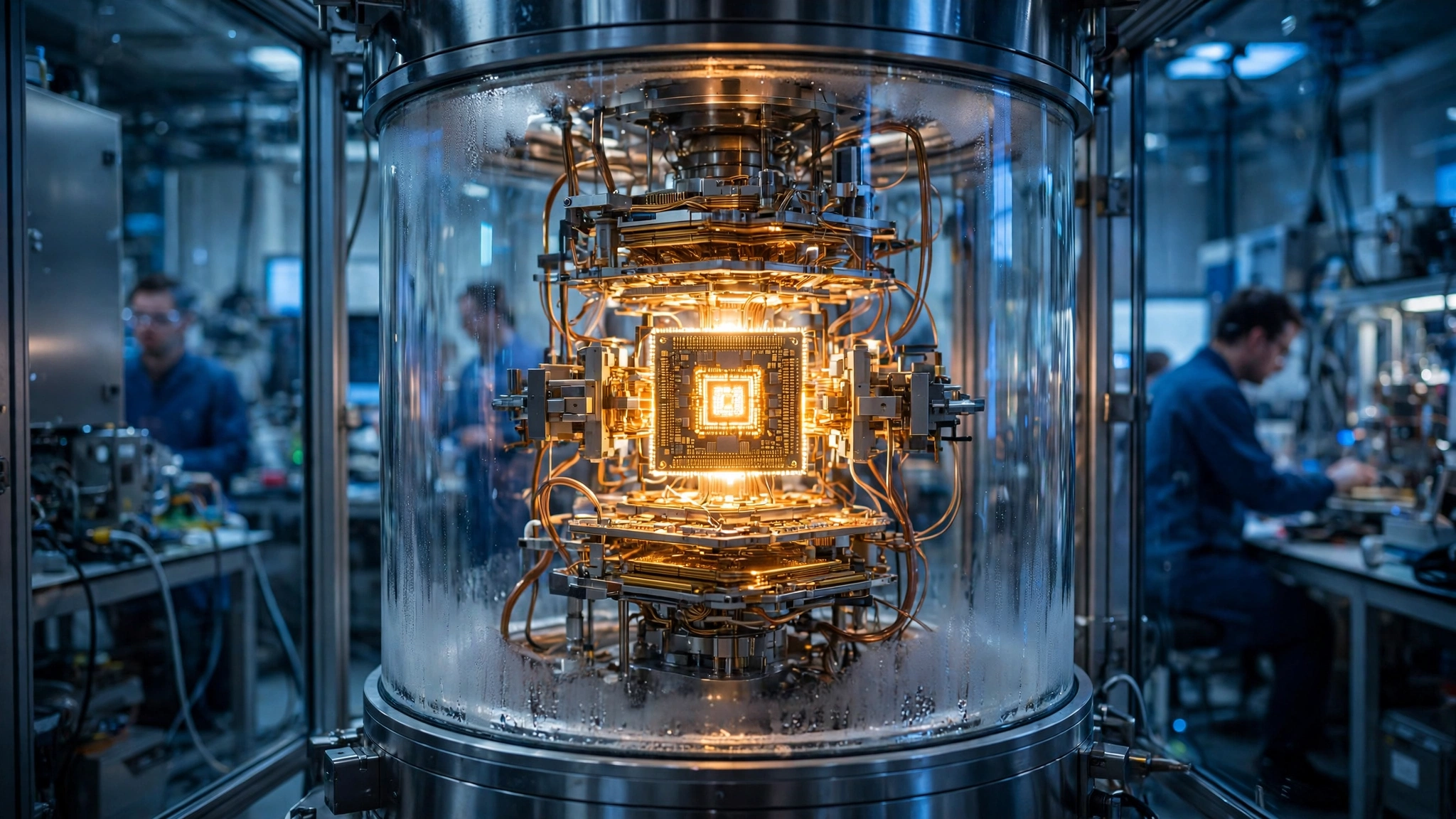
The European Commission has proposed a €50 billion sovereign fund and a draft Quantum Act in its biggest push yet to make Europe a global leader in quantum technology by 2030 — and to cut the bloc’s reliance on the United States and China.
The proposals, unveiled in Strasbourg on Wednesday, would channel public and private money into quantum computing, artificial intelligence and other technologies Brussels considers essential to its technological sovereignty and economic security. The draft law still needs approval from EU member states and the European Parliament, a process that will take months.
“Europe needs to accelerate now,” Henna Virkkunen, the Commission’s executive vice-president for tech sovereignty, said as she presented the plan. Europe leads the world in quantum research, she argued, but risks losing the race to turn that science into products — just as it did with artificial intelligence, chips and cloud computing.
A €50 billion fund for quantum, AI and critical tech
At the centre of the plan is the Sovereign Tech Equity Fund, which would provide equity and similar financing to companies developing technologies deemed critical to Europe’s independence. The Commission is targeting €50 billion (about $55 billion) for the fund, which Virkkunen described as a “sufficient starting point” — a mix of public and private capital rather than a single budget line.
The fund would not be limited to quantum. It would back “all critical technologies necessary for our technological sovereignty and our economic security,” Virkkunen said, covering artificial intelligence and other advanced fields where Europe depends heavily on suppliers from outside the bloc.
Procurement rules to favour European firms
The draft Quantum Act runs across three pillars: research, bringing quantum technology into use, and keeping European technology and supplies secure. Among its measures, it would push public authorities to favour European businesses when spending public money, and reserve certain public contracts for companies from Europe or partner countries on security grounds.
The Act would also establish new European research institutes and funding competitions, and support the development of quantum computers, quantum simulators and quantum-enhanced medical imaging. EU officials and member states would work together to monitor supply chains and reduce the risks of disruption.
The Commission was careful to stress that the procurement measures are not a blanket requirement that every component be manufactured inside the EU. But the direction is clear: public money should, where possible, build European capacity rather than deepen dependence on foreign suppliers.
A long road to becoming law
Nothing in the package is final yet. The draft legislation will now be negotiated with the EU’s 27 member states and the European Parliament over the coming months, and its final shape — and the fund’s eventual size — will depend on how quickly those talks move.
The stakes are high. Quantum computers promise computing power far beyond today’s supercomputers, with applications from drug discovery to cryptography — and the countries that master the technology first will hold a lasting advantage. Europe’s warning is blunt: it led on the science, and it does not want to watch the industry built on it happen somewhere else.
The urgency is personal as well as strategic. The Commission itself was recently the target of an AI-assisted cyberattack, a reminder that technological dependence is not only an economic question but a security one. Whether €50 billion is enough to close the gap with Washington and Beijing is now a question for Europe’s lawmakers.


