The Dar es Salaam-based agritech company said the capital includes a $26 million Series B equity round led by the Private Infrastructure Development Group (PIDG) through its InfraCo investment arm, with participation from Oikocredit and the Dutch development bank FMO.
Existing investors — the Acumen Resilient Agriculture Fund, Goodwell Investments, Africa Eats, and FINCA — all reinvested, while the Schmidt Family Foundation provided debt financing to bring the total to about $40 million.
An infrastructure play, not just an app
Founder and chief executive Elia Timotheo framed the raise as a fix for a solvable problem: a third of what the company's farmers grow never reaches anyone's table.
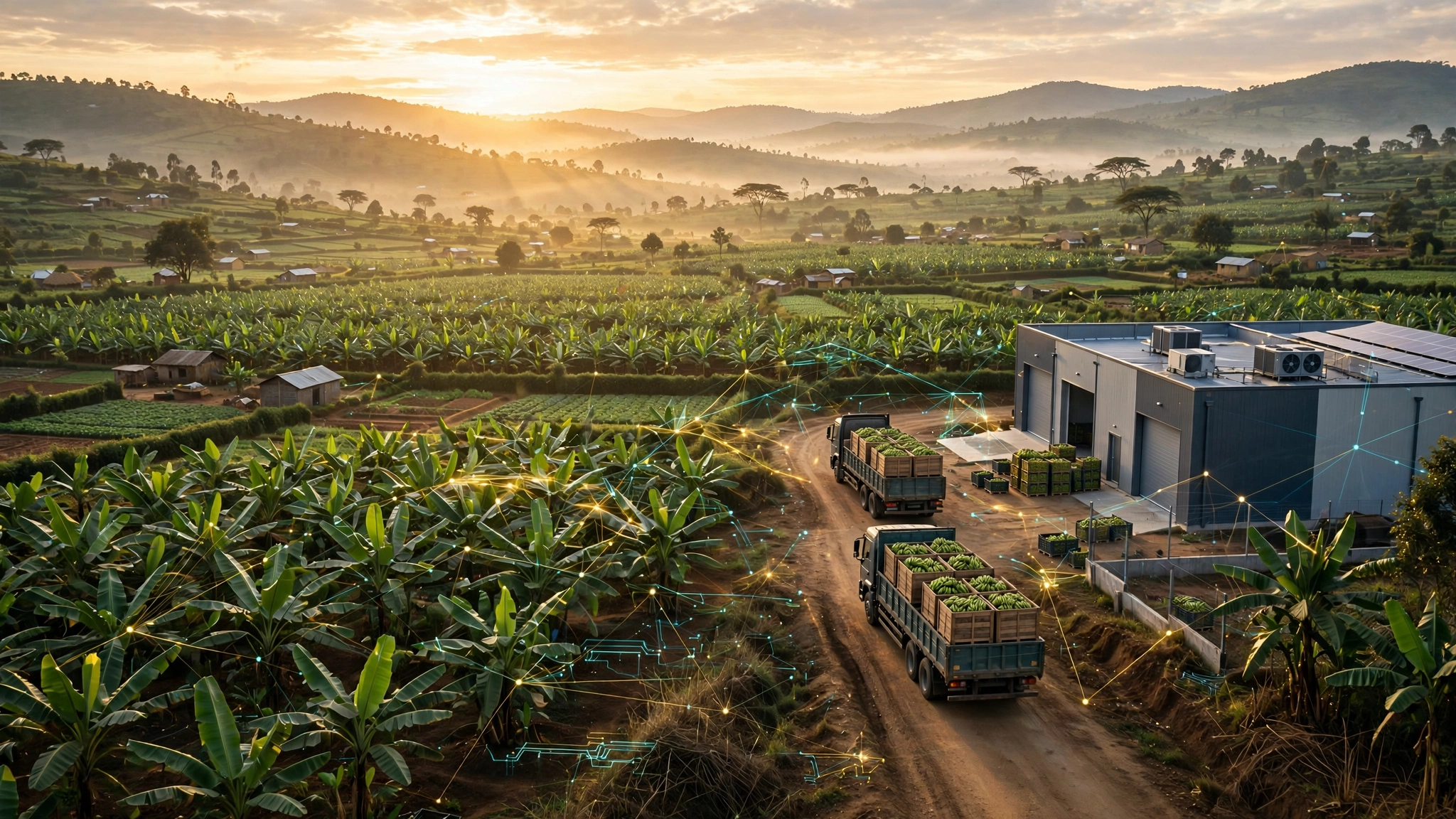
The company says that over the past three years it has been building the layer the market was missing — the sourcing network, the fleet, the storage, and the technology that sit between a smallholder farm and an urban shelf.
East Africa Foods sources produce directly from more than 28,000 registered smallholder farmers, aggregating, grading, storing, and processing it before distributing to more than 10,000 urban retailers.
Its consumer brands include Onja and Golden Banana. The new money will fund processing, storage, and transport capacity, plus the digital platform that coordinates sourcing and distribution.
Entering Kenya as a rival stumbles
The company plans to deepen its operations in Tanzania and enter Kenya, targeting 100,000 smallholder farmers over the coming years and aiming to cut food waste across its network by a third.
The timing is pointed: Kenya's high-profile food-distribution startup Twiga Foods saw its operating entity enter administration in August, with its parent company following in September after years of financial strain.
Twiga's collapse underlined the brutal economics of the business — coordinating procurement, transport, warehousing, and payments for thousands of thin-margin retailers.
Claire Jarratt, head of investment management at InfraCo, said strengthening East Africa Foods' data-driven business should help mobilize future private finance into the sector.
The blended capital structure — equity, development finance, and debt — is a bet on durability that rivals did not have.
Development banks are the new VCs
The deal shows how African tech is increasingly funded by development finance rather than venture capital. PIDG, Oikocredit, and FMO are institutions with a mandate for inclusive, climate-resilient growth — and food supply chains sit squarely inside it.
For readers in Pakistan, the parallels with the country's own fragmented farm-to-retail chains are hard to miss: the waste, the middlemen, and the missing cold chain are the same problems, and the fixes may look similar too.
Whether the Kenya expansion works will come down to execution, not capital.
East Africa Foods has to prove its digital-plus-physical model can scale across a border with different regulation and different crops — with Twiga's fate as a reminder of how quickly agritech logistics can unravel.