DeepSeek has opened up the toolkit behind its consumer chatbot to outside developers, announcing on November 13 that the features of the DeepSeek App are now available through its developer API. The move turns the Chinese AI lab's app into a set of building blocks that third-party developers can plug directly into their own products, without rebuilding the pieces themselves.
The release is anchored by a new model, deepseek-flash, identified as V4.1-Flash-1017, which powers the new capabilities across three endpoints: Messages, Responses and Chat Completions. Developers can switch on the app's built-in tools with a few parameters, or call several of them as standalone services.
What developers get
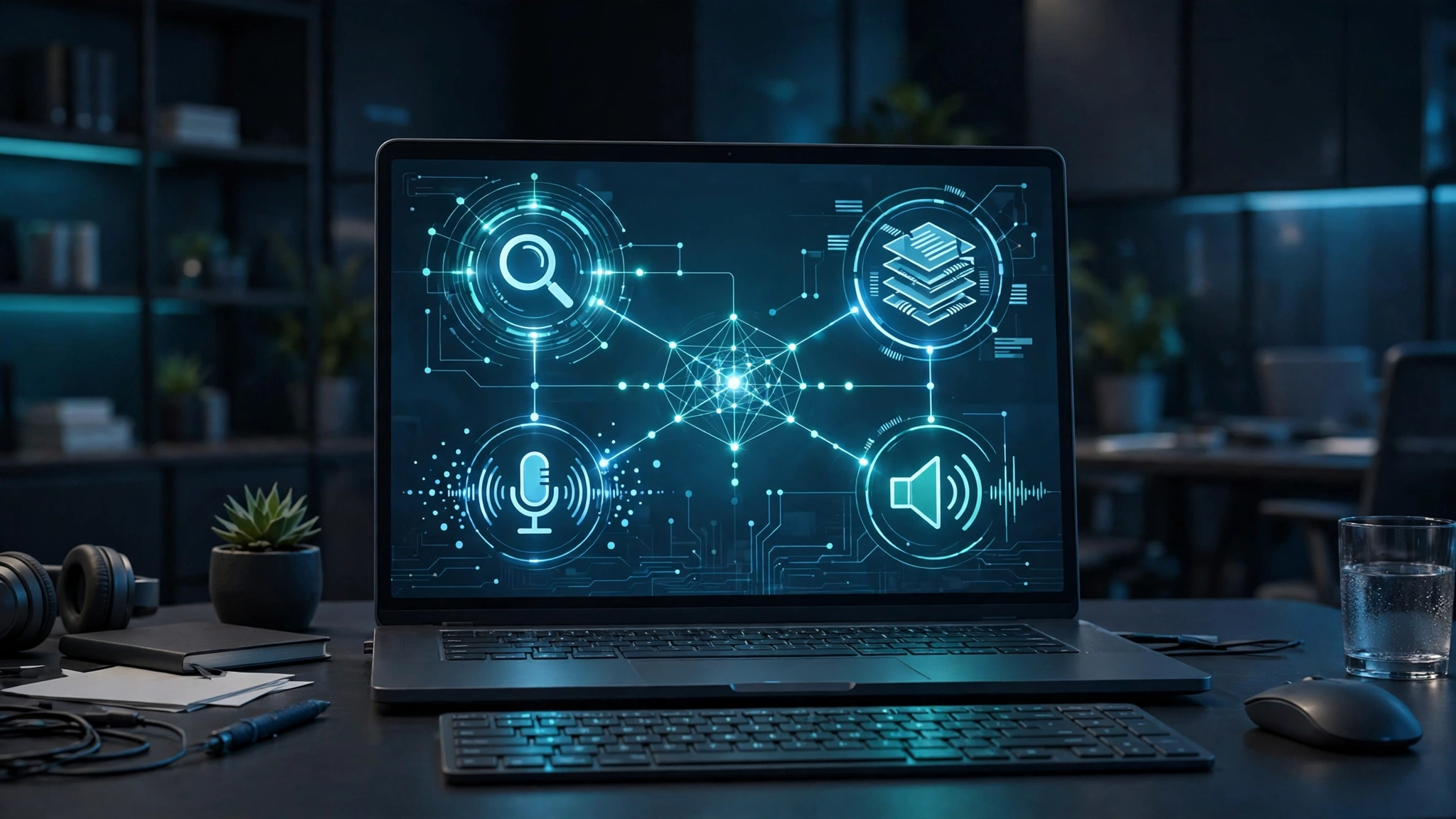
The feature list covers much of what the DeepSeek App does day to day. Developers can now tap into web search, image search, a deep-thinking search mode, file parsing, URL reading, safety checks and voice functions, all through the API. DeepSeek has also broken several capabilities out into standalone APIs covering Search, Fetch, OCR, ASR and TTS.
Search finds live information on the web, while Fetch pulls the contents of a specific page and returns it as Markdown. OCR turns images of text, such as a scanned receipt or a photo of a whiteboard, into machine-readable text. ASR converts spoken audio into words, and TTS runs the other direction, turning written output into a spoken voice.
Document handling is generous. Files of up to 100 MB are supported, with documents running to as many as 1,000 pages, and a single request can reference up to 20 documents, provided the total extracted text does not exceed 8 MB. Supported formats include PDF, Word and PowerPoint files, as well as images.
The safety catch
The rollout comes with one notable condition. Public-facing apps built on the API are required to include safety checks, giving DeepSeek a say in how its tools appear in products that reach ordinary users. The requirement may reassure enterprise buyers, while adding steps for builders who just want to move fast.
DeepSeek also released an open-source frontend demo alongside the expansion, giving developers a working reference for how the pieces fit together in a real application.
Why it matters
The most immediate effect falls on smaller teams. Building a polished assistant that searches the web, reads files and speaks has traditionally required serious engineering resources, and DeepSeek's bundle could shrink that workload considerably. The release also builds on the lab's October 17 update of V4.1 Flash, which added Search and Fetch interfaces priced at $0.75 per 1,000 successful requests.
For DeepSeek, the expansion is another step in its low-cost, developer-first strategy, which has made it one of the most closely watched challengers to the big US labs. The things to track now are practical: how quickly third-party apps built on deepseek-flash appear, and whether the standalone OCR, ASR and TTS services find an audience of their own.