By Hamza Faisal
The global AI trade is losing steam — and nobody is feeling it quite like China.
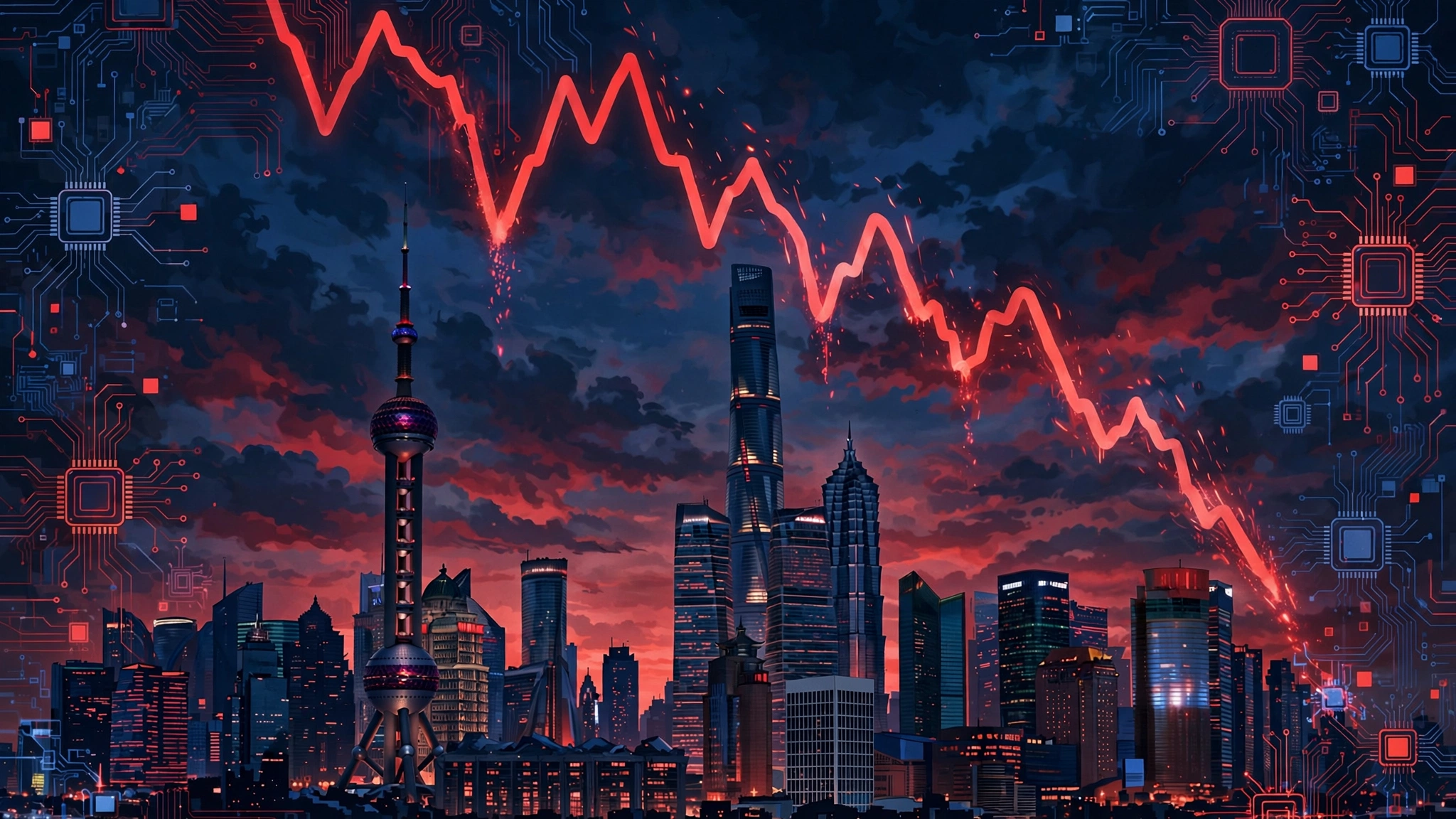
The Nasdaq-style Star50 Index has tumbled nearly 40 percent in the second half of 2026, making it the world's worst-performing major tech gauge, according to Bloomberg data reported by The Business Times and The Edge Malaysia on October 17. The hardware-focused ChiNext index has declined 36 percent over the same stretch.
It is a brutal reversal. Between April and June, investors ignored frothy valuations to bet on Beijing's policy push and ride the global AI boom, sending the Star50 up about 75 percent — a surge that outpaced even South Korea's Kospi. At its peak on June 30, the index traded at more than 80 times forward earnings.
From a 75% rally to the world's worst tech gauge
Even after the plunge, the Star50 still trades above 40 times forward earnings — roughly double the Nasdaq 100's 21 times and nearly ten times South Korea's Kospi, which sits below five times after the regional meltdown. The valuation overhang is the trade's core problem: the rally was priced for perfection, and the unwind is unforgiving.
"It would be much harder for China to achieve its AI ambitions if technology stocks remain under pressure for an extended period," Leonid Mironov, a portfolio manager at Gavekal Capital, told Bloomberg.
Chipmakers lead the collapse
The pain is concentrated in the companies that led the boom. MetaX Integrated Circuits Shanghai and Moore Threads Technology, two of China's flagship domestic chipmakers, have each shed around half of their value during the half.
Moore Threads — often styled as China's Nvidia — had surged 500 percent on its December debut, only to fall from a high of 942 yuan to around 327 yuan, according to CNBC TV18. The retreat extends beyond chips: memory-chip maker CXMT has fallen 27 percent from its post-listing peak, while robotics firm Yushu Technology has lost about half its value from an August high.
The global AI-hardware sell-off, spanning the Nasdaq and Korea, hit China A-shares hardest after foreign investors crowded into the sector in the second quarter, Bloomberg Intelligence analysts Jason Liao and Marvin Chen wrote in a note. Outflows through Stock Connect reached an estimated 90 billion yuan ($13.5 billion) in the third quarter, the largest quarterly withdrawal in a year.
Beijing's market-funding gamble is at risk
The downturn is a setback for Beijing's strategy of using capital markets to supercharge technological supremacy — a worrisome development, analysts note, given Chinese firms' heavier reliance on equity financing. Mainland IPOs have raised a combined $37 billion this year, the highest annual total in three years, with technology companies accounting for more than a third of proceeds.
Chinese financial regulators reportedly discussed market stabilization measures on Thursday and urged state-backed investors to accelerate share purchases. But with valuations still elevated, investors remain cautious about whether policy support can restore confidence.
The world's biggest AI bet is now its biggest casualty. Whether the reversal is a correction or a verdict will be decided by whether China can fund its way out of the slump.
By Hamza Faisal